Chinese New Year: a fresh start, many traditions
From preparing the home to the reunion dinner: meanings, local differences and practical ways to experience the celebrations in Hong Kong and Singapore.
In this guide
- In 30 seconds
- One calendar, many ways to welcome a new year
- Before the celebrations: cleaning, decorating and choosing a gift
- At the table: wishes shaped by language
- Lions and dragons: watch the people behind the movement
- Where to go: two settings, two different trips
- Taking part as a traveller
- Frequent questions
In 30 seconds
- In 2027, Chinese New Year falls on 6 February. Preparations and celebrations span several days: arriving only for New Year’s Day can mean missing the markets beforehand.
- Home preparations lead to local festive meals: dumplings in many northern Chinese families, poon choi in Hong Kong’s New Territories and yusheng in Singapore.
- For a first visit, Hong Kong offers flower markets and Cantonese traditions; Singapore introduces the traditions of Chinese communities within a multicultural city.
A peach blossom branch, a pair of red inscriptions on the door, a dish placed at the centre of the table. These objects offer a way into Chinese New Year: they carry wishes for prosperity, bring families together and give a fresh start a tangible form. We follow the preparations through to the reunion dinner, before heading out among the markets, lanterns and lion dances of Hong Kong and Singapore.
One calendar, many ways to welcome a new year
The traditional Chinese calendar is lunisolar: it combines months linked to the Moon with adjustments that keep it aligned with the seasons. This is why New Year’s Day has no fixed date in our calendar. In 2027 it falls on 6 February; the festive cycle traditionally continues to the fifteenth day, the Lantern Festival. Public holidays and individual performances have their own schedules, however: the date of a parade cannot be inferred from New Year’s Day alone.
The Spring Festival, Chunjie, brings together renewal, family ties and community practices. In 2024, UNESCO inscribed its social practices on the Intangible Cultural Heritage list. They include preparing the home and food, gathering for the reunion dinner, greeting elders and remembering ancestors: knowledge passed on largely through taking part, within families and communities.
This article explores Chinese traditions, including those of communities outside China. Seollal in Korea and Tết in Vietnam are other lunar new year celebrations, each with its own history and practices: a lantern or a nearby date does not make them interchangeable. Language, cooking, religion and family customs also vary within Chinese communities.
Before the celebrations: cleaning, decorating and choosing a gift
Preparations at home begin before the new year: in the customs described by Singapore’s National Heritage Board, cleaning symbolically clears away what belongs to the old year. Some families then avoid sweeping on the first day, so as not to sweep away the newly arrived good fortune. It is an everyday act invested with meaning, rather than a rule everyone follows in the same way.
Pairs of auspicious verses appear on doorways alongside the character fu, meaning good fortune or blessing; it is sometimes displayed upside down, using a play on words that evokes fortune’s arrival. Red envelopes containing money, called hongbao in Mandarin and lai see in Cantonese, convey good wishes and connect generations. If we receive an invitation, we ask our hosts about their family’s customs for gifts and red envelopes.
New Year prints, nianhua, tell further stories through protective figures, images of abundance and characters from popular culture. The NHB explains their links to beliefs and customs. Reading them as little stories reveals more about a shop window or market than its red colour alone.
At the table: wishes shaped by language
The dinner on New Year’s Eve centres on reunion. Making dumplings can be a shared task in northern Chinese families; their shape recalls old ingots, as the Smithsonian Asian Pacific American Center explains. In Hong Kong, families may instead gather around poon choi, a large sharing dish associated with communities in the New Territories.
The ingredients in poon choi are prepared separately, then layered in a single vessel. The Hong Kong Tourism Board also explains the meanings of other festive dishes: fish evokes abundance through the similar sound of the words for fish and surplus. Nian gao rice cakes suggest growth and improvement, while tong yuen glutinous rice balls evoke reunion. Food also offers a way to hear a language: many wishes rely on how the names sound.
Lions and dragons: watch the people behind the movement
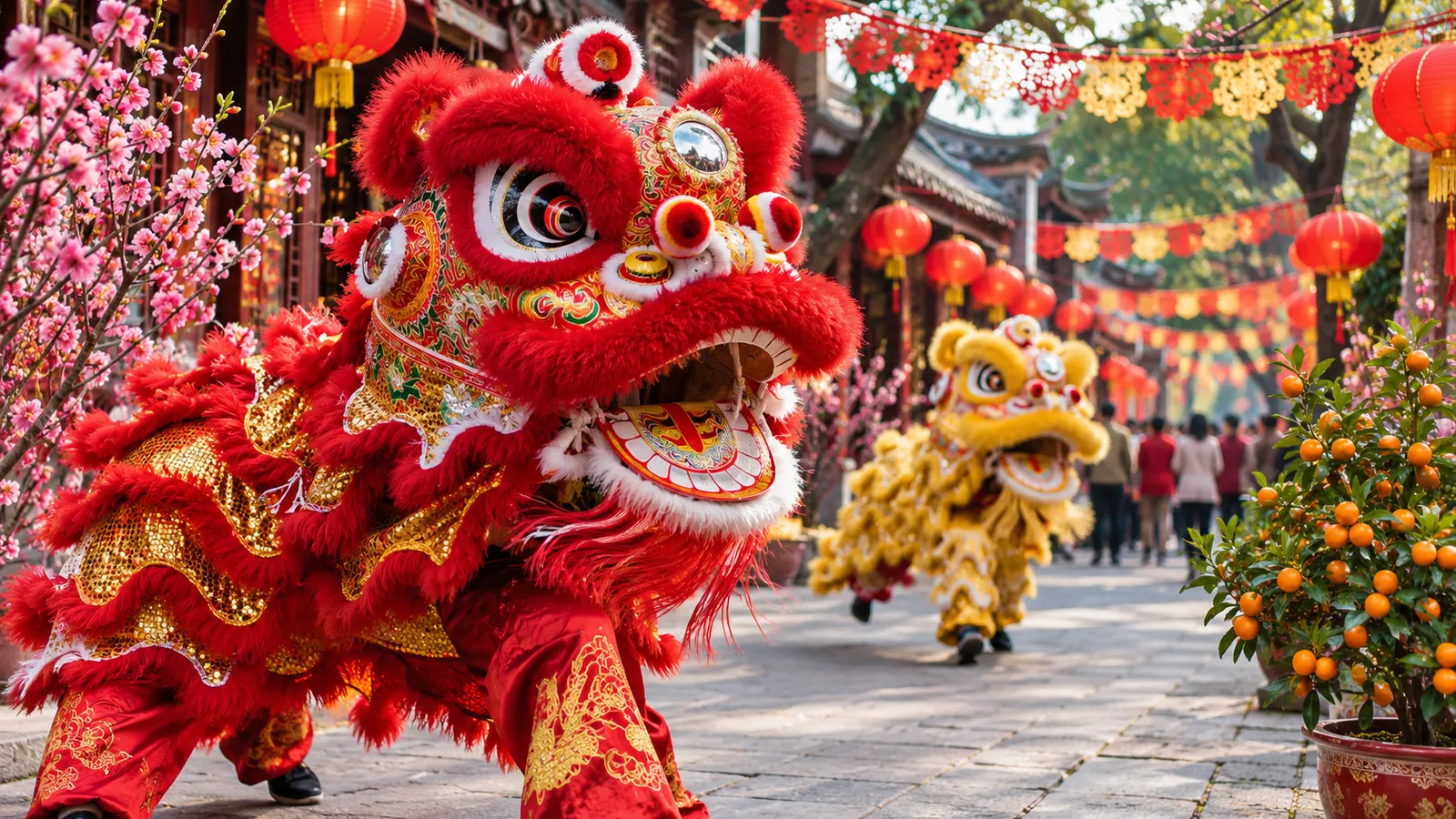
The lion has an expressive head and a body usually brought to life by two dancers: the one at the front controls the head and front legs, while the one behind supports the movement of the back. Singapore’s National Library Board describes the work and training behind this coordination. Styles vary, including northern and southern traditions: not every lion performs the same repertoire.
The dragon is a long, sinuous figure moved by several performers: the Smithsonian’s National Postal Museum presents it among the festive arts of the new year. Watching hands, steps and rhythm reveals the group creating the movement, as well as the character itself. When taking photographs, we keep the performance space and access routes clear; a temple ceremony calls for even closer attention to local instructions.
Where to go: two settings, two different trips
| Destination | What to look for | How to plan |
|---|---|---|
| Hong Kong | Flower markets before New Year, Cantonese food and temple visits in areas open to the public. | Markets: 31 January–early hours of 6 February 2027. Arrive before New Year to visit them. |
| Singapore | Chinatown, Chinese community food traditions and cultural programmes; Chingay is a multicultural event. | Plan around the event calendar: Chingay does not automatically fall on New Year’s Day. |
For Hong Kong, there is already concrete information: the Food and Environmental Hygiene Department has announced fourteen New Year market venues, including Victoria Park. They run from 31 January until the early hours of 6 February 2027. A stay covering 4 and 5 February would therefore allow time for the preparations, according to the announced calendar. These seasonal markets are distinct from the permanent flower market, with their own dates and organisation.
In Singapore, Chinatown provides a way to understand the celebrations through the history of local communities. The NHB’s heritage business register also tells the story of the modern version of yusheng, the festive salad tossed together while exchanging wishes for prosperity. It shows a tradition evolving: communities do more than preserve the past; they create new ways of gathering and sharing.
Taking part as a traveller
- Choose the experience first: a market before New Year, a public performance, a cultural visit or a dinner. Do not assume they are all available on the same day.
- Book transport and accommodation with the increase in festive travel in mind; check the conditions for changes.
- For New Year’s Eve dinner, choose a restaurant with a confirmed menu and booking: a commercial dinner is different from being invited into a family home.
- Read each attraction’s holiday opening hours and have an alternative for shops that close.
- At temples, respect queues and ritual spaces, ask before photographing people and avoid copying religious gestures you do not understand.
Frequent questions
Do we need to join a family dinner to experience the celebrations?
No. Markets, exhibitions, food and public performances provide accessible ways to take part. A family reunion is private: join only if invited, following your hosts’ guidance.
Are red lanterns and the Lantern Festival the same thing?
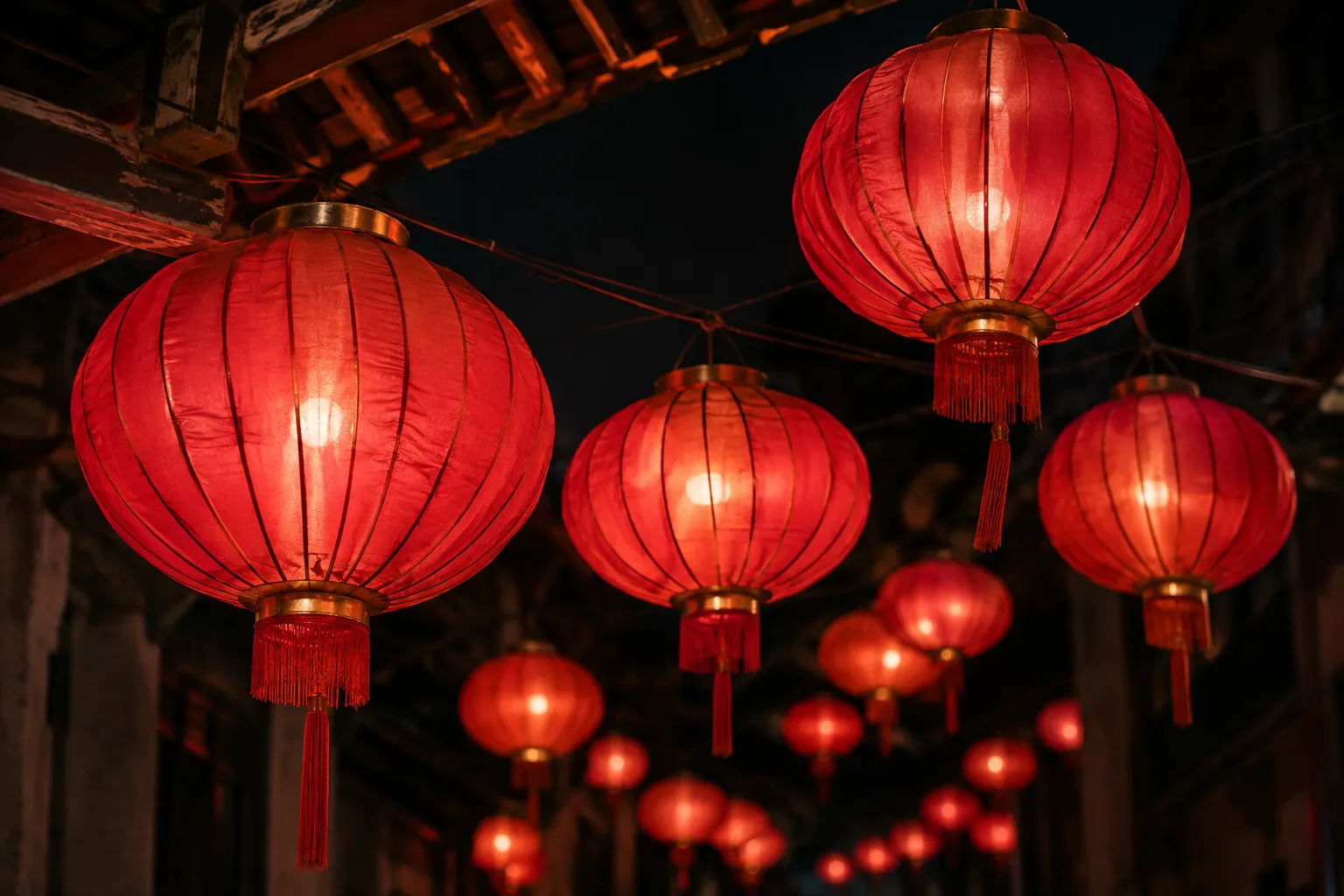
Lanterns can decorate the entire festive period. The Lantern Festival marks the fifteenth day of the first traditional month, which falls on 20 February in 2027; local programmes may have different dates.
Is the full 2027 programme already available?
As of November 2026, the Hong Kong markets mentioned in this article have been announced. Other events should be planned around that year’s programme: we have not assigned previous years’ routes, times or prices to 2027.



Liked an article? Make it your trip
Plan the days, the places and the budget with Daysaway, on the map, with the help of the assistant.