When to visit Rome: time in a square, the story of a city
The Forum and Palatine in milder months, gardens in bloom, Caravaggio in churches and evenings by the Tiber: choose your dates for the Rome you want to discover.
In 30 seconds
For a first visit combining squares, archaeology and gardens, choose April–May or late September–October. March and November are good alternatives, with more changeable weather and indoor visits between walks. January–February, after the holidays, suit museums and churches; July–August call for early mornings and evenings, especially at the Forum and Palatine. Easter and long holiday weekends can increase demand even in the months with the most pleasant weather.
- Jan7°Good
- Feb8°Good
- Mar10°Good
- Apr14°Ideal
- May18°Ideal
- Jun23°Good
- Jul26°Good
- Aug26°Good
- Sept21°Good
- Oct17°Ideal
- Nov12°Good
- Dec8°Good
IdealGoodLess suited· average temperatures in Rome · reference climate area
Month by month
January – March7–10°
GoodJanuary 7°
- Weather: Cool; rain possible and chilly evenings
- Crowds: Lower after the holidays
- Prices: Often lower after Epiphany
Not to miss: Centrale Montemartini and a walk through Ostiense.
February 8°
- Weather: Cool, with changeable days
- Crowds: Moderate at the best-known sights
- Prices: Variable
Not to miss: Caravaggio’s paintings in the churches of the centre.
March 10°
- Weather: Milder; rain still possible
- Crowds: Increasing
- Prices: Rising
Not to miss: Squares, archaeology and St Joseph’s traditions around 19 March.
April – May14–18°
IdealApril 14°
- Weather: Mild; longer days
- Crowds: High, especially over holidays
- Prices: High over Easter and long weekends
Not to miss: The Forum and Palatine in milder weather.
May 18°
- Weather: Pleasant or already warm; showers possible
- Crowds: High
- Prices: Moderate to high
Not to miss: The Aventine Rose Garden during its opening season and walks in the gardens.
June – September21–26°
GoodJune 23°
- Weather: Warmer; shade and breaks matter
- Crowds: High at major monuments
- Prices: Moderate to high
Not to miss: Archaeology in the morning and the Tiber towards evening.
July 26°
- Weather: Intense heat; walking can be tiring
- Crowds: High in tourist areas
- Prices: Varies by accommodation
Not to miss: The Forum and Palatine early; rest during the hottest hours.
August 26°
- Weather: Hot; thunderstorms possible
- Crowds: High at monuments, with differences between neighbourhoods
- Prices: Variable
Not to miss: Evening walks through squares and Trastevere.
September 21°
- Weather: Still hot, then more pleasant
- Crowds: High
- Prices: Moderate to high
Not to miss: Long walks, particularly towards the end of the month.
October17°
Ideal- Weather: Generally mild; rain possible
- Crowds: High at weekends
- Prices: Moderate to high
Not to miss: The Appian Way and Aventine on dry days.
November – December8–12°
GoodNovember 12°
- Weather: Cooler and wetter; shorter daylight hours
- Crowds: Moderate, with peaks around events
- Prices: Some good deals possible
Not to miss: Museums and Caravaggio, with walks between showers.
December 8°
- Weather: Cool; a festive atmosphere in the city
- Crowds: High over the holidays
- Prices: High on the most popular dates
Not to miss: Churches, nativity scenes and squares, allowing for holidays and services.
In Rome, you can step into a church near Piazza Navona and find a Caravaggio, or look out from the Capitoline Hill over the Forum’s columns and arches, below the level of today’s city. History is close at hand, but it often asks you to pause: to recognise a painted scene, understand the purpose of a building with only a few walls left, or follow an ancient road between the trees.
Your departure month changes how enjoyable those pauses can be. April, May and October are our first choices for a visit with plenty of walking. For museums and churches, we would also consider January and February; in July or August, moving walks to the beginning and end of the day is more useful than trying to follow a programme designed for spring.
March–May: squares, roses and time outdoors
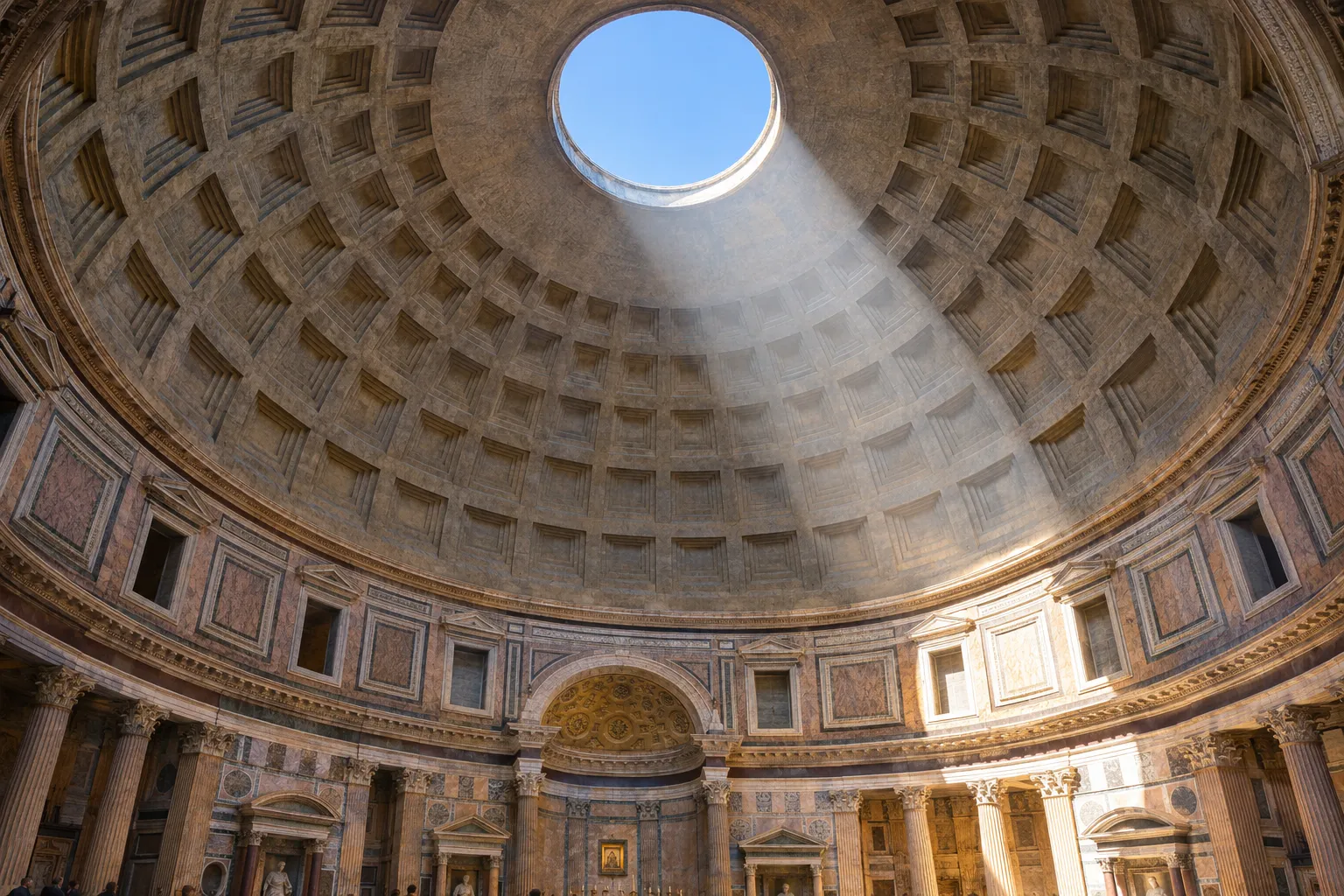
March can still bring rain and chilly evenings. In April and May, longer days and generally gentler temperatures favour a stay combining monuments and walks. Turismo Roma also recommends spring and autumn: the advantage is most noticeable on visits involving hours outdoors. Easter, 25 April and 1 May do, however, call for attention to room and ticket availability.
For a first day, the area between the Pantheon, Piazza Navona and the surrounding streets lets you combine ancient buildings, fountains and short stops without constantly moving across the city. For more greenery, choose the Aventine, one of Rome’s hills: the Orange Garden has a terrace overlooking the city, while the municipal Rose Garden brings together many rose varieties near the Circus Maximus. The flowers are a particular reason to visit in spring; check the opening dates announced by the municipality before adding it to your day, as the garden is not open all year.
Colosseum, Forum and Palatine: three places, three perspectives
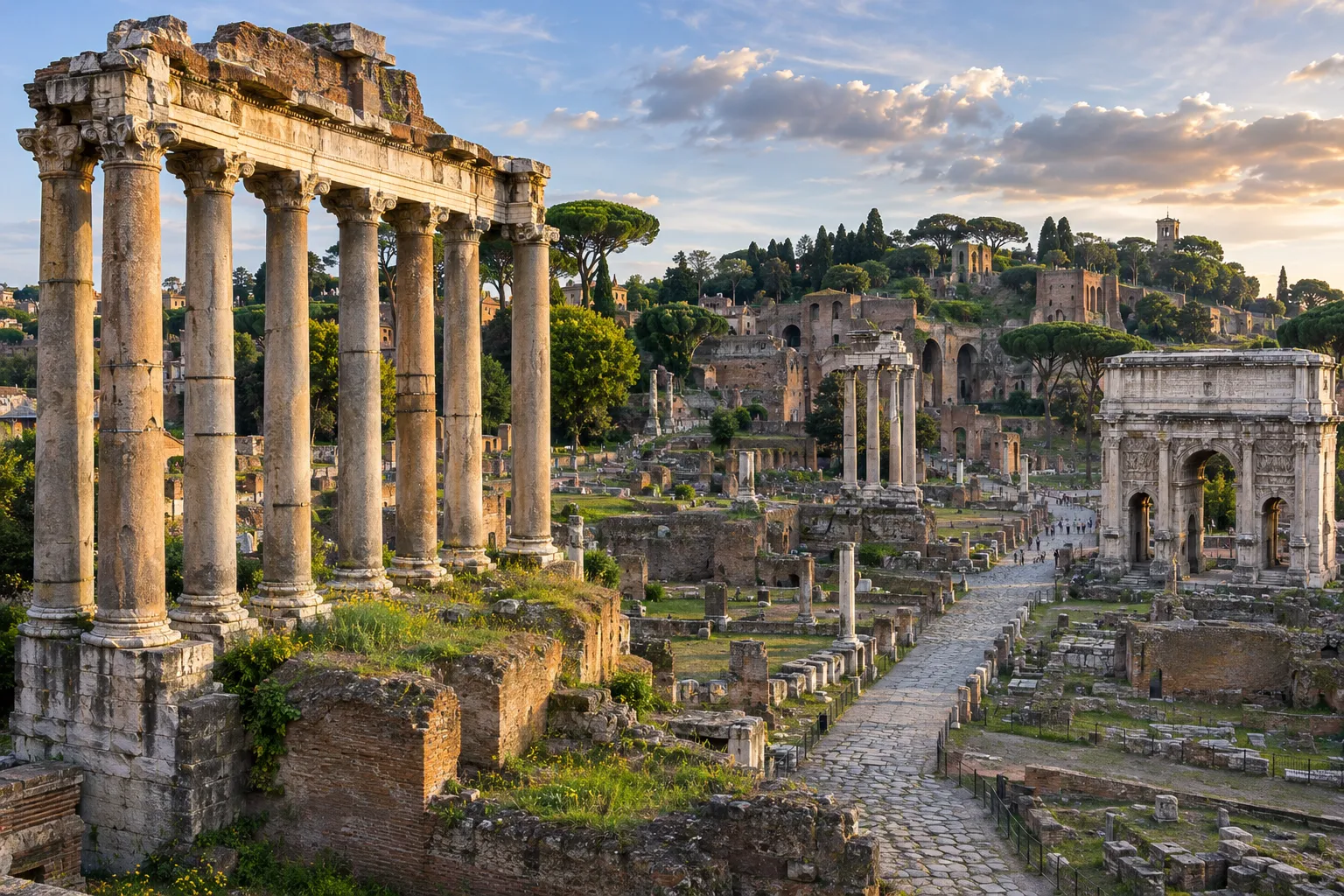
The Colosseum was the amphitheatre for public spectacles; the Roman Forum was a centre of public life, with temples, squares and places of politics; the neighbouring Palatine Hill became home to the imperial residences. Seeing them together helps you picture the city of the crowds alongside that of government and power. In the Forum, a guide’s account can bring the voices of its former inhabitants back to the ruins: political arguments, trade, ceremonies and the ambitions of a city that wanted to rule the world. Between a column and an arch, the ideals and everyday needs of ancient Romans come into view; buildings regain their purpose, and the stones a story to follow.
April–May and October are particularly well suited to this part of the trip. The route includes exposed stretches, climbs and uneven surfaces: comfortable shoes, water and time for breaks matter more than the short distances on a map might suggest. If you struggle with heat, start early in July and August and keep continuous hours outdoors to a minimum.
To get your bearings, begin with Turismo Roma’s Colosseum page, then choose your visit through the official ticket office: the standard ticket and options including the arena or underground areas offer different experiences. The arena is the floor where spectacles took place; the underground areas were the service spaces beneath it. Check your chosen ticket’s details, entry slot and required identification to see exactly which areas your visit includes.
Late September–October: an ancient road beyond the centre
Heat can linger through September; towards the end of the month and in October, a long morning walk becomes more comfortable again. For a change of scenery, the Via Appia Antica, or ancient Appian Way, takes you past funerary monuments, pine trees and stretches of Roman road. Once a major route connecting the city with the outside world, it retains a link with the countryside that is harder to feel in the historic centre.
The Appia Antica Regional Park describes the stretches of basolato, paving made from large stones that still bear the grooves left by carts. It is one reason to visit, but also something to plan around: the surface is uneven, rather than a pavement. For an easy walk, choose a short stretch instead of aiming to complete a long itinerary. On rainy days, or if the terrain does not suit your needs, spend time in the museums and leave the Appian Way for a dry morning.
June–August: the city as the heat eases
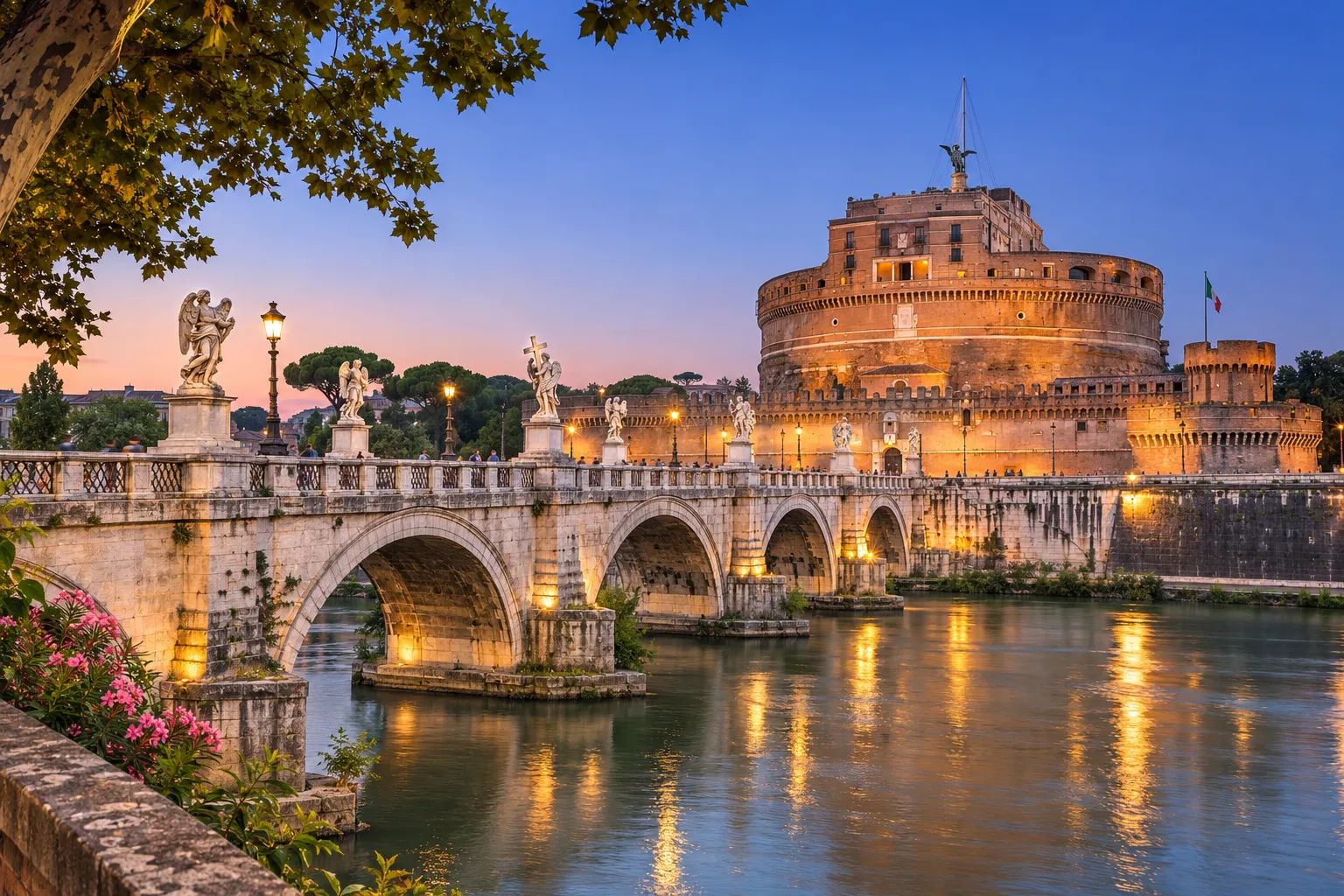
June has long days, but can already be hot; July and August make time on paved squares and exposed archaeological sites more demanding. If your dates are flexible and you want to walk a lot, we prefer another time of year. If your holiday falls in summer, a stay can work well with an early outing, a break in the hottest hours and a return outdoors towards evening.
The central squares and the Tiber are pleasant places for an after-dinner walk. Trastevere, on the river’s western bank, invites you onwards through narrow streets and squares; Santa Maria in Trastevere is a useful landmark, while bars and restaurants make some streets very busy in the evening. For a view, try the Janiculum, the hill above the neighbourhood: allow for the climb, especially after a tiring day.
During a heatwave, cut back further on outdoor visits. Even a tree-filled villa park can involve long walks: shade alone cannot make a garden, the Forum and an indoor visit equally comfortable. When choosing accommodation in these months, it is worth checking for air conditioning.
November–February: Caravaggio and a power station full of statues
Between November and February, rain can interrupt walks and daylight hours are shorter. For anyone who enjoys looking closely at art, however, Rome offers reasons to visit that do not depend on sunshine. After the January holidays, accommodation choice may improve; December and public holidays have different demand patterns and should not automatically be treated as low season.
At San Luigi dei Francesi, near Piazza Navona, Caravaggio painted scenes from the life of St Matthew. In The Calling of Saint Matthew, a shaft of light crosses a scene of men gathered around a table: take time to follow their gestures and gazes. Nearby, at Sant’Agostino, the Madonna of the Pilgrims brings the sacred scene close to two kneeling travellers, their dirty feet in the foreground. Turismo Roma’s Caravaggio route connects these places: they remain working churches, so visits must respect services and chapel access.
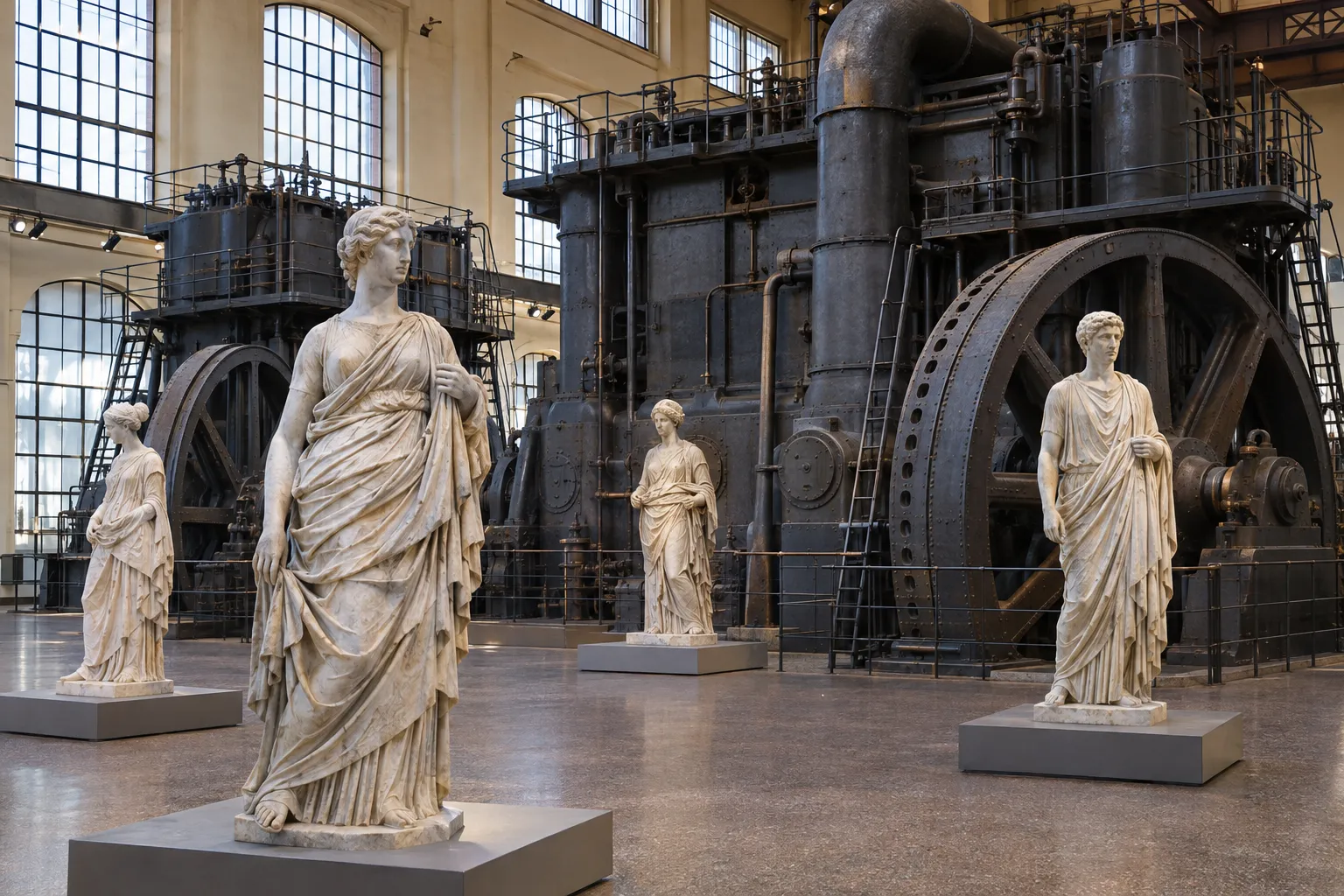
For a museum beyond the usual major sights, **Centrale Montemartini**, in Ostiense, displays ancient sculptures and mosaics among turbines, engines and a huge boiler in a former power station. The contrast is apparent as soon as you enter: marble and industrial machinery, two periods of the city sharing a space. It can be the focus of a rainy morning, especially if you are curious about more recent Rome alongside the imperial city.
The Vatican: choosing between museums and basilica
The Vatican Museums and St Peter’s Basilica are separate visits. The museums take you through collections and rooms such as the Raphael Rooms and the Sistine Chapel, with Michelangelo’s frescoes. The basilica is the great church overlooking St Peter’s Square, home to Michelangelo’s Pietà and Bernini’s baldachin.
The Vatican Museums ticket includes the Sistine Chapel: plan this entry separately from the basilica and its dome. Allow enough time for the area rather than fitting it all into one short gap. On a first trip, choose the works that most interest you and leave room for security checks and getting between places, especially around Easter and religious holidays.
Four days in Rome, or a stop on a trip through Italy
For a first visit, we suggest at least three full days; four or five let you explore a collection more deeply or add the Appian Way while still enjoying the central squares. The Rome in four days itinerary brings together ancient Rome, the Vatican, neighbourhoods and viewpoints. It also includes an idea for St Joseph’s Day, 19 March: if you travel at another time, keep the overall structure and adapt the stops linked to the celebration.
Rome in four days, from its squares to the Vatican: it’s in Explore.
An itinerary through ancient Rome, Trastevere, gardens and great works of art, with a March idea for St Joseph’s Day.
If Rome is part of a longer trip, Classic Italy in fifteen days connects it with Venice, Florence, Pompeii and the Amalfi Coast. Choose your dates with the other stops in mind too: a week suited to Roman museums will not necessarily offer the same experience for beach days and boat trips on the coast. Within the itinerary, Rome has four days for squares, archaeology, the Vatican and gardens.
Classic Italy in 15 days: Venice, Florence, Rome, Pompeii and the Amalfi Coast: it’s in Explore.
15 days on the map, to import into your trips.
Understanding climate, crowds and prices
Temperatures: monthly means for the Rome area, rounded to the nearest degree, from NASA POWER’s 2001–2025 climatology. The grid also covers the surrounding area, rather than measuring individual streets or higher ground. Reference climate data. Crowd and price guidance gives indicative seasonal assessments, rather than quotes: holidays, events and availability can change even between two weeks in the same month. “Ideal” refers to the kind of trip described; it guarantees neither good weather nor access to every activity.

Liked an article? Make it your trip
Plan the days, the places and the budget with Daysaway, on the map, with the help of the assistant.