Ningaloo: life on the reef, from shore to seabed
How a coral reef grows, what threatens it and how to explore it: beaches, snorkelling and diving along Western Australia’s coast.
In 30 seconds
- Ningaloo is one of the world’s great fringing reefs, in Western Australia: at several points, coral can be reached from the beach.
- The coast has been UNESCO World Heritage since 2011; the reef suffered severe bleaching in 2025.
- Explore with snorkelling or diving with professionals, choosing activities suited to experience and sea conditions.
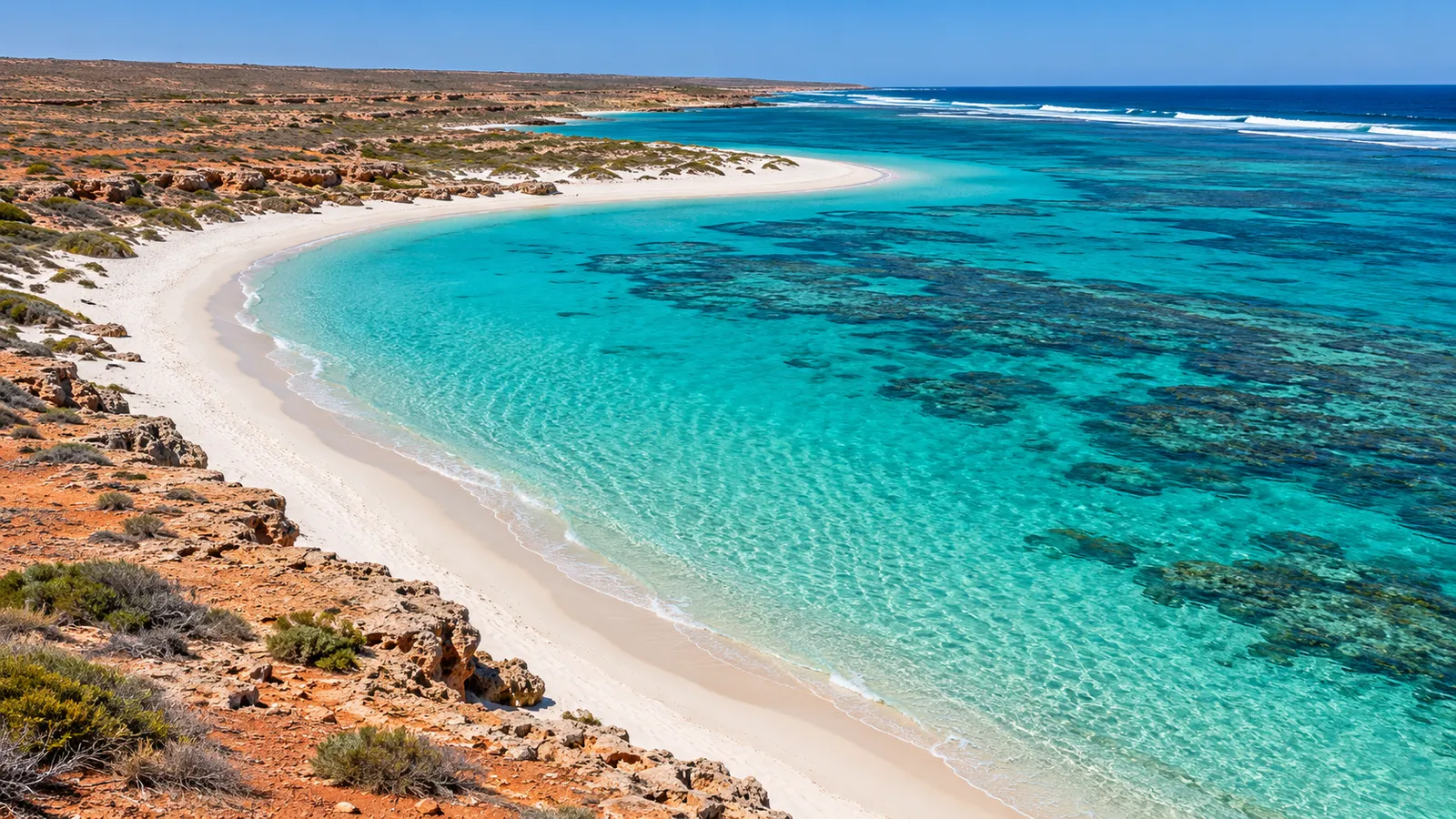
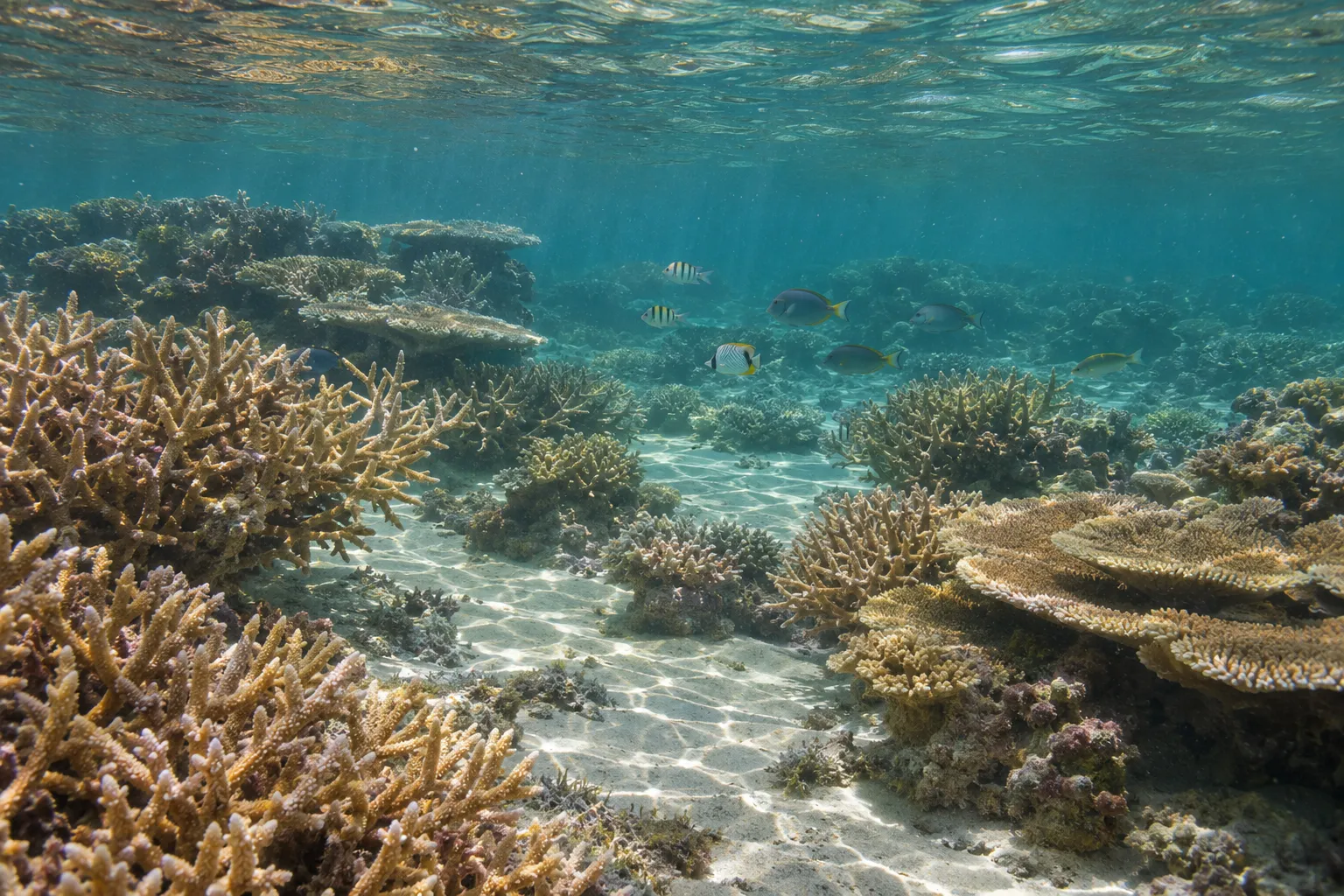
At Turquoise Bay, the white beach separates the lagoon from a dry expanse of shrubs and rocks. Just beneath the surface, branching and rounded forms appear between sandy patches: corals grow beside one another and shelter fish. Pause to watch and the details of each colony emerge, along with animals moving through the hollows.
We are in Western Australia, around 1,200 km north of Perth. Ningaloo is a fringing reef, a reef growing close to the mainland; it is distinct from the Great Barrier Reef on the east coast. UNESCO describes it among the longest near-shore reef systems and recognised the Ningaloo Coast as World Heritage in 2011 for its landscapes and biodiversity.
A history of seas, rocks and tiny animals
The sea has left traces on land too. The limestone ridges of Cape Range, behind the coast, preserve ancient marine deposits and wave-cut terraces. They record different sea levels, earlier reefs and the peninsula’s gradual emergence. The Australian environment department traces this history: today’s dry landscape and seabed belong to different stages of a long transformation.
The living reef grows thanks to polyps, tiny animals that form colonies. Hard corals produce a calcium carbonate skeleton, a limestone structure that accumulates over time and helps build the reef. Other organisms find space among branches, hollows and surfaces. Many shallow-water corals also host tiny algae, receiving nourishment and much of their colour from them. The Australian Institute of Marine Science explains this partnership.
Shell beads more than 32,000 years old have been found in Cape Range’s rock shelters, evidence of a long Aboriginal presence on this coast. The Baiyungu, Thalanyji and Yinigurdira are the Aboriginal peoples the park recognises as Traditional Owners of these lands and adjoining sea, with cultural connections and responsibilities passed down through generations. Traditional Owners now participate in joint management of the Nyinggulu reserves, using an Aboriginal name for Ningaloo.
Bleaching and the work to grow new corals
In 2025, a strong marine heatwave hit Ningaloo. AIMS documented bleaching and severe damage, with effects varying between sites. When heat disrupts the relationship between coral and algae, the tissue loses colour and exposes the white skeleton. Bleached coral may still be alive, but weakened; if stress continues, it can die.
In April 2026, an experimental regeneration project at Ningaloo was announced: researchers collected reproductive material, raised larvae in floating pools and then released them in damaged areas. The programme involves scientists, Traditional Owners, operators and local communities. It is an attempt to aid regeneration, with results to follow over time; it does not mean the reef has already recovered.
Protection also involves water quality, managing fishing and visits, and responding to climate change. The conservation strategy developed with the community brings these aspects together.
Entering the water from the beach
Snorkelling lets you observe the reef from the surface with a mask and snorkel. Some seabed is close to shore, but you need to swim, use the equipment and assess currents. At Milyering Discovery Centre, Cape Range’s visitor centre, you can ask about sites and tides.
At Turquoise Bay, the stretch called the drift involves moving with the current. You need to know where to enter and exit; currents can be strong near the sandbar. For a first experience, an assisted outing is more suitable than drifting independently. In unfavourable conditions, stay on the beach. The park’s guidance.
| Place | What it offers | Before entering |
|---|---|---|
| Turquoise Bay | Pale sand and separate swimming and snorkelling sectors. | Assess currents and the exit; the drift requires experience. |
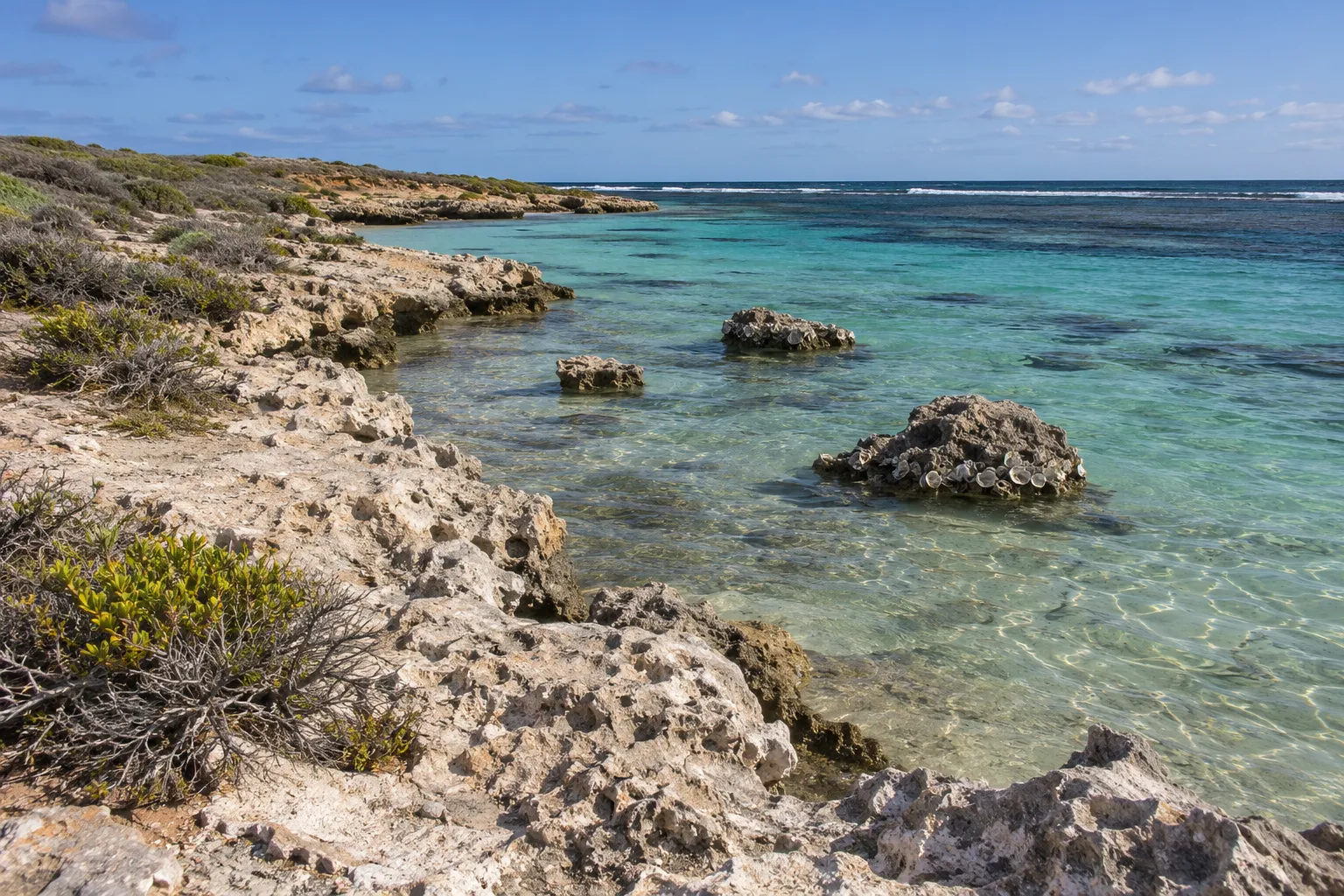
| Oyster Stacks | Shallow coral beside a rocky shore. | High tide of at least 1.2 m only; sharp rocks and possible waves. |
| Lakeside | Coral formations after about 500 m walking along the beach. | Follow sanctuary signs; strong currents are possible here too. |
At Oyster Stacks, water over the reef must be deep enough to swim without hitting it: hence the park’s tide threshold in the table. At Lakeside, the walk leads to the marked snorkelling area. At both, the day’s conditions apply: do not enter alone, and stay out if you feel uncomfortable.
Going underwater with an instructor
With scuba diving, using a cylinder and regulator, you remain below the surface: you see the seabed’s shapes from another perspective and can linger over details. Even without certification, you can consider an introductory experience, often called Discover Scuba Diving, led by an instructor. It includes initial preparation and time to become familiar with the equipment, but does not award certification for independent diving.
In Exmouth, for example, the Discover Scuba Experience offers basic theory and two boat dives, with one instructor for every two participants. The operator requires basic swimming ability, a minimum age of 14 and completion of health documentation; personal circumstances should be clarified before booking. These are this particular offer’s requirements, to recheck for your chosen activity.
Certified divers can choose guided reef outings, providing certification, experience and the date of their last dive. After a long break, the centre may require a practical refresher. Sites and depths depend on ability and sea conditions: choose a centre that explains the programme and how it is adapted to the group.
Visiting the reef respectfully
A fin strike or a hand resting on coral can break it. Staying suspended without touching the bottom, keeping equipment tucked away and giving animals space are skills you can learn with an instructor’s help. There is no need to follow a turtle for a photograph: stop and let it continue. In sanctuary zones, where marine life is protected, do not collect coral or other organisms.
For sun protection in the water, bring a UV-protective shirt. On exposed skin, favour sunscreen using only mineral filters, zinc oxide or titanium dioxide, as recommended by the National Park Service to reduce impacts on reefs. Check ingredients: “reef-safe” on the packaging alone does not guarantee a product is harmless to corals.
Your base and when to travel
Exmouth is a base for Cape Range’s beaches; Coral Bay, further south, lets you stay close to the town’s beach. Arrive on a road trip or fly from Perth to Learmonth and arrange a car or transfers. Access described by Tourism Australia.
To combine the sea and walks, we consider April–September, the period recommended by Cape Range National Park for walking. Local summer, December–February, can be intensely hot. For dedicated trips to see whale sharks, large filter-feeding fish, the commonly indicated window is March–July: separate activities with licensed operators and sightings never guaranteed. The Coral Coast calendar.
Leave a few flexible days and take water on outings. Before leaving, check how to buy Cape Range National Park entry, book a campsite if you want to stay and consult road and access notices. There will be time to go into the water, but also to return to the sand and look at the reef from shore, recognising the places just explored in the lagoon’s dark patches.
Frequent questions
Do you need certification to try diving?
It may not be required for an introductory experience with an instructor; swimming, age and fitness requirements still apply. Certified-diver outings require the appropriate certification. Always check the specific offer.
Is the whole reef bleached?
Damage varies between sites and over time. The 2025 event was severe but does not describe every seabed uniformly: ask for local updates without confusing a single site with the entire reef.
Can you get to know Ningaloo without diving?
Yes: snorkelling suited to your abilities, beaches, boat-based viewing trips and Cape Range landscapes offer different experiences. Check available activities with operators.
Our 14-day Coral Coast itinerary starts in Perth, passes through Kalbarri and Shark Bay and continues to Coral Bay and Exmouth. Its last stages focus on Ningaloo, with snorkelling, boat outings and Cape Range landscapes.
Western Australia's Coral Coast in 14 days: Perth, Shark Bay and the Ningaloo Reef: it’s in Explore.
14 days on the map, to import into your trips.



Liked an article? Make it your trip
Plan the days, the places and the budget with Daysaway, on the map, with the help of the assistant.