Día de Muertos: when remembrance becomes a reunion
The house is prepared, bread is set beside the flowers, a photograph finds its place again. Exploring the gestures of Día de Muertos to understand its meaning and approach it with respect.
In 30 seconds
- The ofrenda symbolically welcomes the dead: water, food, light and personal belongings form an offering dedicated to them.
- 1 and 2 November are the best-known dates, but preparations and rituals follow local calendars.
- As travellers, we can discover public offerings, markets and cultural activities; entering a home or joining a family moment requires an invitation.
Before the candles are lit, there is work to do. Flowers must be arranged, fruit chosen, food prepared. A photograph needs to find its place. A dish that might look like any other to a passer-by can, for that family, be unmistakably someone's dish: their favourite, the one they used to cook when that person was still here.
It is through these gestures that we want to approach Día de Muertos. Members of the Daysaway team have visited Mexico, but we have not yet experienced this occasion. The accounts of Mexican cultural institutions let us follow the preparations for a household ofrenda and the meaning of what is offered.
Preparing the home for those returning
The idea that holds the offering together is the return of the dead. In the Indigenous celebrations described by UNESCO, relatives prepare to welcome the souls with food, flowers and light. The festivities also coincide with the end of the annual maize cycle: harvest time and remembrance meet. The Indigenous festivities dedicated to the dead were proclaimed oral and intangible heritage in 2003 and inscribed on the Representative List in 2008. UNESCO's entry.
Preparing an offering means thinking about the person being awaited. What is placed on the altar makes the memory specific: someone had tastes, habits, a face. For those who believe in the return of souls, these preparations have the concrete meaning of receiving a visit.
The ofrenda is the offering; the altar is the space that holds it. It may occupy a table or a more elaborate structure. The photograph shows whom it is dedicated to; personal belongings and religious images may stand beside it. Its form depends on family habits and local traditions, as INAH's description of offerings reminds us.
From the doorway to the altar: the path of flowers
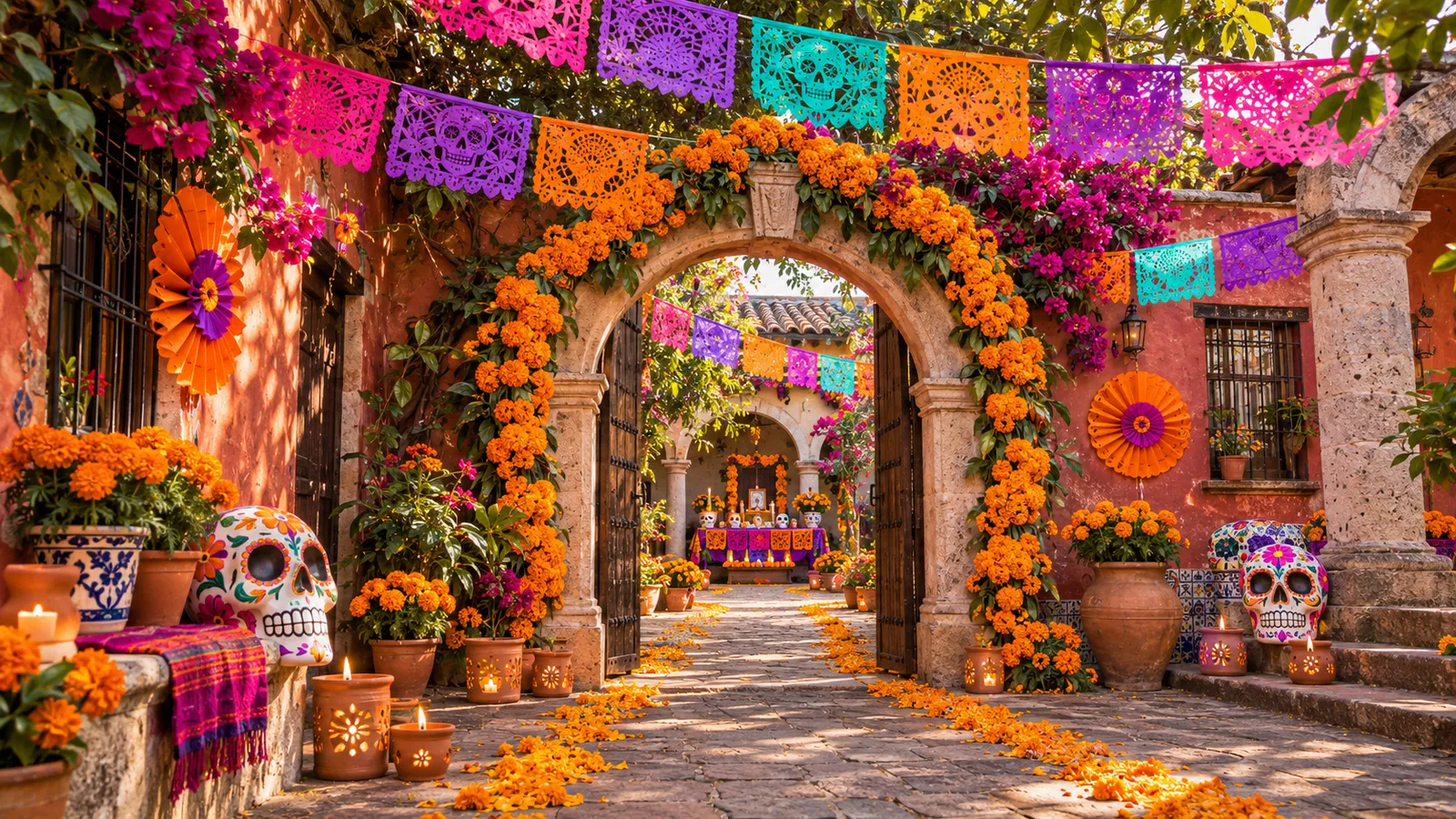
Cempasúchil fills bouquets, arches and petal paths with yellow and orange. Its colour and scent can guide souls towards the home and the offering. Thinking about this purpose changes how we see those flowers: the petal path connects an entrance to a place prepared for someone.
Candles add another guide: light. Copal, a resin burnt in an incense burner, accompanies the preparations with its aroma and a meaning of purification. Light, scents and paths make the welcome perceptible even to an observer.
Water is left on the altar to quench the souls' thirst after their journey; salt is associated with purification. The elements explained by the Instituto Nacional de los Pueblos Indígenas include these, but also practices less familiar to visitors: a petate, a woven mat, can offer the souls rest. Everyday objects take part in the ritual through their functions: drinking, finding the way, stopping to rest.
In the kitchen, remembrance has a flavour
The work continues with the dishes. Preparing what the deceased liked is one of the most personal ways to assemble the offering: remembrance passes through the choice of ingredients and the time spent cooking them. A remembered flavour can reopen a conversation about someone who once sat at the table.
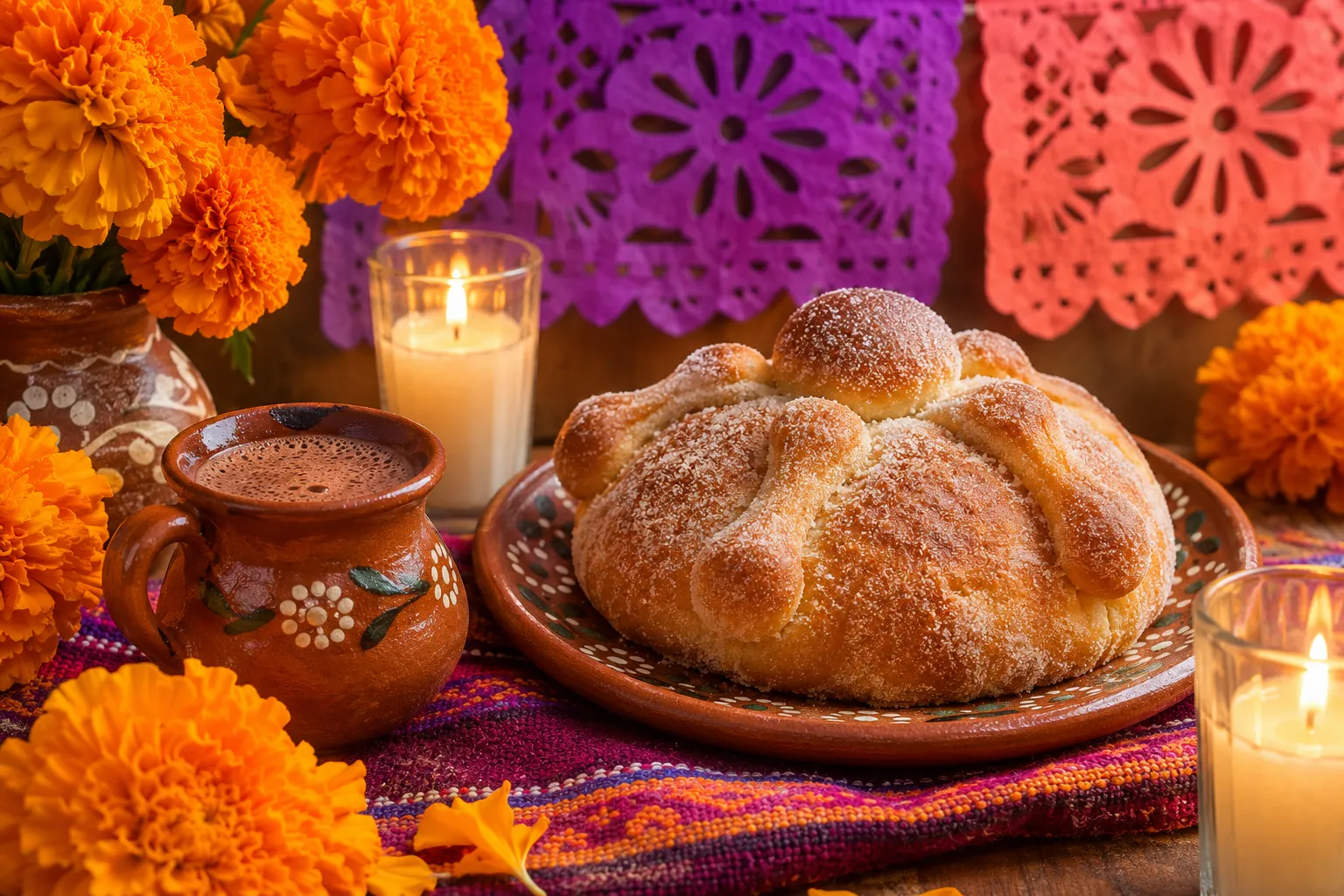
The pan de muerto most recognisable in photographs is round, with raised dough shapes evoking bones and a skull. But its shape varies. INAH describes, for example, breads shaped like dolls and other figures in Guerrero, and representations of people, animals and religious elements in Michoacán. The varieties described by INAH.
INPI also documents Oaxaca's egg-yolk breads, sometimes with sesame and small decorative faces. Finding breads different from the one you already know is a good reason to stop at a bakery and ask what is prepared locally. Bread belongs to a geography of habits, shapes and meanings. The regional varieties collected by INPI.
The moment of reunion
When the offering is ready, the photograph, candles and food share the same space. The remembered person's presence is expressed through what others have kept and prepared. This is what strikes us: continuing to give time to a bond by returning to its details.
In Xochimilco, the local authority's account of the occasion brings together homes, cemeteries and squares. Flowers, bread, fruit and lights sit alongside offerings, coloured sawdust carpets and public events. The festivities move between domestic and community life: travellers can encounter part of them without having access to every moment. Xochimilco's traditions.
Images of conviviality alone do not tell us how someone experiences grief. Laughter and sadness can find a place in the same evening. It would be reductive to turn this occasion into proof that an entire country has stopped fearing death.
Why there is no single Mexican home
Today's forms stem from Indigenous histories and encounters with Catholicism, through centuries of change. INAH emphasises the variety of Maya, Nahua, Zapotec and Mixtec expressions and their role in community life. The days dedicated to different deceased people and the elements of the offering can also change. Indigenous festivities according to INAH.
In the Huasteca, Xantolo includes the Huehues, masked figures who dance and take part in the celebrations. Masks, movement and community gatherings open a different path from the image of a home gathered around its altar. Both belong to this world of practices, with local meanings. UNESCO's account of the Huehues.
1 November is often associated with deceased children, and 2 November with adults; some traditions begin earlier and arrange arrivals and farewells differently. Choosing a destination therefore also means choosing which calendar and customs to get to know.
Turning curiosity into a trip
For a first encounter, Mexico City and Xochimilco offer concrete starting points: public offerings, markets, bakeries and cultural activities. A visit can begin during the preparations, observing what is sold and asking what will be offered. In Xochimilco, the local authority also lists exhibitions and events dedicated to ofrendas; programmes and access need checking for the year of your trip.
We would allow days for both the preparations in late October and the celebrations in early November, choosing the events we want to discover. For a public event, we would seek the organiser's programme; for a community experience, someone who explains in advance where visitors are welcomed and under what conditions.
A home prepared for the dead is still a home. An open door during the occasion is not an invitation to a visitor. And an illuminated cemetery remains a place where families may want quiet reflection.
- Choose a destination and check which events are public, on which days and at what times.
- To observe the preparations, include markets, bakeries and cultural activities, without counting on access to private homes.
- Ask before photographing a person or a family altar; avoid flash, interruptions and moving objects for a photograph.
- In cemeteries, keep paths clear, do not walk on graves and follow local guidance.
- If a family invites you, let your hosts guide your participation.
We would like to return to Mexico for this too: to see how a memory becomes a choice in the kitchen, an arranged flower, a photograph brought back into the light. Perhaps the part that stays longest is the simplest: someone is still preparing something for someone.
Frequent questions
Are Día de Muertos and Halloween the same occasion?
They are distinct occasions. To understand Día de Muertos, start with the offerings and the relationship with the dead, rather than inferring its meaning from proximity in the calendar or from costumes.
Do you need calavera face paint?
It is not a condition for discovering the occasion. Context matters: attending a public event in costume and visiting a place of quiet reflection are different situations.
Does UNESCO's recognition cover all festivities organised for tourists?
The recognition concerns Indigenous festivities dedicated to the dead. An event using Día de Muertos symbols does not automatically become an expression of every local tradition.
Mexico for the Day of the Dead: Mexico City, Yucatán and the Riviera Maya: it’s in Explore.
A Daysaway team itinerary, to import into your trips: 14 days, 49 places on the map.
Liked an article? Make it your trip
Plan the days, the places and the budget with Daysaway, on the map, with the help of the assistant.