Egypt: stone, the Nile and the longing for eternity
Ten days among pyramids, painted tombs and temples: our journey from Cairo to Abu Simbel, following the traces of a civilisation that still astonishes us.
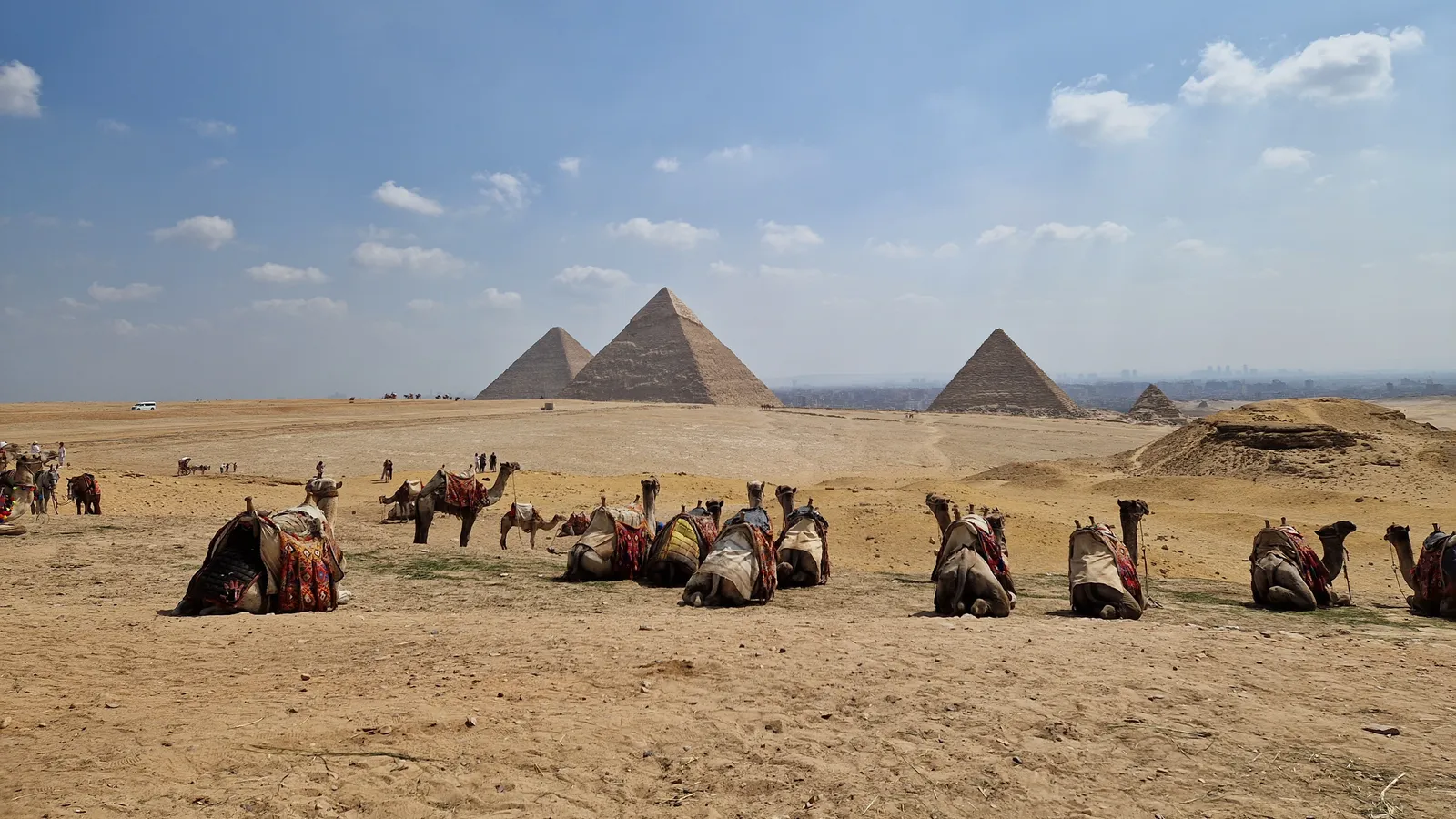
The pyramids are still before us even when the visit is over. From our hotel in Giza, we watch them change with the light until they become dark silhouettes against the sunset sky. Sleeping with that view is one of our loveliest memories of Egypt: being able to look at them again without having to leave straight away.
In September 2023, we put together a journey that suited the way we travel: Cairo and Giza, Luxor, Edfu, Aswan and Abu Simbel, with a few trips out to sea. We expected imposing monuments. What surprised us, visit after visit, was also the attention to detail: an engraved figure, colour surviving on a wall, the proportions of a face. Our guides helped us read those tiny details, the nuances our eyes might otherwise pass over: the position of a hand, a symbol, a figure’s gesture. Through them, we began to recognise ideas about life, power and eternity.
Giza and Cairo: before the stone, within the city
The pyramids of Khufu, Khafre and Menkaure belong to the Fourth Dynasty of the Old Kingdom, more than four thousand years ago. They form parts of funerary complexes: around their great masses stood temples, processional routes and other burials. To understand them, it helps to widen our gaze from each monument to the landscape built for the king and his cult after death. The Giza complex.
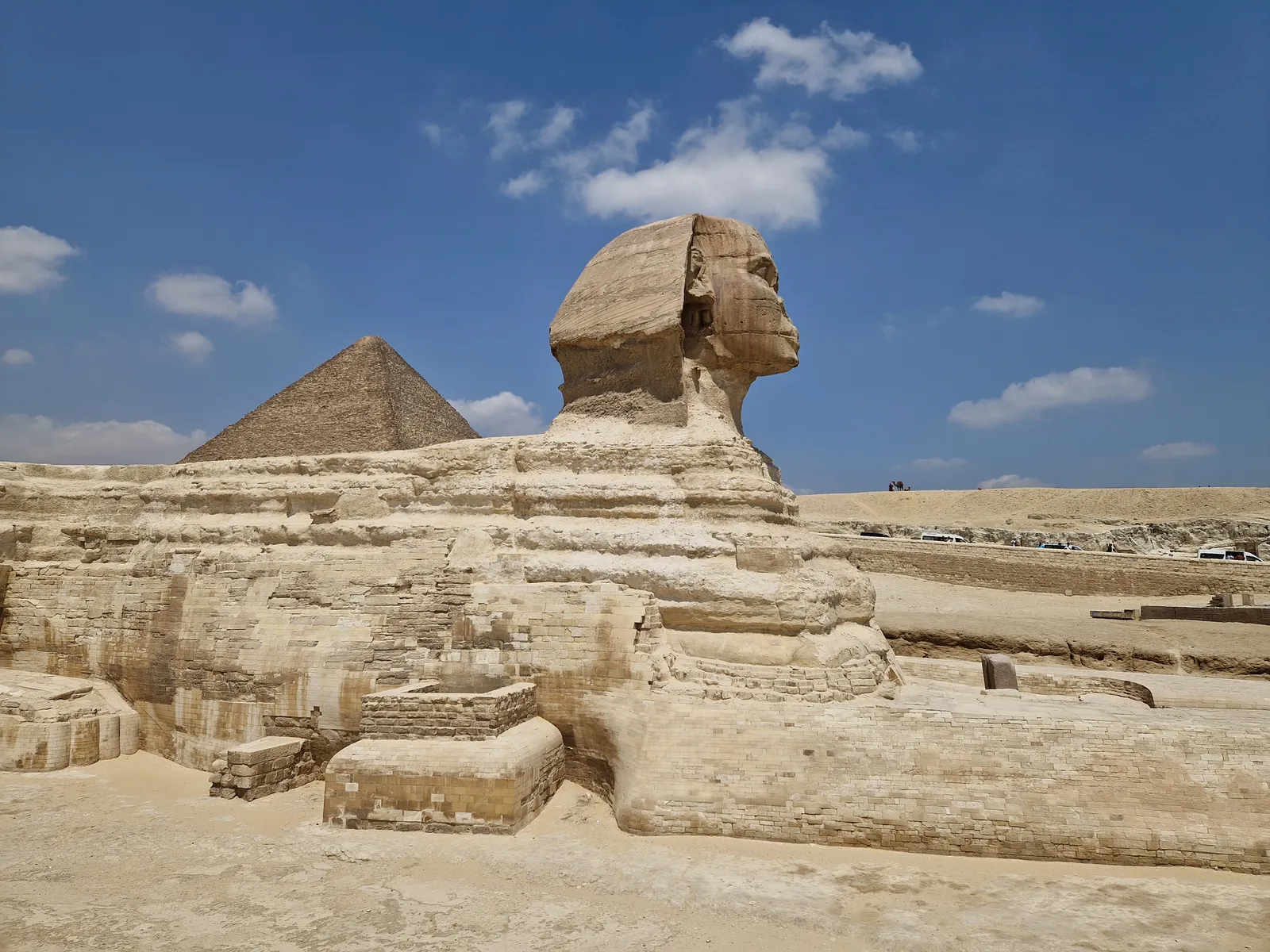
The Sphinx adds a different presence: its lion’s body and human head represent the ruler in his strength. Evidence links it to Khafre’s reign and funerary complex. Its religious role changed over time: in the New Kingdom, it was worshipped as a manifestation of the sun god under the name Horemakhet, “Horus on the Horizon”. The figure we see today therefore also carries centuries of worship and interpretation. About the Sphinx. We had seen those shapes countless times in photographs, but in person our eyes kept travelling up the stone, trying to take in its full height.
Going inside a pyramid surprised us even more. The imposing exterior gave way to a small, narrow, cramped passage: grandeur became the physical sensation of stone close to our bodies. Photographs from outside do not prepare you for that contrast.
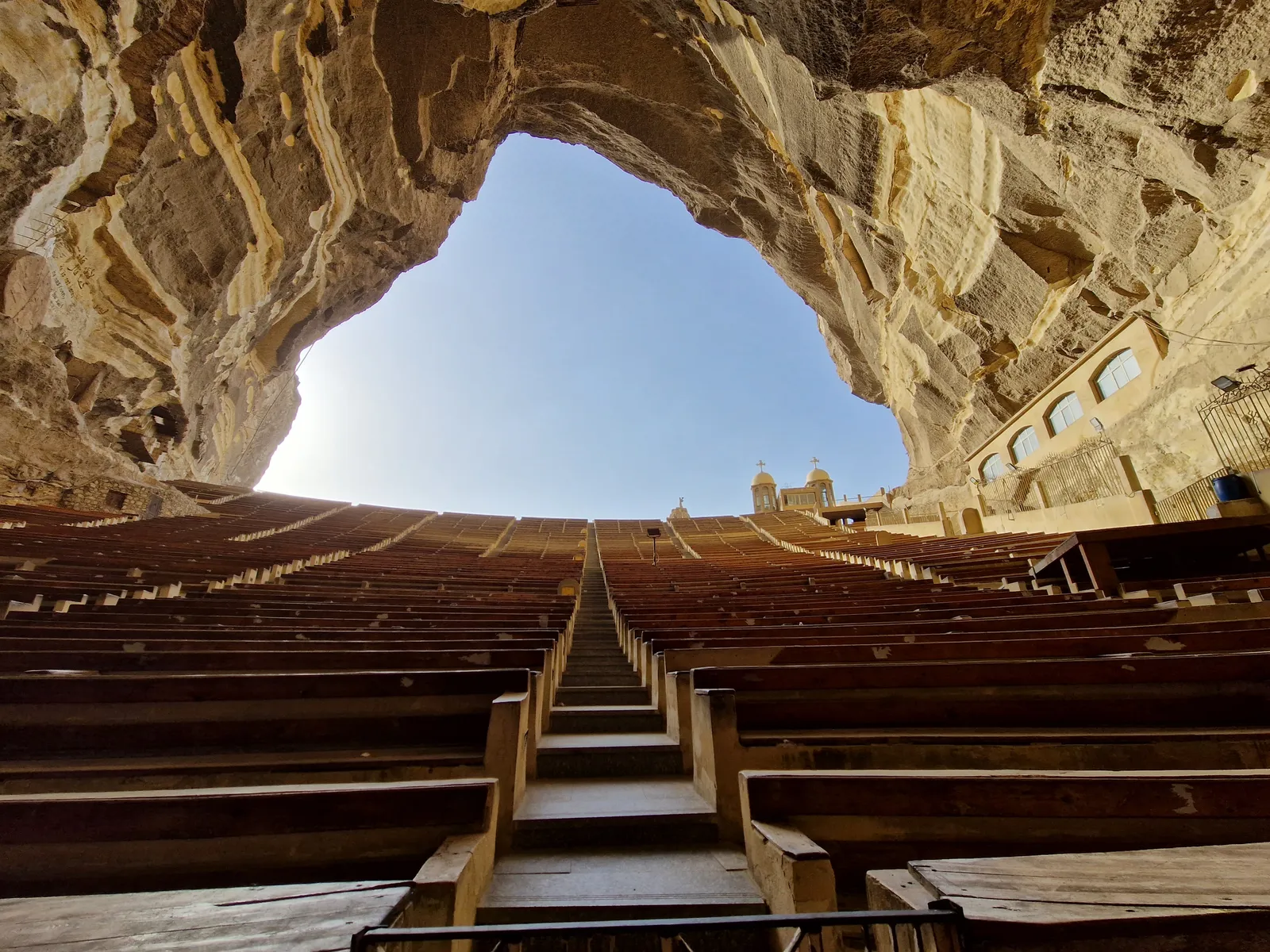
We also enjoyed exploring Cairo as a city. At Mokattam, the church in the St Simon complex opens an astonishing space within the rock: the tiers of seating lead the eye towards the wall, and the mountain itself becomes part of the Coptic community’s place of worship. The Cairo Governorate’s account. It is a visit we would gladly repeat, for the beauty of the place and this different face of the city.
We had not yet hired a car here: we used taxis and Uber. We found a ride up, but our return requests were rejected, and we ended up arranging a much more expensive lift locally. Organising the return journey before setting out would have made everything easier; the difficulty getting back did not take away from the visit.
The route crossed a neighbourhood where materials were collected and sorted alongside homes. Driving through the narrow streets was slow; the smells and the work taking place in plain sight brought us face to face with an everyday life far from our own. The communities of collectors and recyclers known as the zabbaleen play an important role in Cairo’s waste system, also documented by UN-Habitat.
That work supports the city, often under difficult conditions. Passing through the neighbourhood made us reflect on how little we usually see of the services that make our daily lives possible. For anyone visiting Mokattam, consideration begins here: recognising people, homes and workplaces, moving discreetly and asking permission before taking photographs.
Luxor and Edfu: stone preserves gestures and colours
In Luxor, the astonishment continued even when we thought we had grown used to the grandeur. At Karnak, the hypostyle hall of the Temple of Amun has 134 columns: moving closer continually changes what you can see, from the mass of the shafts to the reliefs on their surfaces. The complex grew through the work of many rulers; walking through it means encountering centuries of construction and transformation rather than the work of a single reign. Karnak’s history.
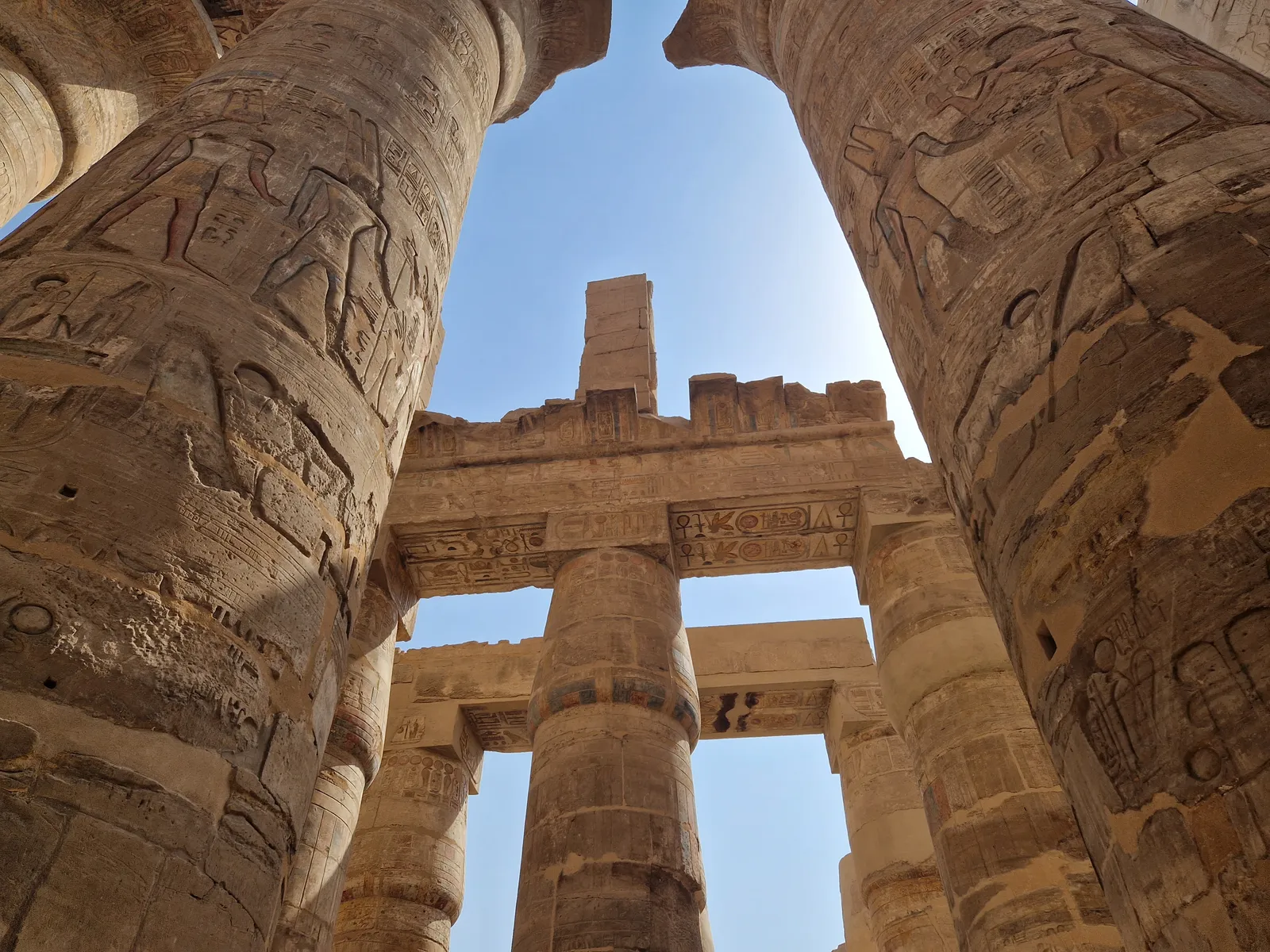
Our guides were especially valuable here. We often travel independently, but in Egypt we were glad to turn to people who could explain names, figures and meanings. A relief stopped being simply a surface to admire: we could follow its story.
In the Valley of the Kings, the landscape is dry, open and dazzling. We remember a day of truly intense heat. Inside the tombs, attention turns instead to colours and figures: walls and ceilings form part of a design in which images and texts accompany the ruler into the afterlife. The kings of the Eighteenth, Nineteenth and Twentieth Dynasties of the New Kingdom were buried here, long after the age of the great pyramids. The Valley of the Kings in context.
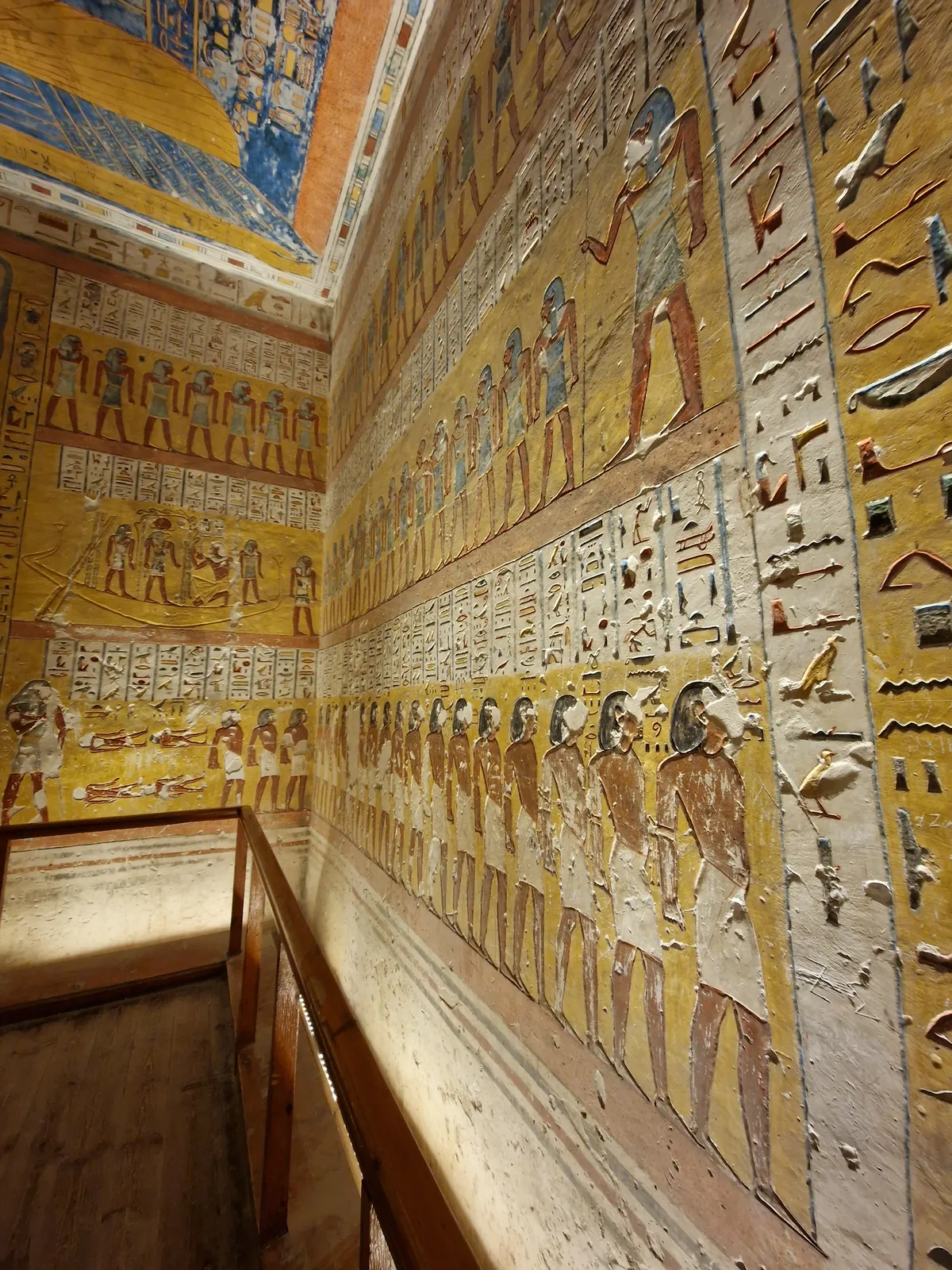
In funerary texts, the world after death is a journey to understand. The Amduat, found in many royal tombs, describes the sun’s nightly voyage: its rebirth offers the deceased a prospect of renewal too. Not all tombs have the same texts or decoration; recognising this variety enriches the visit. An explanation from the Australian Museum.
The discovery of Tutankhamun’s tomb in 1922 also fed the story of the “pharaohs’ curse”, amplified by the press after Lord Carnarvon’s death. Over time, explanations involving toxic substances or microorganisms in the tombs have been proposed; however, no common cause of this kind has been established for the deaths attributed to the curse. A historical study published in the BMJ found no significant association between supposed exposure and survival. The University of Manchester instead traces the role of reporting and speculation in the legend’s emergence.
Edfu takes us into another era again. The Temple of Horus, built in Ptolemaic times, shows how Egyptian religious tradition continued to find expression under a dynasty of Macedonian origin. The great entrance leads into courtyards, columned halls and increasingly inner spaces. Reliefs also depict foundation rituals and the voyage of Horus’s sacred barque with Hathor: the building preserved the gestures and celebrations of worship. Edfu Temple. Pausing to read a scene with our guide helped us give meaning to the precision that kept surprising us.
When organising these visits, we would keep September’s heat firmly in mind: entering during cooler hours where available, carrying water and allowing real breaks between sites. Tomb choices also depend on the day’s programme: the standard ticket and any additional admissions do not necessarily cover the same things. The official monuments portal is the reference to check before buying.
Aswan and Abu Simbel: a shared sunset, then departure in darkness
At Philae, near Aswan, you reach the temple by boat. The water gives the visit a different approach from the great sites on dry land. The complex is primarily associated with the cult of Isis and preserves buildings from different periods. The island hosting it today is Agilkia: the monuments were moved from Philae to save them from rising water. The complex’s history. Edfu and Philae thus remain two distinct memories: the Temple of Horus and the landing on Isis’s island.
In Aswan, there was also a short boat outing suggested by the hotel where we were staying. It was not a long cruise: an aperitif, a table shared with strangers and a little awkwardness at first. Everyone kept to themselves. Then the mood relaxed, people began moving around the boat, and towards sunset we found ourselves outside watching the light on the water. The calm of that moment remains among the first things we would recall.
The landscape turned golden and, aboard the boat, time seemed to leave us a little room to linger.
The next morning, we left for Abu Simbel while it was still night. We had slept little and tried to catch up during the minibus journey. Arriving very early, though, rewarded the tiredness: there were very few people during our visit, and we could linger before the temples with a freedom we still remember.
The colossal figures on the façade of the larger temple represent Ramesses II. The sanctuary was carved into the rock in the thirteenth century BC; beside it, the smaller temple is dedicated to Hathor and Queen Nefertari. The scale of the figures also speaks of the ruler’s power in Nubia. The Abu Simbel site.
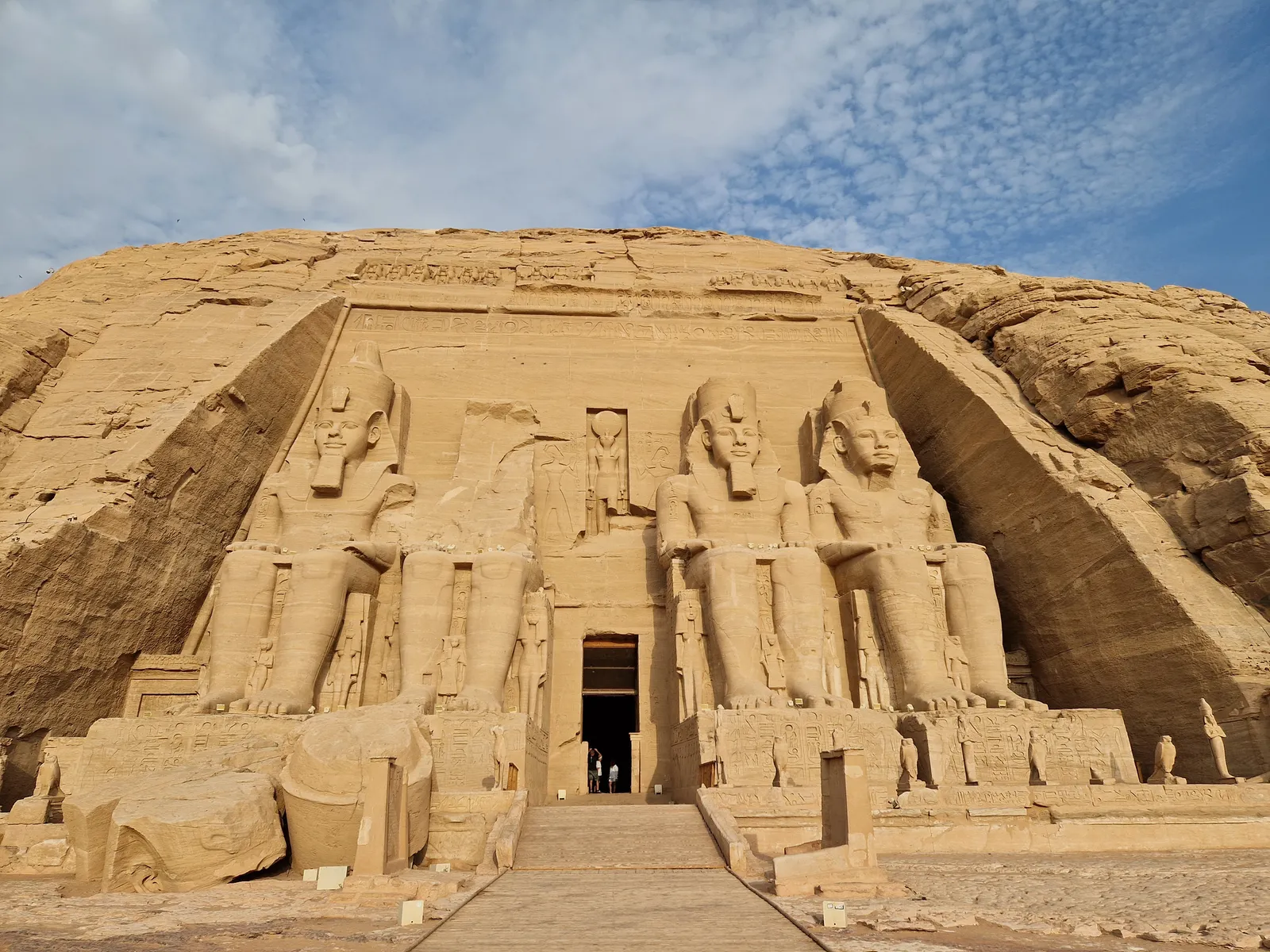
A modern undertaking adds to that ancient wonder. The construction of the Aswan High Dam threatened the temples: they were dismantled and reassembled higher up as part of the international campaign supported by UNESCO. Abu Simbel was inaugurated in its new position in 1968. Knowing that what we see was also rescued and reconstructed changes the visit: alongside the ancient wish to endure comes a contemporary responsibility. UNESCO’s account of the reconstruction. Before leaving Aswan, it is worth agreeing departure time, transfer duration and actual time at the site with the organiser; our uncrowded arrival remains the experience of that day, not a promise attached to a precise hour.
What we bring home
The journey had the right pace for us. We had time to admire the places, listen to explanations and enjoy the aspects of Egypt that had fascinated us. The sea added a different pleasure: at Paradise Island, we remember clear, warm water and an unhurried day with no other plans.
Looking back at the experiences we booked, we realise that the most vivid are those in which the place gave the moment a particular character. In Aswan, for example, the shared sunset on the little boat became part of our memory of the city. In Luxor, we were happy to try a hot-air balloon, but the scenery on our outing and the time spent in flight did not draw us in as much as we had hoped: the desire to fly remains, though we might choose another occasion to repeat it. The boat dinner with a buffet and entertainment in the Cairo area also left a less vivid memory. People were courteous, but the evening never found the ease we so enjoyed on the Nile in Aswan.
We hired the car after the Cairo stop and drove ourselves. Driving habits and traffic required more adaptation than we expected; anyone considering the same choice should weigh it against their driving experience and the alternative of organised transfers. Remembering the independence does not erase the attention it required.
Among the souvenirs that came home with us were a small handmade vase and an alabaster slab with a hieroglyph carved into it. What captivated us most about the stone was its translucency: light could pass through it, giving its surface a delicate glow. The “Egyptian alabaster” used in ancient objects is commonly calcite; the Brooklyn Museum also describes how it was worked. In our objects, we rediscover the pleasure of observing material, its shapes and the way it changes in the light.
At home, that vase is a small reminder of everything we looked at: hands capable of shaping stone, the colours of tombs, carved faces that continue to meet our gaze across the centuries. This is what Egypt has left us: wonder at what has survived and a desire to know more about the people and ideas that created it.
What we would do again, what we would change
We would do it again
- Sleep with a view of the pyramids and choose a route that leaves time to experience and admire every stop.
- Rely on guides to understand the sites’ history and meanings.
- The little sunset outing in Aswan and the overnight departure for Abu Simbel.
We would do it differently
- The boat dinner with a buffet and entertainment: in our case, it was not very engaging.
- The balloon flight specifically in Luxor, given our expectations of scenery and duration.
Egypt in 12 days: the pyramids, the Red Sea and the temples of the Nile: it’s in Explore.
A Daysaway team itinerary, to import into your trips: 12 days, 39 places on the map.
Liked an article? Make it your trip
Plan the days, the places and the budget with Daysaway, on the map, with the help of the assistant.