Twenty-one days to feel small before the Himalayas
Our trek to Everest Base Camp, the quiet of Kala Patthar and the return over the passes, with backpacks on and a few plans to rethink.
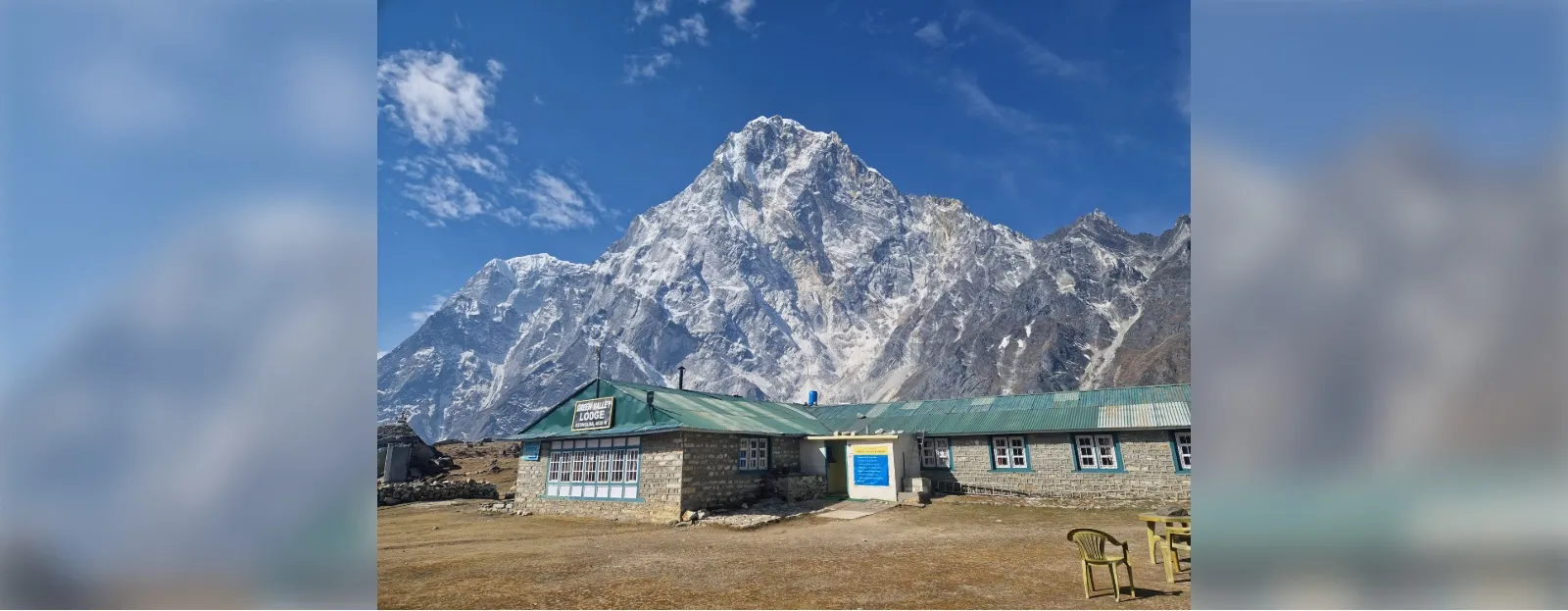
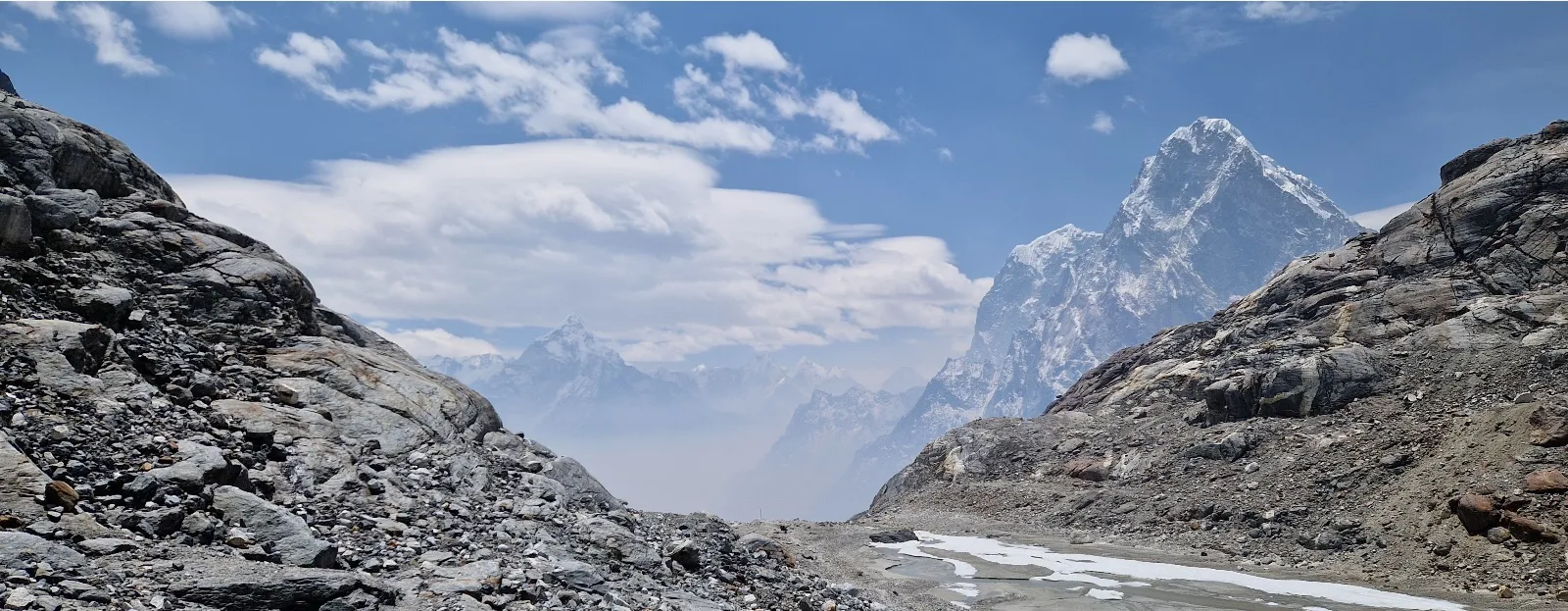
One morning, we stepped out of Green Valley Lodge at first light and found a mountain in front of us. We had seen it the day before, yet that morning it seemed to fill the sky. Wherever we looked, there was this gigantic mountain, so close and imposing that its grandeur made us feel tiny. It was as though someone had brought an enormous photograph towards us until it wrapped around us. A spontaneous “wow” escaped before we could think of anything else. We had been there for days, surrounded by mountains, and they could still surprise us like this.
All that mattered there was you, your kilometres to walk through this boundless natural world.
Between April and May 2024, we spent twenty-one days in Nepal, with Everest Base Camp and the Three Passes circuit in our plans. We had organised the trek ourselves, without a guide or porter, each carrying our own backpack. We expected miles on foot, simple rooms and a few inevitable changes of plan as altitude and bad weather intervened. What surprised us was how much we enjoyed a life made up almost entirely of walking, scenery, dinner and somewhere to sleep.
From Kathmandu to the trails of the Khumbu
The first change of plan came before we had even set foot on the trail. Our booked flight from Kathmandu to Lukla, the small airport where our trek through the Khumbu, the Everest region, would begin, was cancelled because of bad weather. Another couple told us they had already been waiting since the day before. We had some spare days, but wanted to keep them for the trek and the return journey too. So we shared a helicopter and managed to set off.
Once we were walking, the Himalayas revealed themselves gradually. At first there were trees, streams, green trails and long suspension bridges across the valleys. Other trekkers passed, along with people at work and pack animals carrying supplies. On narrow stretches, we stopped to let them through: between backpacks and moving animals, the space needed to be shared with care.
There were people around, of course. Yet for much of the trek we found space of our own. We could slow down, stop to admire the view and set off again at our own pace. We had spent time planning the route and enjoyed experiencing it this way, with the freedom we had hoped for when choosing to travel as a pair.
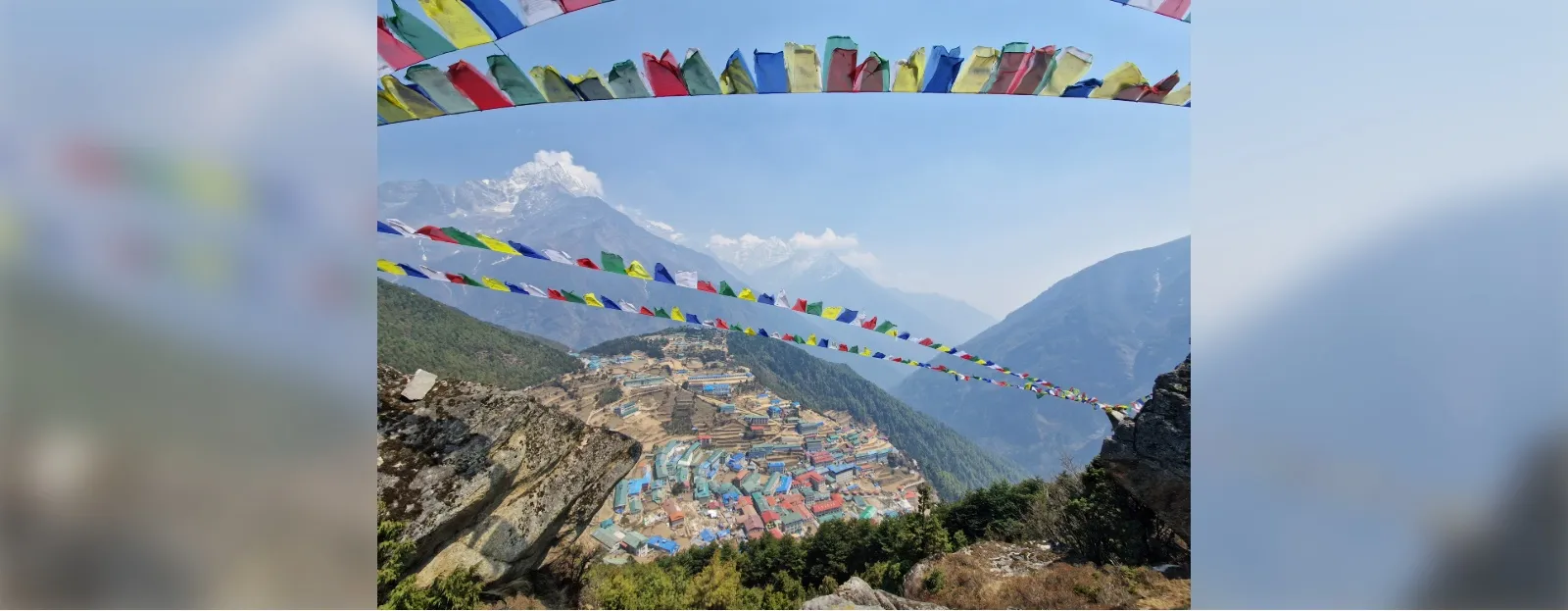
As we climbed, the landscape changed. The greenery thinned and rock and ice took up more and more of the view. Distances began to feel different in our legs too. On our trip, mornings were often clearer; later came clouds, wind and sometimes rain. We tried to set off early to get closer to the next stop before the weather worsened. Reaching the lodge after hours outdoors became a pleasure we were already looking forward to along the way.
Evening soup and the days we stayed put
Dinners are among our fondest memories. After a day of walking, sitting in the communal room with other travellers and waiting for a hot meal felt wonderful. Rice, momo — the filled dumplings of the local cuisine — and even garlic soup. We probably would not have ordered it at home; up there, we really enjoyed it. We cannot say how much hunger had to do with it, but we still remember that soup.
The lodges were as much a part of the experience as the trail. The bedrooms were unheated and we had brought sleeping bags: the available blankets were not always enough. The bottle left beside the bed in the evening felt as though it had come straight from the fridge by morning. Sometimes the water froze in the pipes and nothing came out of the tap. Washing took some adjustment too, with cold water or limited hot water.
Phone reception was poor and connections became harder to find as we climbed. For hours at a time, there was little to check on a screen. After the day’s miles, eating and resting happily filled the time that remained. Comforts were few, but we grew fond of that simplicity. We liked waking up knowing that all we had to do was get ready, pick up our backpacks and walk through such an immense landscape.
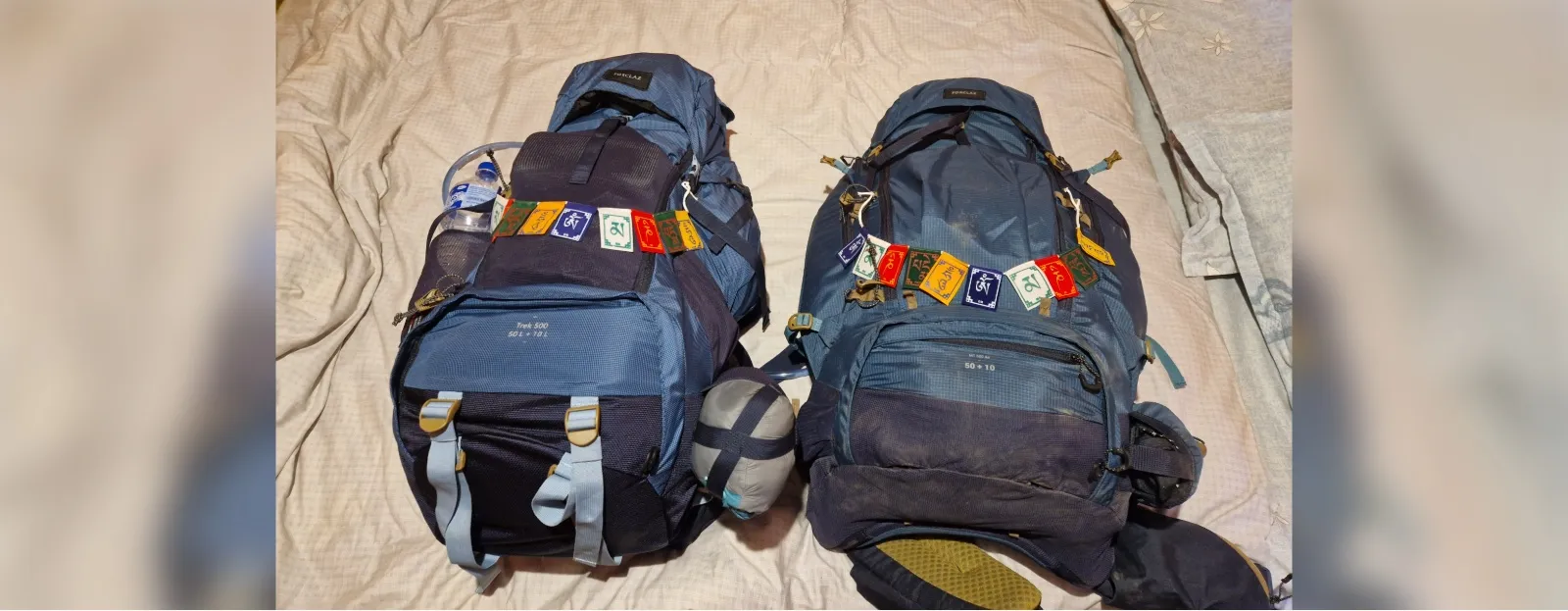
First, though, we had to pack our bags again. The things we used most often needed to stay at the top, within reach; anything we would not need during the day could go underneath. Each morning brought another round of fitting and layering everything in, with one recurring little nightmare: stuffing the sleeping bag back into its sack, then getting it into the backpack. It took up more space than anything else.
Above four thousand metres, however, altitude illness stopped us. There were two of us and the altitude affected us differently: one felt well, the other was weakened. Seeing someone who rarely gets ill and almost never complains feeling so unwell was worrying. We had already spoken to doctors before leaving and brought medication for altitude problems; going through it, far from the familiar routines of home, was still difficult.
We stayed a couple of extra days in the same lodge, hoping more time to acclimatise would help. We did not descend or seek medical assistance there. After rest and the medication we had brought, the condition improved considerably and we resumed the trek. But we had to give up our first planned pass, Renjo La. We were disappointed, but health came first, and we wanted to keep some time for possible delays to our return flight: using up those days could have put our journey home at risk. Renjo La will be an excellent reason to return.
On Kala Patthar, with the sun on our faces
We reached Everest Base Camp, and it was satisfying. But there were so many people. After days when the trail had given us space and quiet, the crowds were noticeable. The moment that stayed with us most deeply came on Kala Patthar, the viewpoint above Gorak Shep looking towards Everest and the mountains around it.
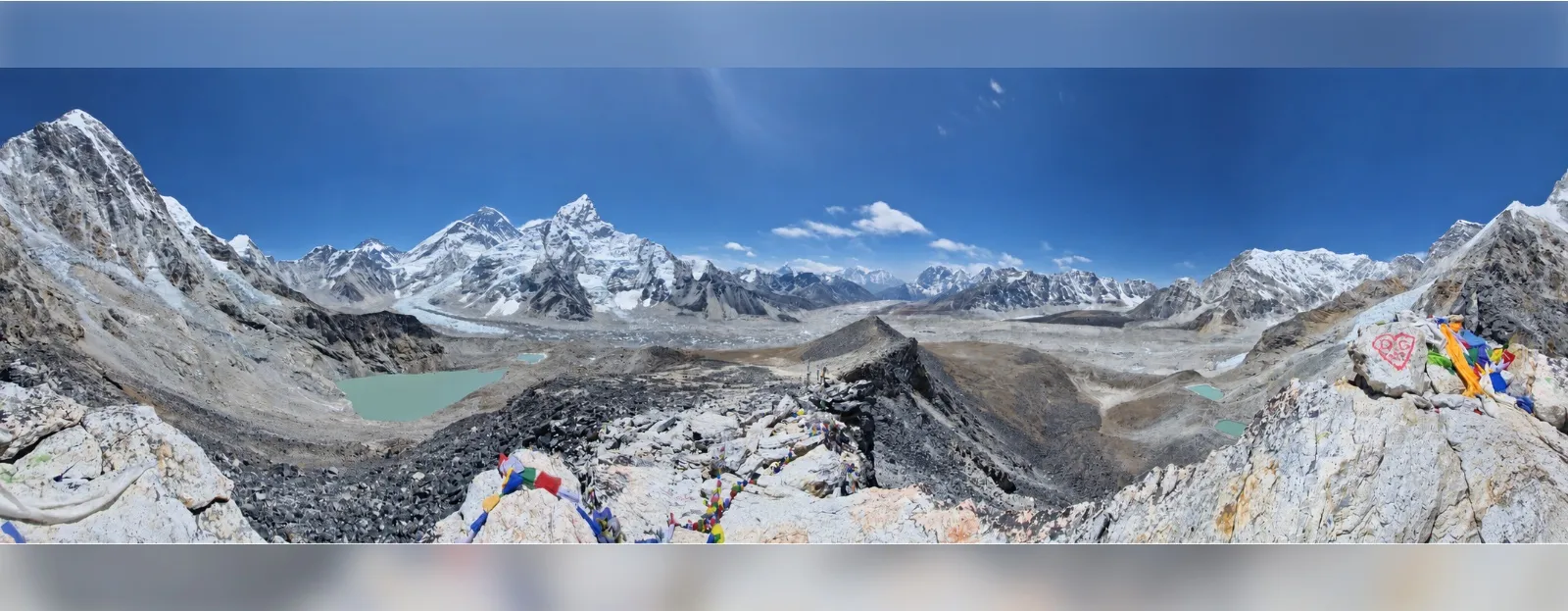
Many people climbed in the dark to see the sunrise. We left early, but when those who had gone in search of the first light were already coming down. We avoided the darkness and the fiercest cold of the hours before the sun. Up there, above five thousand five hundred metres, we found ourselves alone before an immense panorama. Everest was clearly visible, within a sweep of peaks that seemed to surround us on every side.
It was very windy. We were wearing several layers of technical clothing and windproof jackets, with almost all our faces covered. On the little exposed skin, we could feel the warmth of the sun. We ate our Mars and Snickers bars while looking at the mountains. For a while we said little: it felt natural to stay there, absorbed by what lay before us. Later we joked too, looking back on the mishaps and all the plans we had changed to reach that point.
Sunrise must be beautiful from up there. We enjoyed the later light, the sun on our faces and a quiet that was entirely ours. It was the highest point we reached on the trip, and our own legs had brought us there after intense days and some worry. Even now, when we think of Nepal, we often return to that moment.
The return, miniature mountains and the last plane
We crossed two of the circuit’s three passes and completed a loop, returning towards Lukla by a different route from the way up. The plan had lost a pass, but the journey kept giving us new landscapes. Preparing the route had helped; allowing ourselves time to change it had been just as necessary.
We also carried a small daily hesitation with us: water. We had bought a filter to reduce plastic bottles and spending on bottled water during the trek. At first, though, we hardly used it. Fear of an upset stomach and more lost days made us reluctant. We only decided to use it towards the end and, in our case, had no problems. Looking back, we would use the filter we brought sooner and buy fewer bottles.
When choosing equipment, it is worth checking exactly what it treats: filters have different capabilities and many do not remove viruses. The CDC explains how to make water safe during a trek, through boiling or filtration followed by disinfection, depending on the system and the manufacturer’s instructions. Preparing and trying out equipment before leaving also helps you use it more confidently along the way.
We brought home a particular souvenir made from that plastic. During a stop near Namche, we visited a small exhibition space selling models of the mountains made from recycled bottle caps. We bought one: a colourful miniature Himalaya, made from material collected in the region.
It is the Sagarmatha Next project, which continues to offer these objects. Designed by Super Local and produced by moware, the models use bottle caps recovered from trails and the Himalayan region. The centre combines exhibitions with activities dedicated to waste recovery. We liked knowing where that little object came from: it carried the shapes of the mountains and something of the work needed to care for them.
The last adventure was managing to leave Lukla. On the morning of our return, we waited a long time through rain, clear spells and flights starting again. Our plane was the last to take off before the weather worsened again. Instead of reaching Kathmandu, we had to land at another airport; from there, several hours in a minibus still lay ahead. We managed to get back on our last available day, using up the time we had kept for unforeseen events.
Those twenty-one days asked for effort and adaptability. We worried, gave up a pass we wanted to cross, and waited for a body, then the weather, to let us move on. Yet we would go again tomorrow. We miss the pleasure of dinner after a day on foot, mornings facing the mountains, that feeling of having only a few things to do and being completely absorbed in each one. And we miss that wind on Kala Patthar, as we finished our bars and kept looking at the wonder around us, proud of ourselves.
What we would repeat and what we would change
We would do it again
- Climbing Kala Patthar after sunrise: that day brought sunshine and a quiet that stayed with us.
- Keeping spare days for acclimatisation and flights: we needed them on the trek and right up to the last day.
We would do it differently
- Allowing a few more extra days, to try to include Renjo La while keeping some in reserve for the return flight.
- Using the filter we had brought sooner, and buying fewer plastic bottles.
To start picturing the route, explore the Everest Base Camp and Three Passes in twenty-one days itinerary. It includes the full circuit, including Renjo La, which we gave up. Timings and stages need to be adapted to acclimatisation, conditions and the days needed for transport.
The lodges named in the itineraries are suggestions for planning the stages. We found plenty along the route, but with so many trekkers walking, some places were already full. We changed a few plans on the spot too, finding somewhere else when there was no availability or choosing a lodge we liked better. We met people willing to help and left ourselves free to decide where to stay once we arrived.
Everest Base Camp and the Three Passes in 21 days: it’s in Explore.
21 days on the map, to import into your trips.
Liked an article? Make it your trip
Plan the days, the places and the budget with Daysaway, on the map, with the help of the assistant.