Iceland in summer or winter: what do you want to do?
Highlands, puffins, glaciers and the northern lights: two seasons, two ways to travel. The pros and cons of each activity, to help you choose your Iceland.
In summer, Iceland convinces you there is still time for one last walk. Then you look at your watch: it is nearly midnight. In winter the opposite can happen: you have only just started exploring and the light is already fading, but what is left turns the ice into something you can hardly take your eyes off.
They are two different trips, down to the things you can do. The Highlands and puffins tip the choice towards summer; the northern lights and some natural ice caves towards the cold months. Glaciers, on the other hand, deserve a section of their own: they do not go on holiday when June arrives.
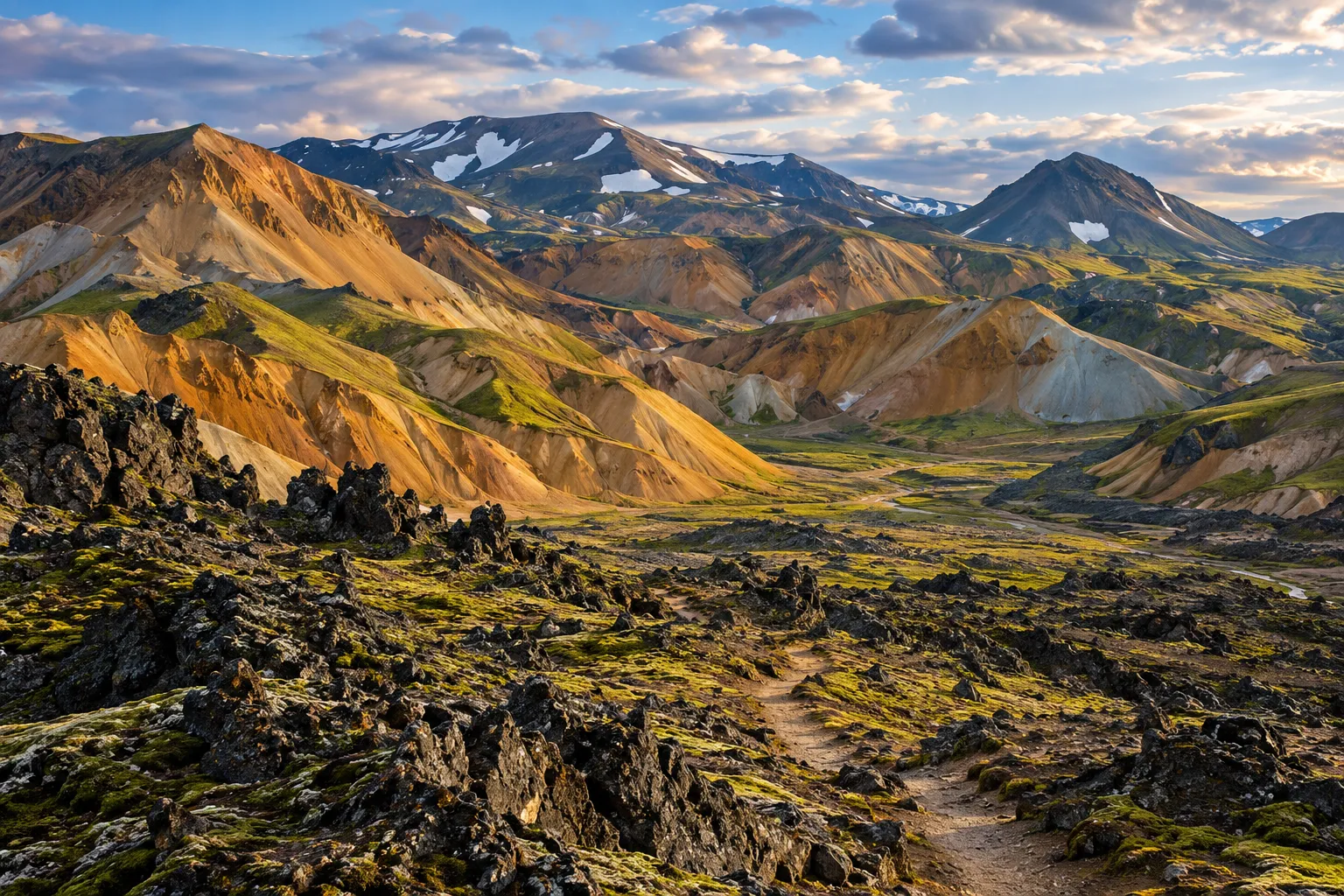
Summer (June–August) · Explore further
Highlands, treks, puffins and endless days. More freedom to get around, with no promise of good weather.
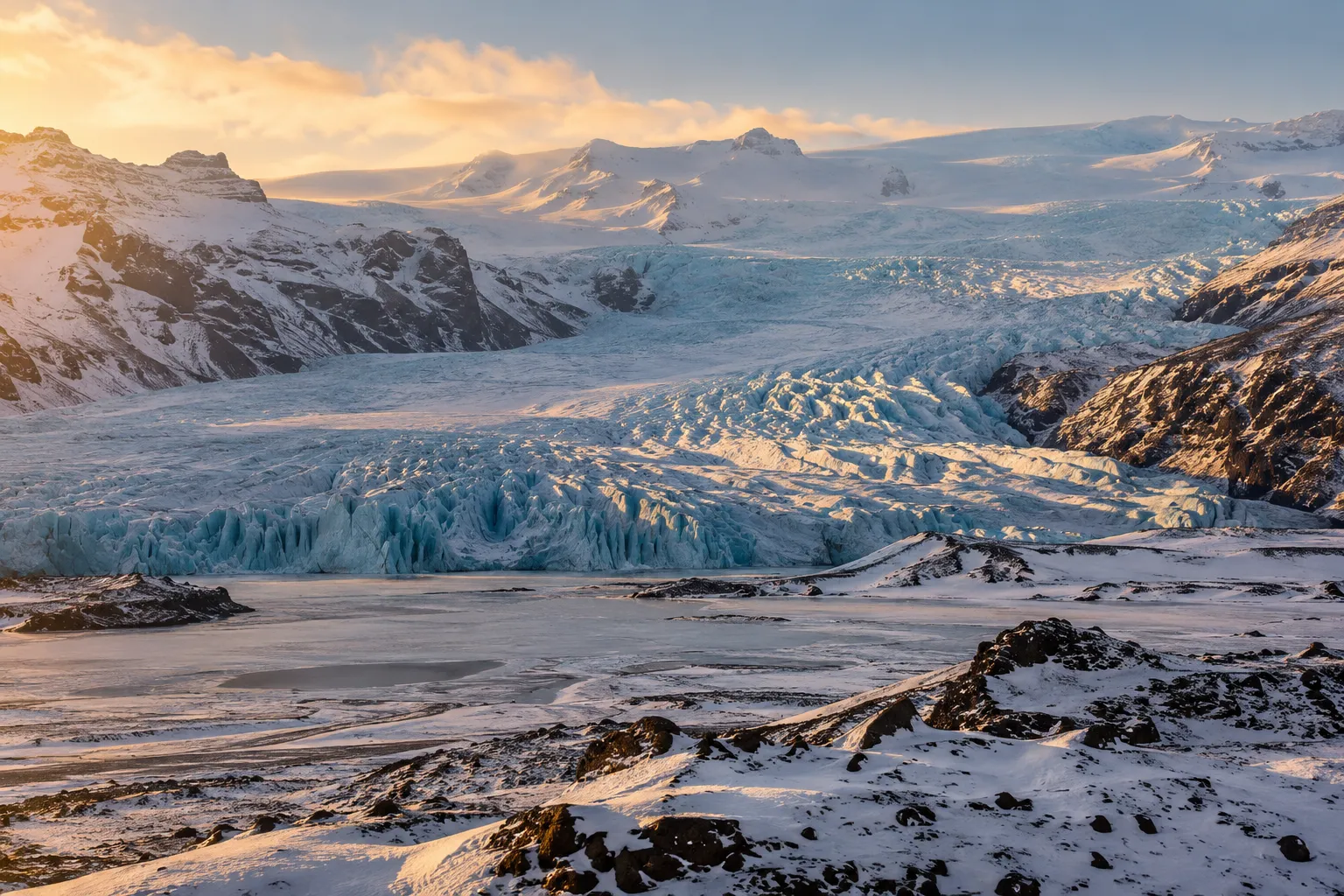
Winter (December–February) · Pick a few big experiences
Snowy landscapes, ice and nights spent chasing the northern lights. A more compact trip, with room to change plans.
The verdict, in 30 seconds
Choose summer if you want to hike and see more of Iceland
The activities you dream of are treks in the Highlands, cliffs full of puffins, boat trips and a road trip with more hours of daylight. For a first independent trip with plenty of driving, it is the season we would recommend most readily.
Choose winter if ice and the northern lights drive your choice
You would rather focus the trip on a few areas, pick guided tours on the ice and keep a few evenings free for the northern lights. You accept short days and possible cancellations, without measuring your holiday by the kilometres covered.
Highlands and trekking: summer opens up the landscape
If you picture mountains in mineral colours, lava fields and trails through the interior, you are thinking of the Highlands. Landmannalaugar is one of the most recognisable images of this summer Iceland: Visit Iceland's July guide puts its rhyolite mountains and hikes front and centre.
The summer advantage is access, but “summer” does not mean every road is open on 1 June. The Icelandic Road Administration explains that snow, thaw and wet ground decide when roads open. Check the specific road, the right vehicle and the conditions at the time; an organised tour can spare you from handling difficult access on your own.
Long treks have a precise season too: for the Laugavegur, Ferðafélag Íslands usually gives late June to early September. In winter the same route is not simply the snowy version of a summer walk: in this comparison, the point goes to summer. Its downside is that you still have to build the plan around the openings, not just around your holidays.
Puffins: if you want to see them, the month matters
With puffins the choice is clearer. They come back to the coast to nest and spend most of the year at sea. Visit Iceland gives May to mid-August as the best window, with arrivals and departures that vary.
Dyrhólaey, the Vestmannaeyjar islands and other colonies let you fit birdwatching into your trip; Visit South Iceland describes the viewpoints along the south coast. There is no need to turn the encounter into an expedition, but do not take it for granted during a very quick stop either.
Summer pros: you can combine birds, coast and walks. Cons: late August may be too late for what you have in mind. If they are a priority, June and July are a more sensible choice than chasing the last departures. Watch them from the permitted paths and at a distance: their burrows make some cliff edges fragile.
Glaciers: spectacular in both seasons
Winter can make the glacial landscape feel even vaster and more enveloping: snow on the hills, cold tones and low light put the ice centre stage. It is the appeal we would go for if what you want most is a trip with a wintry atmosphere.
But you do not need to wait for winter to walk on a glacier. Visit Iceland describes glacier hikes and ice climbing all year round, always with trained guides. Access, routes and departures depend on conditions: choose the experience by difficulty and length, not just by the photo.
In summer the contrast between ice, rock and the surrounding landscape offers a different kind of beauty, plus more daylight to combine the tour with other stops. In winter the practical limit is the time available between transfers and activities. Our verdict on glaciers is a draw: winter wins for those who want that particular atmosphere, summer for those who want to fit them into a broader trip.
Ice caves: the difference that really matters
Going inside a natural cave is a different experience from walking on the surface of a glacier. Many of the caves visited in the Vatnajökull area are tied to the cold months: meltwater carves passages that guides assess season by season. The Visit Vatnajökull guide explains how it works.
The winter advantage is being able to include these explorations in your trip. The downside is that a natural cave is not a fixed attraction: it can change, become inaccessible or be replaced by another route.
Avoid the blanket rule “every ice cave is open only in winter”, though: places and experiences differ. Visit Iceland's overview distinguishes several areas and stresses how variable conditions are. Before booking, ask whether the tour is a natural cave, a man-made tunnel or a glacier walk, and how it handles cancellations. They are not equivalent experiences, even when the pictures look alike.
Summer light or northern lights: two wishes that do not overlap
Around the summer solstice the evenings go on and on. In Reykjavík the sun dips briefly below the horizon, leaving a glow that lasts through the night: the special light described by Visit Reykjavík. You can spread your visits out more freely, but your body still needs to sleep. An eye mask may turn out more useful than yet another camera accessory.
In winter the day shrinks a lot: around the December solstice Reykjavík gets just over four hours of daylight between sunrise and sunset, according to the city's guide to the light. So March should not be planned like December.
The northern lights need darkness, a reasonably clear sky and auroral activity. Visit South Iceland points mainly to September–April, with possible sightings even earlier once the dark returns. It is a chance, never a confirmed booking. If it is your main wish, choose the dark season, but build a trip you will enjoy even if the clouds decide to join you every night.
Whales and lagoons: summer widens your options
Whale watching does not disappear in winter. Visit Reykjavík gives a main season from April to October, with departures in the cold months too. The choice depends on the harbour, the operator and the sea conditions; the animals guarantee no appointment in any season.
For boat trips among the icebergs, though, the calendar matters more: the Jökulsárlón lagoon operator usually runs from early May to October, weather and ice permitting. Seeing the lagoon from the shore is a different experience and does not mean the boats are running.
Summer pros: you can more easily combine wildlife, coast and boat trips. Cons: the most popular activities still need booking and may be cancelled. Winter pros: some trips still run and the landscape changes completely; do check availability, though, rather than copying the summer plan.
Getting around and weather: the pace changes, not just the jacket
For an independent trip, summer generally gives you more leeway, mostly thanks to the light and seasonal access. It is still an Icelandic summer: cool, windy and changeable, as Visit Iceland's summer guide reminds you. A waterproof and layers are needed even when the calendar says July.
In winter, snow, ice, wind and closures can turn a simple transfer into a day you have to rethink. SafeTravel recommends experience of winter conditions and flexible plans; it also makes clear that a 4×4 does not remove the risk of sliding on ice.
This is how we would choose: in summer you can plan a longer itinerary, still leaving some slack. In winter, pick fewer bases and a few important activities, with time to move them by a day. If driving in those conditions worries you, consider organised tours: giving up the wheel does not mean giving up Iceland.
Budget and breaks: compare the whole trip
On cost, we would not promise that one season always wins. Compare flights, accommodation, transport and above all the activities you really want to do: a winter trip with more guided tours can balance out differently from a summer one with lots of independent hiking. It also matters what you can reschedule, and on what terms.
Then leave room for breaks. A hot soak after wind and rain makes sense in both seasons; for us the contrast with the winter air adds charm, while in summer it is nice not to have to rush back before dark. Reykjavík, its cafés and a quiet dinner also deserve a place in the plan, without having to be the backup for something more spectacular.
Point by point
| Point | Summer (June–August) · Explore further | Winter (December–February) · Pick a few big experiences |
|---|---|---|
| Highlands and trekking | The season to go for, checking roads and trails. (better option) | Not the usual alternative to summer trekking. |
| Puffins | Seasonal colonies; best not to leave it to late August. (better option) | Not the season to see them in the colonies. |
| Glacier hikes | Possible with a guide and the right conditions. | Possible with a guide; a more wintry atmosphere. |
| Natural ice caves | Availability to check case by case, without generalising. | The choice for many seasonal experiences at Vatnajökull. (better option) |
| Northern lights | The brightest nights are not suitable. | Darkness helps; sky and activity remain decisive. (better option) |
| Hours to explore | Very long days around the solstice. (better option) | Few hours in December; varies a lot by month. |
| Whales | Main season, with several departure options. | Tours in some places, to be checked. |
| Boats at Jökulsárlón | Operating season, within weather and ice limits. (better option) | Do not assume they run: check the service dates. |
| Self-drive | Generally more leeway in daylight and access. (better option) | Requires experience and more flexibility. |
| Atmosphere | Mineral colours, green and endless evenings. | Snow, ice and low light: a different charm. |
| Overall cost | Compare transport, accommodation and activities on real dates. | Also factor in guided tours and cancellation terms. |
Highlighted, the better answer for that point; no highlight: a draw.
A starting point for Iceland in summer: it’s in Explore.
Discover the team's itinerary through the Highlands, the Ring Road and the Westfjords. A base for the summer season, to adapt to openings and your dates.
Choose the experiences first, then the season
Write down the three things you would really hate to miss. If the Highlands, trekking and puffins are on the list, the answer is summer. If you write the northern lights, a natural ice cave and winter landscapes, choose the cold months and accept a more flexible plan. If at the top you simply put “see a glacier”, both options are still open.
For a first road trip we would more readily recommend summer. For those who dream of ice and prefer a few intense experiences to a long list of stops, winter may be the happier choice.
Both have their charm; they do not have to fight over the same trip. What matters is not booking one season while expecting the activities of the other. Puffins, for example, do not stay on the cliff just because we have already bought our ticket.
Liked an article? Make it your trip
Plan the days, the places and the budget with Daysaway, on the map, with the help of the assistant.