Japan in spring or autumn: cherry blossom or autumn leaves?
Cherry blossom or red maples? Weather, crowds, costs and the small pleasures of both seasons, to help you choose the trip that's most like you.
Some people see a photo of an avenue covered in cherry blossom and have already decided when to go. Then along comes a picture of a temple framed by red maples, and suddenly spring no longer seems the only answer.
Japan offers two different shows: sakura, the cherry blossom, and the autumn foliage, called koyo. Which to choose depends on what you want to experience, how flexible your holidays are and how far you're willing to chase nature. Because nature, unfortunately, doesn't read flight confirmations.
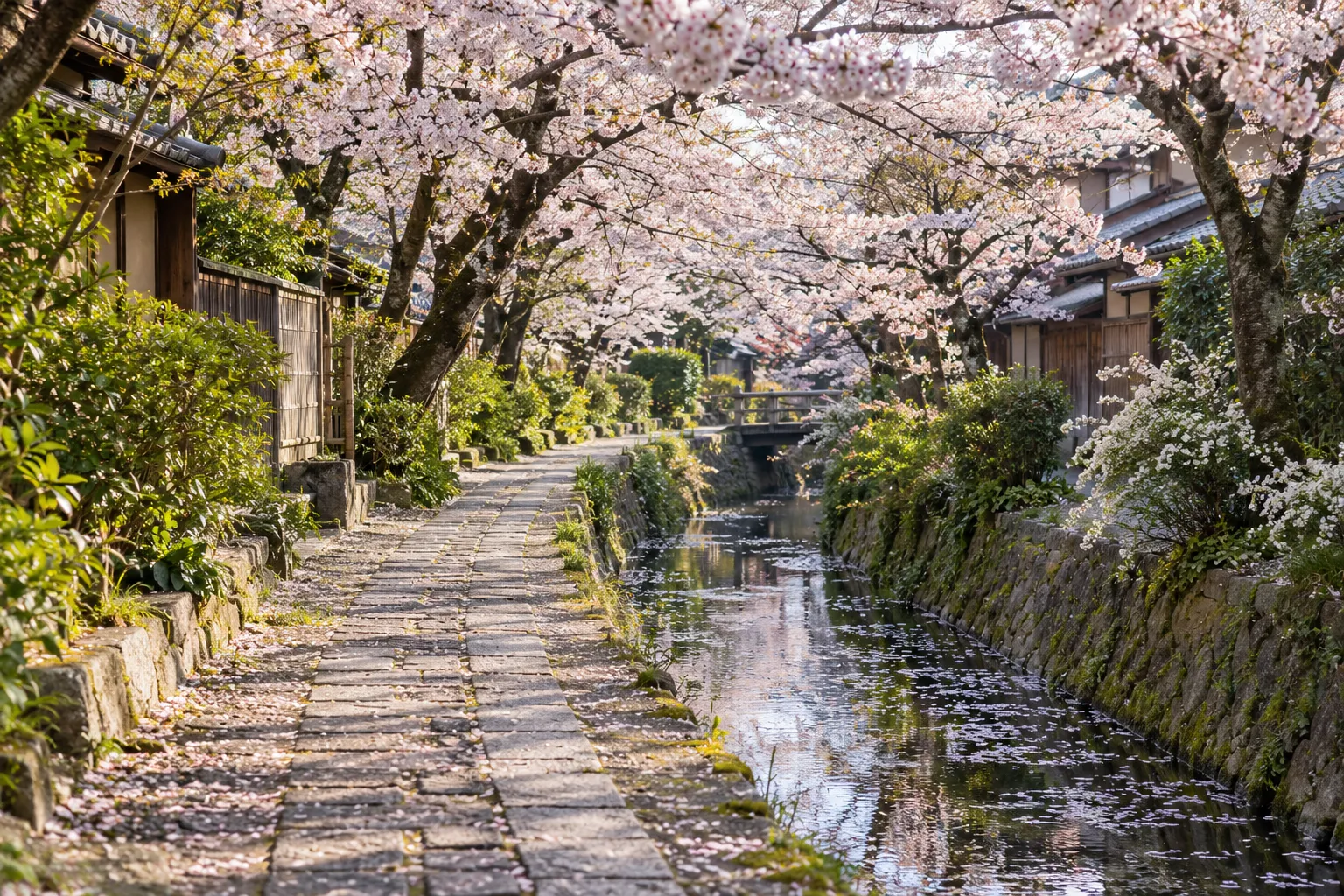
Spring (March–May) · Sakura
Delicate blossom, hanami and lengthening days. A beautiful date in the calendar, with a short window.
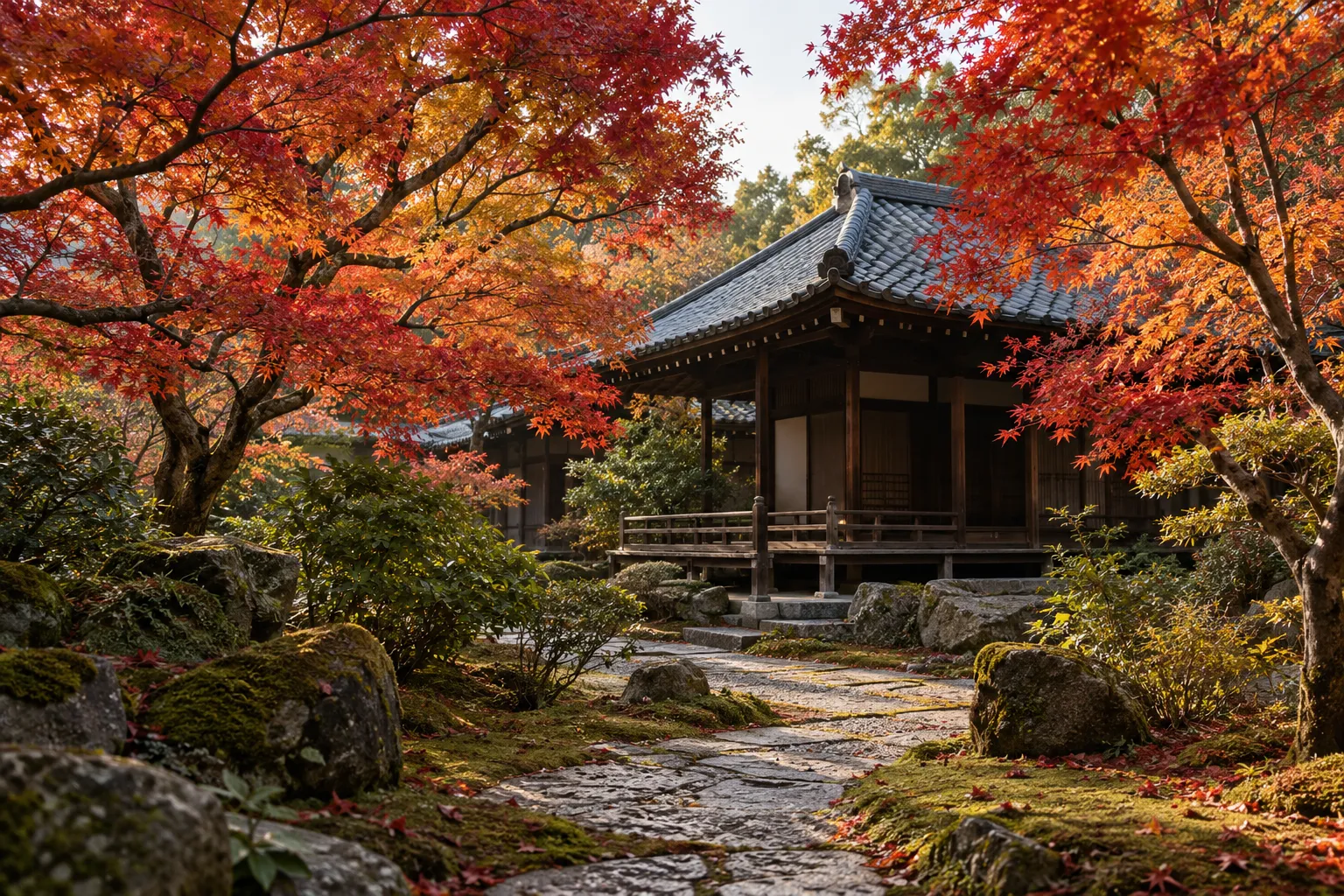
Autumn (September–November) · Autumn leaves
Red maples, golden ginkgo and gardens to explore. More leeway on the colours, fewer hours of daylight.
The verdict, in 30 seconds
Choose spring if it's the cherry blossom you dream of
Hanami is the reason you want to go to Japan: you accept the uncertainty of the blossom and would happily book that trip even without the perfect peak. You want to stroll under the flowers and have longer afternoons.
Choose autumn if you want colour with more leeway
You're drawn to gardens, woods, seasonal food and evenings in hot springs. You'd rather have an itinerary that depends less on a few days of full bloom, and you're happy to choose the region to fit your dates. Without expecting empty temples or ever-lower prices.
When to go: choose the region first
For Tokyo, Kyoto and Osaka, the spring benchmark is generally between late March and early April. Moving towards Tohoku and Hokkaido, the season arrives later, between April and early May. Early and late varieties widen the options: not every cherry tree follows the same calendar. These are seasonal indications, not guaranteed appointments; check JNTO's sakura updates for the year you travel.
In autumn the movement is reversed: the colours start in the north and at altitude, then move south and down to the plains. In Hokkaido and the mountain areas they can begin in September; for many parts of Tohoku and the mountains of Honshu, October is what counts most. In Tokyo the indicative period runs from mid-November to early December; in Kyoto many spots are at their best between November and early December, with differences even within the same area. Compare the Tokyo benchmarks and the Kyoto Prefecture calendar.
The advantage: both seasons let you look for the show in different regions. The limit: a good deal for Tokyo in October doesn't automatically include red maples. If your holidays are fixed, choose the dates first and then the area.
How long does the magic last?
Spring has a particular intensity precisely because it passes so quickly. In Tokyo, about a week to ten days normally pass between the first flowers opening and full bloom; then the weather can speed up the falling of the petals. “First bloom” and “full bloom” are not the same thing. The official Tokyo guide helps you tell varieties and periods apart.
The autumn colours are spread across different trees, species and altitudes: they often leave you more chances of finding beautiful colours during the same trip. That doesn't mean a single maple stays perfect for a month, or that the peak can be predicted months ahead. JNTO describes a national season stretching from late September to early December in its guide to autumn colours.
Our take: if the idea of “arriving too late” bothers you, autumn generally gives you more leeway. If, instead, you love waiting for something fleeting, that's exactly where sakura become irresistible.
Weather and packing: no season promises sunshine
Spring can bring pleasant walks and still-cold evenings. Autumn covers both almost summery days and jacket mornings: September, October and November are not interchangeable.
A concrete example: in the Japan Meteorological Agency's climate averages for Tokyo, March has a mean temperature of 9.4 °C, April 14.3 °C, October 18 °C and November 12.5 °C. These are monthly means, not daytime highs or forecasts. In the same series October is wetter than November: “dry autumn” is an oversimplification.
Typhoons can also affect early autumn: JMA statistics show frequent approaches in September, still present in October and falling off in November. To compare with the cherry blossom in the classic cities, weigh up late March–April against November above all, not spring against autumn in general. Layers, a jacket and a plan for rain work in both.
Crowds and budget: autumn is no secret trick
Hanami makes parks and walks very popular, and accommodation in the most sought-after places needs booking well ahead. Autumn has its own crowd-pullers: Kyoto counts both seasons among its most pleasant and popular times in its introduction to the seasons. Don't set off thinking you'll have the garden to yourself.
Watch out for Golden Week too, between late April and early May: it's one of the main domestic travel periods, as JNTO points out. It doesn't automatically coincide with the sakura in Tokyo or Kyoto, but it can overlap with spring in the north.
On budget, we don't hand out a win on paper. Flights and rooms depend on your departure airport, the city, public holidays and how far ahead you book; without comparing like-for-like quotes, “autumn is cheaper” remains a hypothesis. The strategy is to check the cost of the whole trip over two real windows, go for flexible cancellation when it's worth it, and visit the most popular places on weekdays or at opening time.
The atmosphere: a picnic or a walk among the maples?
Hanami is also a way of being together: sitting under the cherry trees and enjoying the season. That's spring's big plus, especially if you like watching life in the parks. The Japan Information & Culture Center of the Embassy of Japan describes this custom and its link to a time of new beginnings. For a picnic, always follow the rules of the place: not every garden allows it.
In autumn, momijigari, the search for coloured leaves, invites you to look at landscapes, trails and gardens. Red maples and yellow ginkgo change the scene and the way you photograph it. Choose spring if you want that particular celebration of flowers; autumn if what draws you most is contrasts, woods and architecture among the colours. These are preferences, not a beauty ranking.
Daylight hours, walks and evenings in the onsen
Spring has a practical advantage: compared with the autumn-leaf period in the main cities, it gives you more daylight for sightseeing. In November darkness falls early: the Tokyo sun calendar makes it clear. Put gardens and walks in the first part of the day, leaving neighbourhoods, restaurants and any evening openings actually scheduled for the evening.
For us, autumn scores points if you picture a hot bath in an onsen after a cool day; spring if you want to make your walks last without constantly checking your watch. For mountain hiking, though, you need to choose the trail: mild cities don't mean accessible heights. And if your goal is to reach the summit of Fuji, neither of the two classic windows is the right one: check the official climbing season, which is in summer.
At the table, the trip changes
In spring you can look out for bamboo shoots and green flavours, as well as sweets linked to the blossom: the Kyoto Prefecture food guide describes takenoko and other local early produce. It's a good chance to go beyond the pink product you see in shop windows.
Autumn brings chestnuts, mushrooms and harvest dishes, described by JNTO in its guide to seasonal flavours; in Tokyo you'll also find sweet potatoes and pumpkin among the products of the season. If you love these flavours, autumn may become your deciding factor. Availability and menus remain regional: sushi, luckily, doesn't make this choice for you on its own.
Point by point
| Point | Spring (March–May) · Sakura | Autumn (September–November) · Autumn leaves |
|---|---|---|
| Dreaming of cherry blossom | Hanami and blossom: it's the right season. (better option) | Maples and ginkgo; they don't replace sakura. |
| Leeway on colours | Short peak, more sensitive to when you arrive. | Usually more chances across species, altitudes and places. (better option) |
| Light in the cities | Longer afternoons between late March and April. (better option) | Shorter days in the November period. |
| Weather | Mild at times, with cold and rain possible. | Depends on the month; November differs from September. |
| Crowds | The famous hanami spots are in high demand. | The famous autumn-leaf spots are in high demand. |
| Budget | To compare on your chosen dates and cities. | No guaranteed saving compared with spring. |
| Photography | Pale flowers, petals and scenes in the parks. | Red and golden contrasts among gardens and woods. |
| Seasonal food | Shoots and spring sweets. | Chestnuts, mushrooms and harvest flavours. |
Highlighted, the better answer for that point; no highlight: a draw.
An itinerary to start from: it’s in Explore.
Open the Daysaway team's 20-day trip to Japan: a base to adapt to your dates and to the season you choose.
Northern Japan in autumn: it’s in Explore.
Ten days of onsen, temples and foxes: the Daysaway team's itinerary for exploring northern Japan in autumn, to adapt to your dates and pace.
The question that settles it
Imagine coming home without having seen the landscape exactly as in the photo that convinced you to go. Would the rest of the trip still make you happy?
If the cherry blossom is the wish you've been carrying around for years, choose spring and keep a few days flexible, without turning every move into a chase. If you're after a mix of gardens, colours, good food and cool days, we'd choose autumn, matching dates and region carefully. For a first trip, both work: what matters is building it around what you like.
And if the doubt really won't go away, there's a very rigorous solution: book two trips to Japan, one in spring and one in autumn. It's not indecision. It's just that a proper comparison needs both tests.
Liked an article? Make it your trip
Plan the days, the places and the budget with Daysaway, on the map, with the help of the assistant.