When to visit Lisbon: the city’s changing light
Alfama’s hills, June festivities and days beside the Tagus: choosing a month for a first visit, with time to pause along the way.
In 30 seconds
For a first trip between neighbourhoods, viewpoints and the riverfront, we choose April–May or September–October. June is particularly appealing for Santo António’s festivities, with crowds and noise as part of the experience. November to February still offer museums, music and walks between brighter spells; in July and August, keep the middle of the day lighter.
- Jan12°Good
- Feb13°Good
- Mar15°Good
- Apr16°Ideal
- May19°Ideal
- Jun22°Ideal
- Jul23°Good
- Aug24°Good
- Sept22°Ideal
- Oct19°Ideal
- Nov15°Good
- Dec12°Good
IdealGoodLess suited· average temperatures in Lisbon · Instituto Geofísico
Month by month
January – March12–15°
GoodJanuary 12°
- Weather: Cool, possible rain
- Crowds: Low
- Prices: Lower, except at New Year
Not to miss: Museu do Fado and Chiado’s cafés
February 13°
- Weather: Cool and changeable
- Crowds: Low, except on long weekends
- Prices: Often lower
Not to miss: Walks between brighter spells
March 15°
- Weather: Milder days, rain
- Crowds: Increasing
- Prices: Vary around Easter
Not to miss: Belém and the riverfront
April – June16–22°
IdealApril 16°
- Weather: Mild, still some showers
- Crowds: Moderate to high; Easter peaks
- Prices: Medium to high
Not to miss: Alfama and viewpoints on foot
May 19°
- Weather: Mild or warm, cool evenings
- Crowds: High at classic sights
- Prices: Medium to high
Not to miss: Terraces and hill walks
June 22°
- Weather: Generally dry and warm
- Crowds: High; very high at festivities
- Prices: High, especially 12–13 June
Not to miss: Santo António neighbourhood parties
July – August23–24°
GoodJuly 23°
- Weather: Warm, little rain
- Crowds: High
- Prices: High
Not to miss: Early viewpoints and outdoor evenings
August 24°
- Weather: Hot, possible heatwaves
- Crowds: High on tourist routes
- Prices: High
Not to miss: Mornings by the river and indoor breaks
September – October19–22°
IdealSeptember 22°
- Weather: Still warm, cooler evenings
- Crowds: High
- Prices: Medium to high
Not to miss: Neighbourhoods and terraces in late afternoon
October 19°
- Weather: Mild, increasing rain
- Crowds: Moderate, with busy days
- Prices: Variable
Not to miss: Riverfront on dry days
November – December12–15°
GoodNovember 15°
- Weather: Wetter, cool air
- Crowds: Generally lower
- Prices: Often lower
Not to miss: Fado, museums and pastry shops
December 12°
- Weather: Cool, rain and short days
- Crowds: Variable; holiday peaks
- Prices: Rising over the holidays
Not to miss: City-centre lights and musical evenings
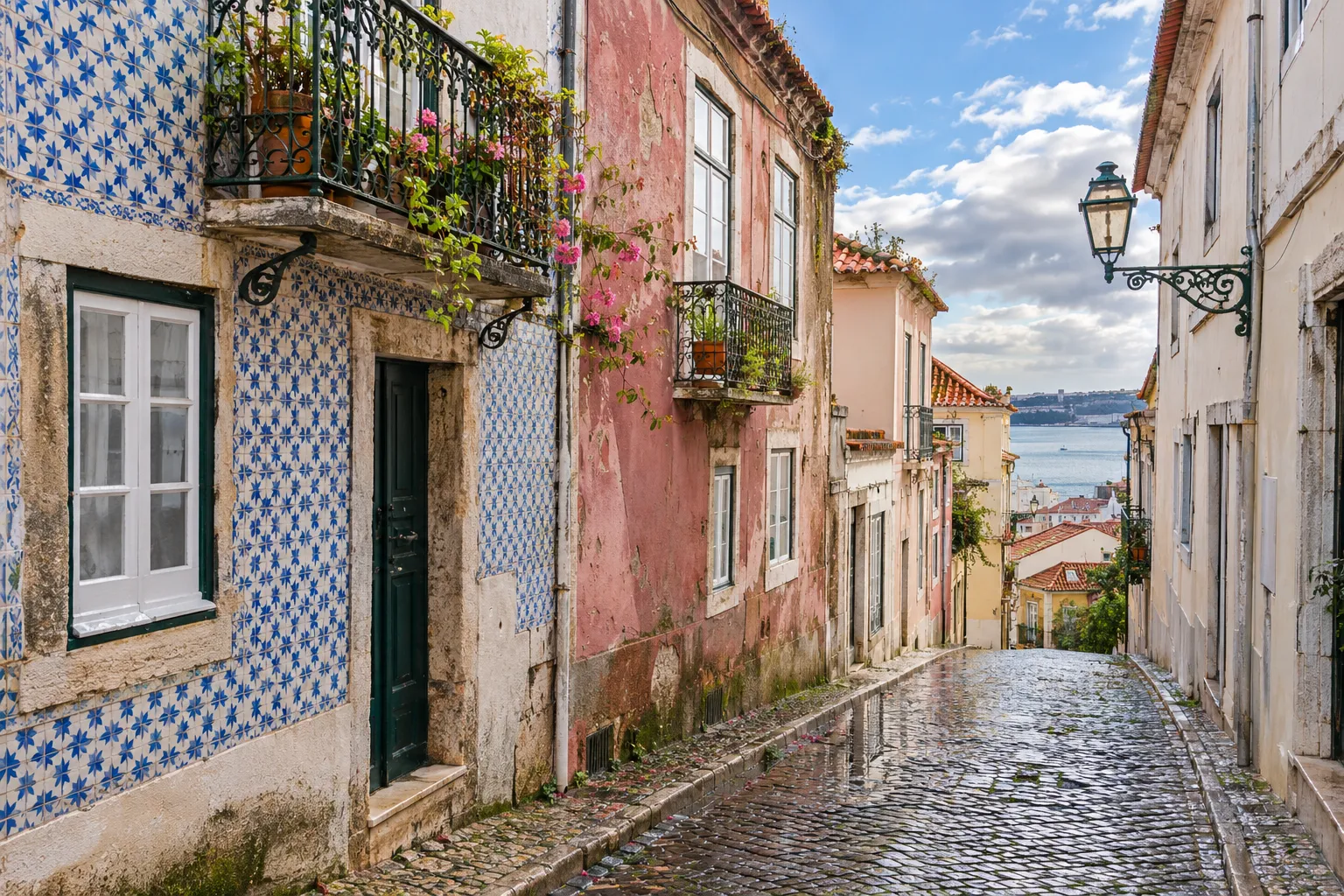
In Lisbon, looking out over Alfama shows how much a trip revolves around time outside: rooftops overlap all the way to the Tagus, a tiled wall catches the light, and the next street starts climbing again. Mild temperatures make walking between neighbourhoods and stopping at viewpoints along the way more enjoyable.
The calendar covers the city and a stay spent mainly on foot, with indoor visits too. Temperatures are rounded monthly means from the Lisboa/Instituto Geofísico station, taken from the IPMA 1991–2020 normals: they include day and night, so do not indicate afternoon heat. Crowds and prices are seasonal pointers, especially for accommodation, and vary with festivities, long weekends and booking.
April–May and September–October: Lisbon on foot
For a first visit, these periods offer a good balance between days outside and pauses in the neighbourhoods. April can alternate sunshine and showers; May tends to be warmer. September often remains hot, while the chance of rain increases in October. A light jacket is still useful in the evening and beside the river.
The miradouros are the city’s viewpoints, terraces overlooking hills or water. Santa Luzia deserves a stop for its azulejos too, the decorated ceramic tiles that frame the view here. Alfama, the neighbourhood of lanes beneath the castle, involves climbs, steps and frequent detours. If you prefer fewer slopes, spend more time on Belém’s much flatter riverfront.
The difference matters when choosing accommodation too: an address that looks close on the map may be considerably higher up. Shoes with good grip help on the calçada, the small-stone paving patterned along the pavements. Holidays can fill the city in April and May; pleasant though September and October are, they do not automatically mean quiet streets or cheap rooms.
June: the streets become a celebration
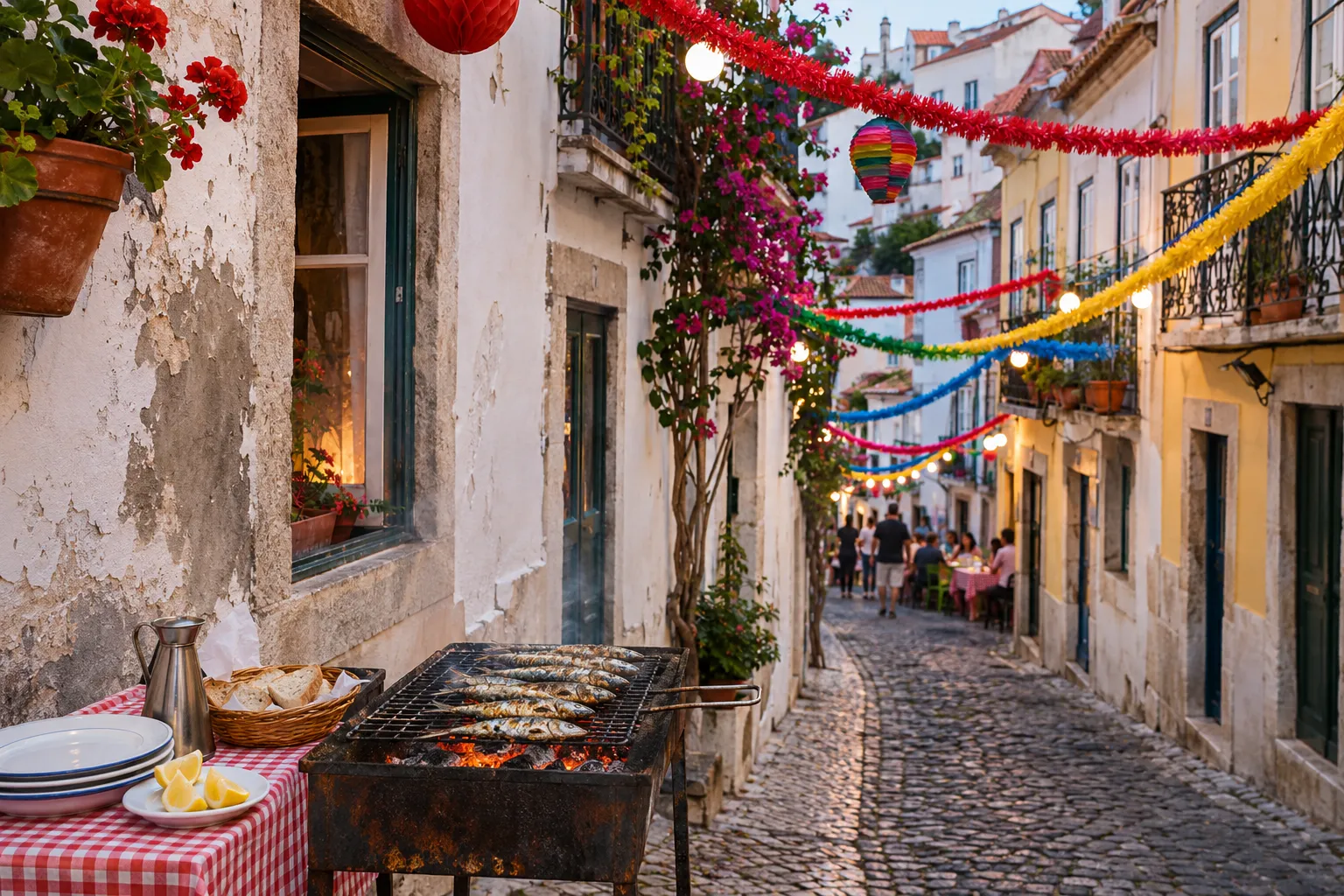
June has its own reason to travel. During the Festas de Lisboa, the city’s June celebrations, streets and little squares fill with music, dancing and outdoor tables amid colourful decorations and grilled sardines. These neighbourhood parties are called arraiais. This is a Lisbon to enjoy particularly in the evening, when a walk can continue from one small square to the next. The night of 12–13 June is the best-known moment of the celebrations honouring Santo António.
The marchas populares, parades in which neighbourhoods take part with costumes and choreography, bring the festivities to Avenida da Liberdade. At the neighbourhood parties, you can eat, listen to music and dance in the streets. These are different experiences: the official Festas de Lisboa programme helps you choose where to spend the evening. Check individual concert dates and admission arrangements for the year of your trip.
Staying nearby can be convenient if you want to join in; if you want rest, accommodation directly overlooking the celebrations may be noisy. Avoid an overly full programme that afternoon. June is ideal for this encounter with the city, but it involves a clear choice: livelier streets and less peace in the neighbourhoods taking part.
July–August: the river, shade and long days
In the summer months of July and August, the city lends itself to outdoor evenings and late walks. Midday can be tiring on exposed slopes, which is why we rate these as good months with some adjustments. A morning in the lanes, an indoor visit after lunch and a return to the river in late afternoon make a more pleasant combination than a whole day in the hills.
Belém offers a change of perspective, with more open spaces and the broad Tagus. If you enjoy wandering among façades and small shops instead, set out early and let the longest break coincide with the heat. Being close to the Atlantic does not guarantee swimming conditions: a day in the city and a day on the coast’s beaches have different requirements.
Sintra also needs separate consideration. Its palaces and gardens sit in the hills west of Lisbon, where it can be cooler, damper or foggier. Check tickets and access on the Parques de Sintra website: adverse weather and fire risk can affect opening. Before setting out for Sintra, check the local forecast: its hills may be cool and foggy even when Lisbon is sunny.
November–March: brighter spells and evenings of fado
From November to March, rain and shorter days make plans less predictable. Lisbon still works well for a weekend combining walks and indoor places. After a shower, patterns in the paving reflect the façades; on steep stretches, slow down and wear suitable shoes. Bring a hooded waterproof jacket, useful when wind makes an umbrella difficult to use.
For an introduction to the city’s musical history, visit the Museu do Fado in Alfama, with recordings, performers and instruments. Fado is a singing tradition connected with Lisbon and its stories, often accompanied by the Portuguese guitar. The visit can prepare you for an evening of live music: when choosing a venue, check whether it offers dinner, a show alone or a drinks requirement, and book the experience you want.
New Year, Christmas and long weekends can increase demand in these months too. March brings more opportunities for walking, but remains changeable. If you mainly want terraces and long days outdoors, April and May are an easier choice; if you enjoy cafés, music and pauses in the neighbourhoods, there is plenty in a Lisbon dotted with umbrellas too.
From Lisbon to Sintra, then towards Porto: it’s in Explore.
The official eight-day Portugal itinerary spends its first stages in Lisbon and Sintra before continuing towards Porto and the Douro. Its June dates include Santo António’s night.

Liked an article? Make it your trip
Plan the days, the places and the budget with Daysaway, on the map, with the help of the assistant.