Rio Carnival: the journey begins with the rhythm
A samba school's story, the work behind the floats, music filling the street. And the information to choose where to experience Carnival in 2027.
In this guide
In 30 seconds
- Samba schools bring a collective story to the Sapucaí: music, costumes and floats develop the same theme.
- In 2027, the Special Group parades on 7, 8 and 9 February; the champions return on 13 February.
- The grandstands help you see the whole picture, frisas bring you closer to the parade route; in the blocos, the celebrations take shape in the streets.
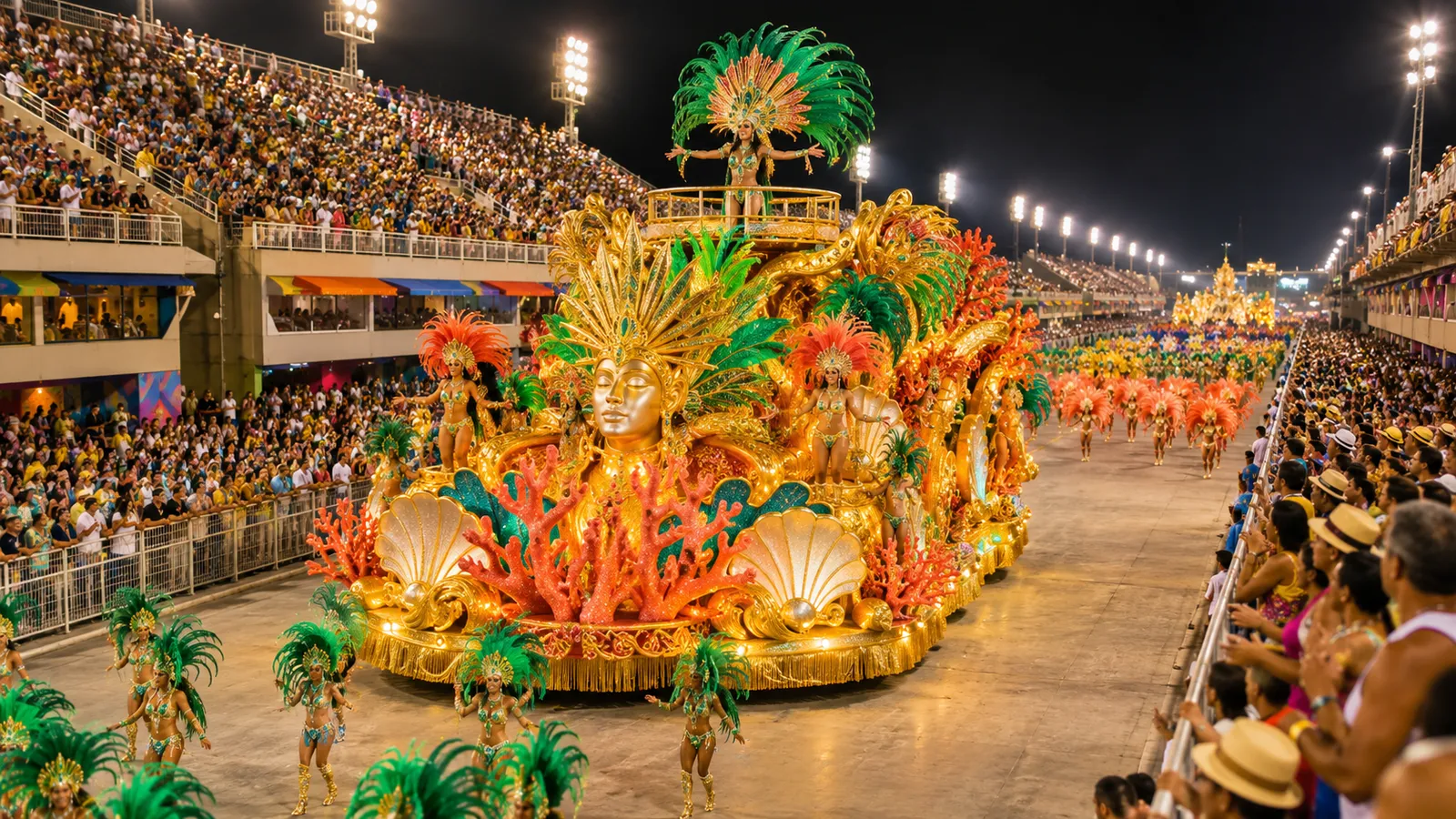
A flag spins, opens and stretches out again. Behind it come rows of costumes in the same colour; further on, a float continues the story with figures as tall as a building. The song returns, sung by those parading and by those who know it in the stands. To follow Rio Carnival, you can start here: ask what all these people are telling together.
We in the Daysaway team have not yet experienced it. While preparing this article, we looked for what we would want to know before leaving: recognising a school, understanding a flag's role, choosing somewhere to watch. Because the desire to go also grows when that spectacle starts to have meaning.
Before the Sapucaí, the courtyards and neighbourhoods
Rio's samba took shape in working-class communities between the late 19th and early 20th centuries. The homes of women known as tias baianas, many originally from Bahia, were important meeting places in this history. Music, conviviality and support networks found space in courtyards and gatherings: to understand samba, you also need to look at those who make coming together possible.
The Fundação Joaquim Nabuco traces this passage from Bahia to Rio and recalls the first official schools' competition, in 1932, organised by the newspaper Mundo Sportivo. That history predates by decades the arena we now associate with Carnival. The Fundação Joaquim Nabuco's account.
IPHAN distinguishes three strands of Rio samba: partido-alto, also linked to improvisation; samba de terreiro, to the life of courtyards and schools; and samba-enredo, to the parade's theme. Their recognition as Brazilian cultural heritage safeguards knowledge and ways of being together passed between generations. The intangible heritage described by IPHAN.
How to read a school on parade
The enredo is the narrative thread: it may explore a historical event, a figure, a social theme or a symbolic world. The samba-enredo gives it words and melody; costumes and floats make its stages visible. The alas, groups of participants in coordinated costumes, let the story unfold through images.
Try finding a school's synopsis and listening to its samba before your trip. When a colour, character or recurring figure appears, you will have something to recognise. You do not need to translate every line: knowing the theme already changes what catches your eye.
The bateria is the percussion ensemble that sustains the rhythm. The mestre-sala and porta-bandeira present the school's flag through a ceremonial dance: it is worth following their movements as well as their costumes. At the beginning of the parade, the comissão de frente introduces the school with a choreographed presentation. The jury assesses these elements alongside, among others, the enredo, costumes and samba: behind the emotion is also a competition requiring preparation and precision. The criteria listed by LIESA.
The Sambadrome night begins long beforehand
In the Cidade do Samba, the Special Group's barracões house the making of floats and costumes. Thinking about that work helps you pause over the details: a glittering surface, a structure that must move, an outfit repeated across an entire ala. What passes before the audience brings together months of preparation. Carnival's places described by Riotur.
The Sambadrome, designed by Oscar Niemeyer and opened in 1984, gave the parades a permanent home. The parade route runs for around 700 metres, towards Praça da Apoteose, between stands on either side. A float passes before you, while other parts of the school fill the route: where you watch from changes how much of the whole you can grasp. The Sapucaí according to Riotur.
Where to sit: the whole picture or the details?
From the arquibancadas, the grandstands, the raised position lets you follow the movement of the alas and the sequence of floats. It is the view we would choose to read a school's story. In ordinary grandstands, a ticket does not mean a numbered seat: distinguish the category you are buying.
The frisas are seating areas closer to the parade route; row A is right beside it. From there, costumes, expressions and float craftsmanship fill your view, while your viewpoint remains lower. For 2027, LIESA has put six-person frisas on sale: when comparing an offer, check whether the price covers the whole space or one seat resold within it.
The cadeiras individuais in sector 12, by contrast, are numbered seats. Camarotes are spaces with their own packages and services: food or entertainment may be included, but you also need to check the actual position from which you see the parade. LIESA's announcement on 2027 categories distinguishes grandstands, individual seats and frisas; the league's FAQ helps explain the layout.
| Seating | What it offers | Before buying |
|---|---|---|
| Arquibancadas | A raised view of alas and floats | Category, sector and whether seats are numbered |
| Frisas | Proximity to participants and details | Row; the whole space or a single seat |
| Cadeiras individuais · sector 12 | A numbered seat | Position on the parade route map |
| Camarotes | Parade views and package services | Actual view, services and operator's conditions |
When the music takes to the streets
In the blocos, the distance between listener and participant shrinks. The procession and audience share the same neighbourhood, among people dancing, following the music or stopping at the edges. The celebration works on another scale: you can focus on a group of percussionists, a refrain, whatever is happening nearby.
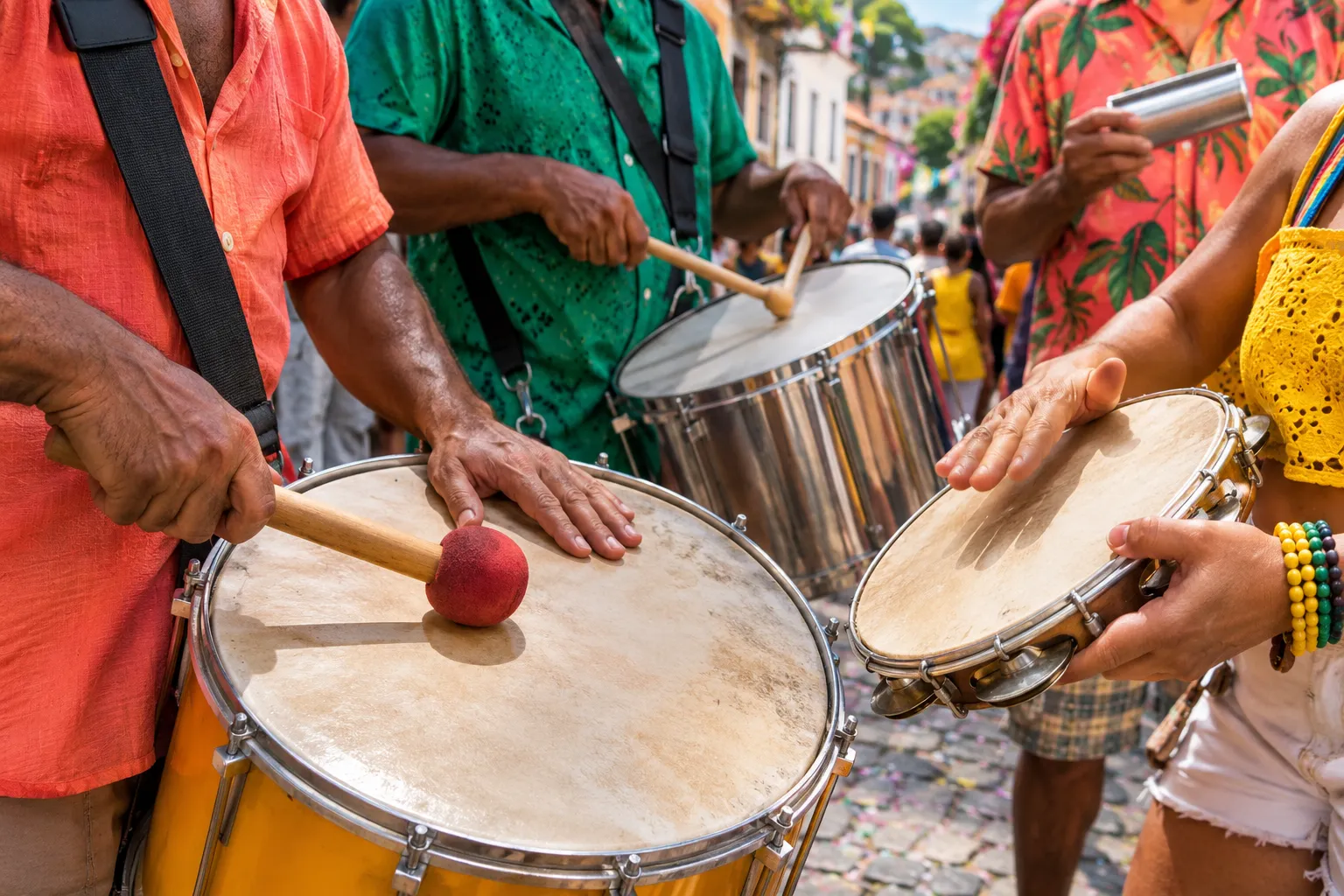
Choosing a bloco also means choosing its repertoire, time and scale. The best known can attract enormous crowds; a smaller event may leave more room to listen and move. The street calendar has its own days and routes, including around the parade dates: for 2027, you need the updated programme, rather than reusing 2026 times.
Water, light clothing and sun protection help on hot days. Riotur also recommends agreeing a meeting point with friends and checking road closures: details to sort out beforehand, so you can stay immersed in the celebrations. Riotur's advice for blocos.
The 2027 dates and a programme with breathing room
The Special Group parades on 7, 8 and 9 February 2027. 13 February is the Sábado das Campeãs: the participating schools depend on the competition results. To see a particular school, start with the competition nights and their running order. LIESA's calendar and the announcement on the 2027 nights.
For a first trip, we would build the stay around one night at the Sapucaí, leaving the following day at a slower pace. A bloco on another day would let us discover the street celebrations too. Choose accommodation with transport to both events in mind: the neighbourhood where you sleep is not necessarily where you will spend your evenings.
- Choose the night and school you want to follow; listen to the samba and find the enredo synopsis.
- Buy through LIESA's official links and check the category, sector and admission arrangements.
- For 2027 frisas, also check the instructions on pulseiras, the admission wristbands.
- Compare the route to your sector: Riotur lists Praça Onze for even-numbered sectors and Central do Brasil for odd-numbered ones; recheck the 2027 transport plan.
- Spread parades, blocos and sightseeing across different days, allowing time to return and rest.
We would love to arrive in Rio with a song already in our heads and discover what happens when thousands around us sing it. That is where we would begin: with a school to get to know, a night to look forward to and enough time to let ourselves be drawn in.
Frequent questions
Can visitors parade with a school?
Some schools offer ways for visitors to participate, but buying an audience ticket is not enough. Contact the school or an authorised channel to find out about the costume, rehearsals and commitments required.
Can you discover samba outside the competition nights?
Schools publish activities and rehearsals with their own admission conditions. The quadras, the schools' headquarters, can offer opportunities to hear music and get to know the scene; consult the individual association's calendar.
How do you choose with children or accessibility needs?
Check the requirements of the event and ticket category before buying. Ask about access, seating and facilities; also consider noise, the length of the evening and opportunities for breaks.

Liked an article? Make it your trip
Plan the days, the places and the budget with Daysaway, on the map, with the help of the assistant.