Salkantay or Inca Trail: which trek is right for you?
High mountains, archaeological sites, altitude and nights on the trail: two different ways to reach Machu Picchu. How to choose the one that suits your trip.
Some trips are about how to get there. This one is about how you want to walk before you arrive. Salkantay and the Inca Trail both lead to Machu Picchu, but they can leave very different memories: a snow-capped mountain filling the whole horizon, or an ancient stone staircase disappearing into the forest.
We compare the five-day Salkantay and the classic four-day Inca Trail. They are two common formats, not two identical programmes for every operator: stages, overnight stays and transfers need reading in detail. There are also short versions and combined routes, which change the comparison quite a lot.
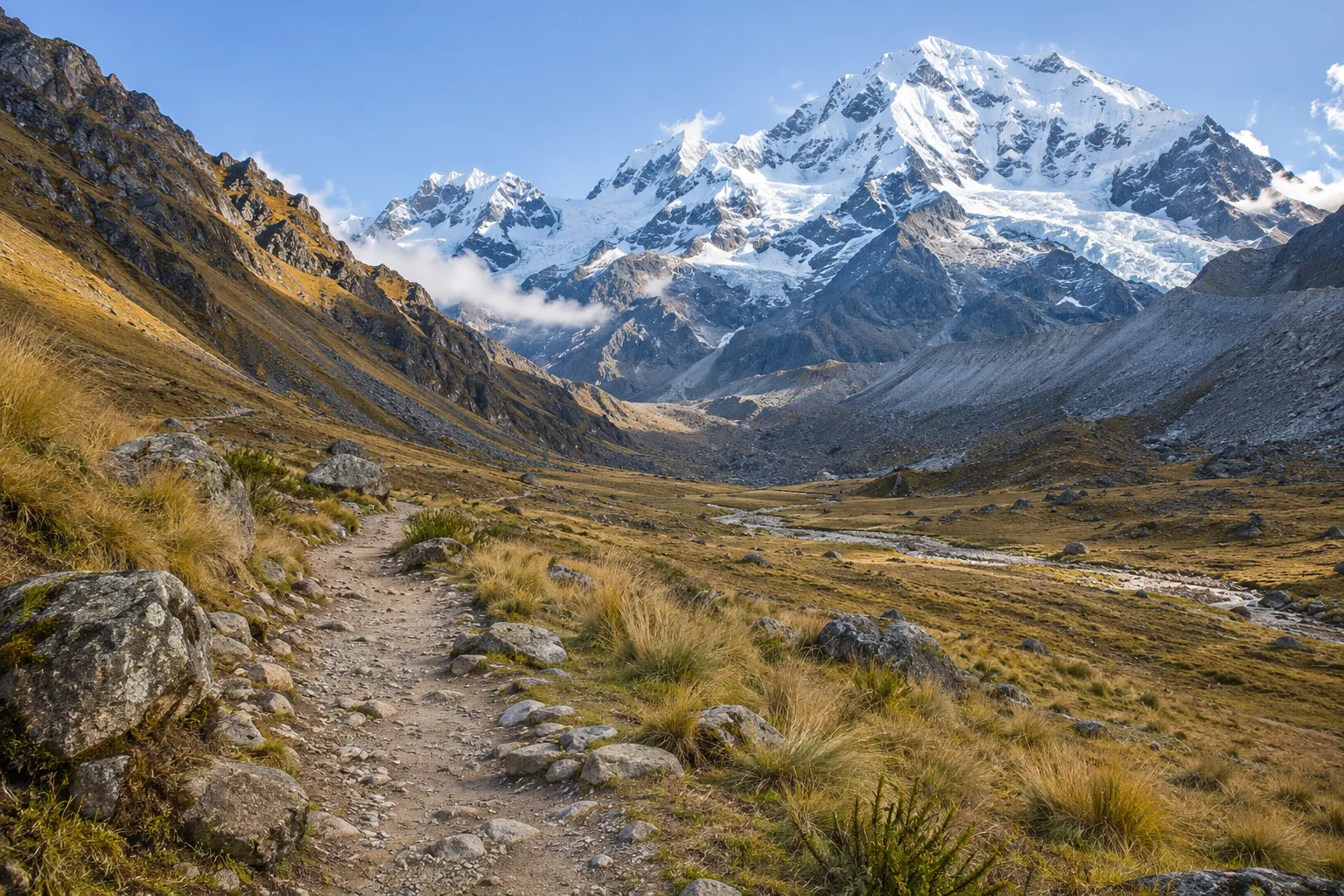
Salkantay Trek
Five days in the format compared here: high mountains, changing landscapes and arrival via Aguas Calientes.
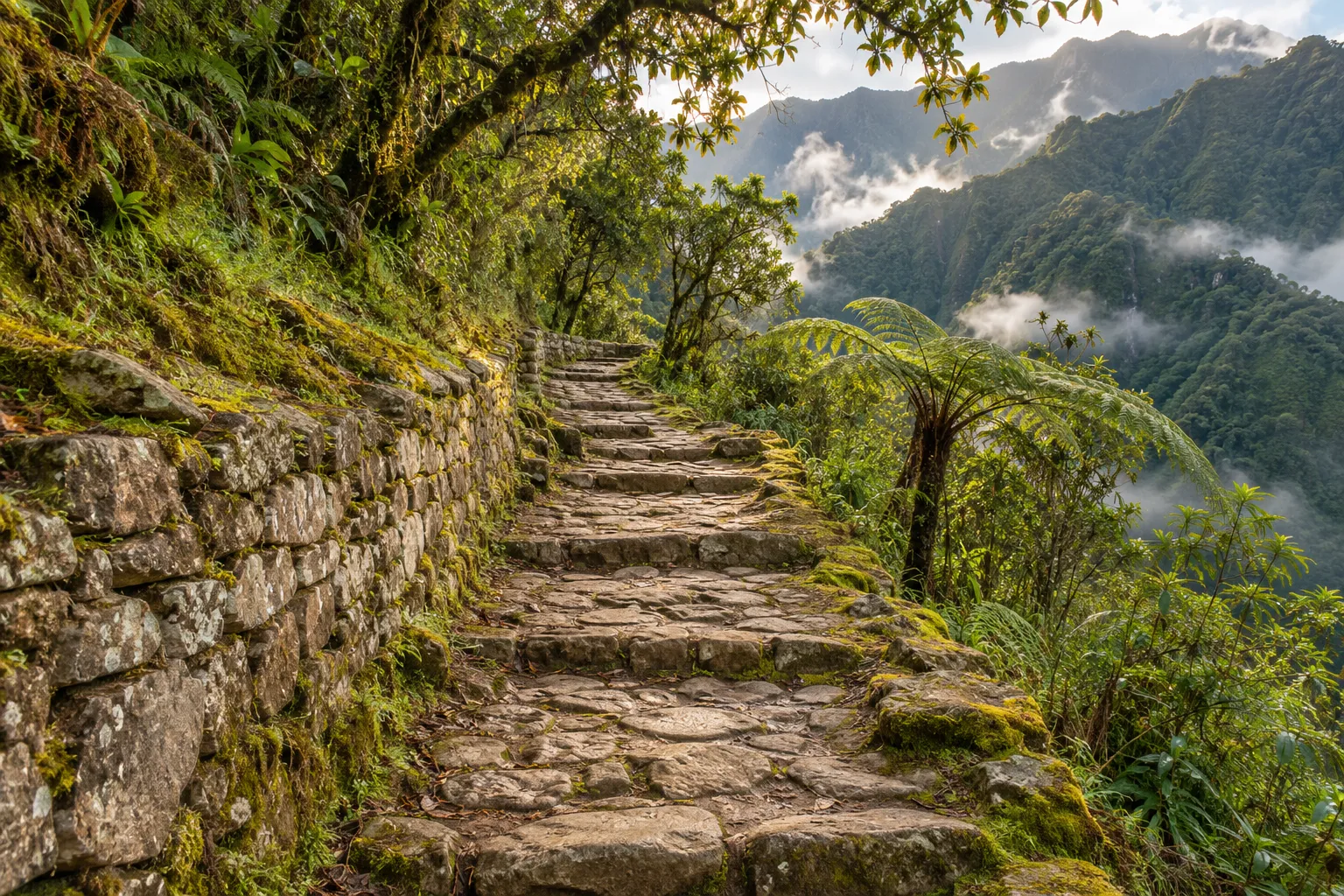
Classic Inca Trail
Four days in the classic format: a historic path, archaeological sites and arrival through the Sun Gate.
The verdict, in 30 seconds
Choose Salkantay if…
Wide open spaces and high mountains are what move you most. You want to compare different kinds of overnight stays and you're not set on entering Machu Picchu through the Sun Gate. You accept a higher maximum altitude, though: more organisational flexibility doesn't mean less physical effort.
Choose the Inca Trail if…
The historic path is an essential part of the trip: you want to come across archaeological sites along the way and reach Machu Picchu through Intipunku. You're willing to plan ahead and spend more nights camping, with a schedule tied to permits and assigned stages.
Landscapes: which photo makes you want to go?
Salkantay has an instant appeal: the contrast between the glacial mountain and the greener landscapes you meet on the way down. In the formats that include it, Humantay Lake adds another hike to the programme. Check that it's really included, and on which day: an identical name on the cover of the tour doesn't guarantee the same route. The five-day programme by Salkantay.org shows a concrete example of this sequence of landscapes.
The Inca Trail, instead, ties landscape and archaeology together: you walk, reach a site, set off again, find worked stone inside the mountain once more. Along the classic route SERNANP describes places such as Runkurakay, Sayaqmarka and Wiñaywayna, all the way to Intipunku. The advantage is a continuous story; the limit, if you're mainly after glacial views, is that the experience has a different centre of gravity. The official route described by SERNANP helps you picture it.
So the choice we suggest is a personal one: Salkantay to put high-mountain scenery at the centre, the Inca Trail to weave the walk together with history. Both offer nature; both lead to an extraordinary archaeological site.
Effort and altitude: shorter isn't automatically easier
The Salkantay pass reaches about 4,630 metres in the programme mentioned; the highest point of the classic Inca Trail, Warmiwañusca, is commonly given as around 4,215 metres, including in the technical sheet by Tierra Biru Expeditions. The difference matters, but it isn't the whole story of the difficulty.
To compare two quotes, ask for the ascents, descents and walking hours day by day, the altitude of each night's stay and the weight of the pack you'll carry yourself. A long descent can be as hard on your knees as a climb is on your lungs; spreading the same stages over fewer days changes the pace. Ask yourself, too, how well you recover sleeping away from home and how you feel after several days on foot in a row.
Training doesn't make you immune to altitude problems. The CDC explain the role of acclimatisation: avoid squeezing the trek in right after a quick arrival at altitude, and plan a gradual ascent. If you have doubts about your own situation, talk to a healthcare professional first. On the trail, tell your guide about any symptoms, rather than turning the pass into a test of willpower.
Permits: freedom still has a calendar
For the classic Inca Trail, permit availability shapes your choice of dates: PROMPERÚ recommends booking months ahead through a licensed agency. If it's the trek you dream of, check availability before building your whole trip around it. PROMPERÚ's advice makes this clear.
The commercial Salkantay compared here doesn't need the limited permit of the classic Inca Trail. That leaves more room, but it doesn't mean setting off without bookings: you still need to secure your Machu Picchu ticket, circuit, overnight stays and transport, as well as any local access fees. Even an alternative route loses its advantage if you find out too late that the ticket for the finale is missing.
Watch out for combinations called "Salkantay + Inca Trail": if they enter the regulated network of the Caminos Inka, they shouldn't be confused with the Salkantay via Aguas Calientes. Always ask for the exact route and which permits it includes.
The arrival at Machu Picchu really is different
The classic Inca Trail reaches Intipunku, the Sun Gate, on foot along the historic path. If that's exactly the moment you imagine, this difference can decide the trip. Visibility, though, is up to the weather: no package can book you a break in the clouds.
On the most common Salkantay, the approach ends in Aguas Calientes, where you sleep before the visit and then go up to the site entrance. Alpaca Expeditions' programme is one example. It isn't the same dramatic entrance as the classic Inca Trail, but you may like the idea of a shower and a bed before the last day.
Either way, get the circuit and the time on your ticket in writing, along with any extra climbs and the journey back. "Machu Picchu included" doesn't, on its own, describe the visit you'll actually make.
Where you sleep and what you spend: compare the whole trip
On the Salkantay you'll find offers with tents and others with better-equipped lodges; the operator just mentioned, for example, offers cabins and domes as well as the final hotel. That's an option of that programme, not a guaranteed feature of the route. On the classic Inca Trail, camping remains an integral part of the experience.
To choose, ask very concrete questions: shared or private accommodation, toilets, showers, sleeping mat and sleeping bag. Comfort is what you find in the evening when you're tired, not the evocative name of the lodge.
On budget, we'd rather avoid a figure that mixes different offers. Put two quotes for the same dates side by side and check the site ticket, guide, meals, water, gear, luggage transport, hotel, bus and the train back. Add rentals, supplements and meals not included. Ask about group size, support provided and the working conditions of the staff, too. The figure worth comparing is the cost of the experience you really want, not the biggest price on the first screen.
When to go: the season doesn't cancel the weather
SERNANP gives April–October as the recommended period and November–March as the rainy season for the area. It's a useful guide, not a promise of clear skies: keep some slack in your plans and ask the operator about current conditions before you leave.
The Inca Trail normally closes in February for maintenance and conservation, as PROMPERÚ points out. Don't conclude that Salkantay is automatically a good alternative that month: rain and trail conditions can affect it too. For both, check openings and closures on your actual dates.
In the trip as a whole, leave room for acclimatisation and for getting back. Five or four days of trekking aren't all the time you should set aside for this part of Peru.
The comparison at a glance
The preferences in the table refer to each single criterion: they don't name an overall winner. For difficulty and cost, the draw is an invitation to compare real programmes.
Point by point
| Point | Salkantay Trek | Classic Inca Trail |
|---|---|---|
| Length of the format compared | 5 days; stages and transfers depend on the operator. | 4 days on the classic; other versions exist. |
| High-mountain scenery | Glacial peaks and a descent into greener landscapes. (better option) | Andean passes, valleys and forest along the historic path. |
| Archaeology along the way | Sites and stages depend on the variant chosen. | A string of sites before Machu Picchu. (better option) |
| Approximate maximum altitude | About 4,630 m at the Salkantay pass. | About 4,215 m at Warmiwañusca. |
| Physical effort | Weigh up altitude, ascents, stages and pack weight. | Weigh up steps, ascents, stages and pack weight. |
| Permit flexibility | Outside the classic's permit; site ticket still to secure. (better option) | Limited permits: you need to plan ahead. |
| Arrival through the Sun Gate | Not on the common route via Aguas Calientes. | Part of the classic route. (better option) |
| Variety of overnight stays | Tents or equipped lodges, depending on the programme. (better option) | Camping along the classic route. |
| Overall cost | Compare what's included, excluded and the way back. | Compare what's included, excluded and the way back. |
Highlighted, the better answer for that point; no highlight: a draw.
Add the Salkantay to your trip to Peru: it’s in Explore.
The team's official itinerary links Salkantay, Machu Picchu and the Amazon: a starting point to adapt to your dates and your pace.
The final question
Imagine telling a friend about the trip. Do you start with the mountain and the changing landscapes, or with those ancient stones walked one step at a time? It's a more useful question than "which one is best?".
If the Inca Trail is the dream, plan for it: choosing Salkantay while expecting the same path risks taking something away from both. If instead it's Salkantay that makes you want to lace up your boots, choose it for what it offers. Machu Picchu will be the finale; the journey starts well before.
Liked an article? Make it your trip
Plan the days, the places and the budget with Daysaway, on the map, with the help of the assistant.