The 7 wonders of the modern world: our collection, one journey at a time
Four places visited, three still to discover. Behind the list lie cities, empires, craftspeople and a global vote: a journey into stories that photographs alone cannot tell.
A façade carved into rock, a pyramid in dialogue with the sun, marble worked like embroidery. We call them all wonders, yet each asks us to look differently. We are building our collection of journeys: Petra, Chichén Itzá, the Taj Mahal and Machu Picchu are already part of Team Daysaway’s travels; the Colosseum, Christ the Redeemer and the Great Wall still await us.
Four stops have taken us from Petra’s rock to the mountains of Machu Picchu, via Chichén Itzá and the Taj Mahal. The other three lie ahead; meanwhile, following their stories also reveals how these places came to share a list.
A list from 2007, rather than a ranking from antiquity
The modern selection began in 2000 as a private initiative by Bernard Weber, the founder of New7Wonders. The project invited people around the world to choose existing monuments. An initial vote reduced 176 nominations to 77; an expert panel then chose 21 finalists, announced on 1 January 2006. The seven winners were revealed in Lisbon on 7 July 2007, a memorable date: 07/07/07. The organisers’ timeline.
In the final stage, voting took place online, by telephone and by SMS. The organisers reported more than a hundred million votes: votes, not necessarily individual people. The result reflects public participation rather than a scientific ranking of monuments’ importance. New7Wonders’ account of the voting channels.
The other contenders: another map to unfold
The finalists that did not make the seven included the Acropolis in Athens, the Alhambra in Granada, Angkor Wat, the Eiffel Tower, Hagia Sophia in Istanbul, Kyoto’s Kiyomizu-dera, the Kremlin and Red Square, the moai of Rapa Nui, Neuschwanstein, the Statue of Liberty, Stonehenge, the Sydney Opera House and Timbuktu. Giza was also on the list, with a special story. The official list of 21 finalists.
The selection placed a contemporary theatre such as the Opera House alongside archaeological sites and religious complexes: “modern” refers to the new list, not when the monuments were built. The panel’s rules also allowed one finalist per country, a restriction that helps explain why the list was not a comprehensive inventory of great monuments. The panel’s criteria.
Giza, the ancient wonders and the UNESCO confusion
The Great Pyramid of Giza is the only wonder on the ancient list still largely standing. The others were the Hanging Gardens of Babylon, the statue of Zeus at Olympia, the Temple of Artemis at Ephesus, the Mausoleum at Halicarnassus, the Colossus of Rhodes and the Lighthouse of Alexandria. This tradition of lists emerged from the Mediterranean and Near Eastern worlds, rather than a worldwide vote.
Giza appeared among the 21 modern finalists. Following Egyptian protests, it received honorary status, outside the competition for the seven places: it was not simply rejected, nor should it be counted as an eighth voted winner. The story is also documented in CNN’s coverage on the day of the announcement.
UNESCO neither organised nor endorsed the vote, as it clarified in a 2007 statement. World Heritage status follows a different process, involving nominations by states, assessments and conservation obligations. A monument can appear on both lists, but the designations are not equivalent. UNESCO’s clarification.
1. Petra: a rose-red city within the folds of the rock
Jordan
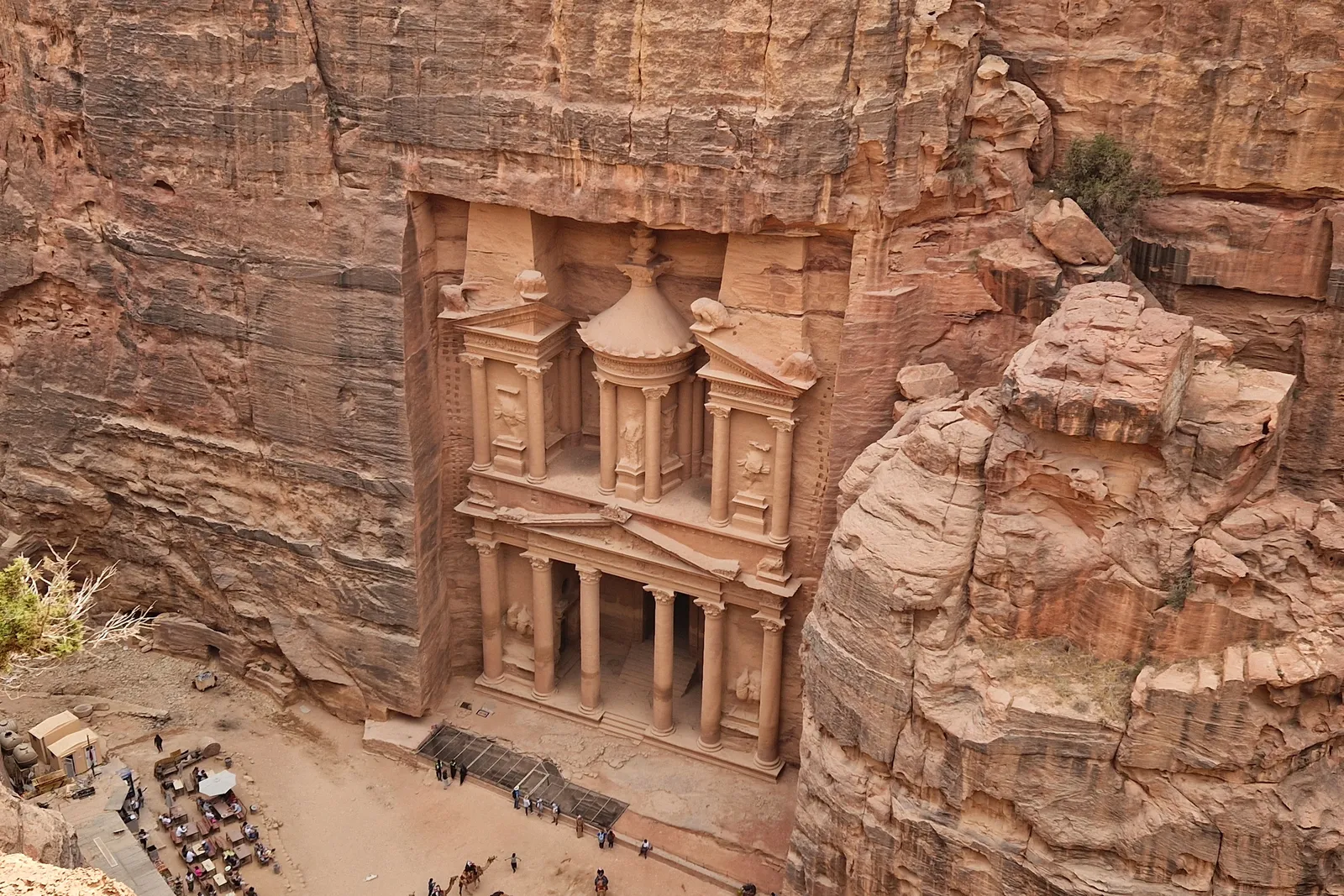
On our journey: September 2023. The walls of the Siq narrow the view, then reveal the columns of Al-Khazna. Its familiar name is the Treasury, but the building is generally interpreted as funerary: knowing this shifts the visit from a treasure hunt to an encounter with memory carved in stone. The Petra authority’s description.
Petra was a Nabataean caravan city: its architecture tells of exchanges between Arabia and the Mediterranean, while channels and water-harvesting systems explain how people could live here. Look beyond the most photographed spot: tombs, streets and the Monastery reveal the city’s scale. UNESCO’s historical context.
For a suggested pace, allow two days at the site, staying in Wadi Musa: one for the central route and another for a longer walk. Bring suitable shoes and water, take breaks and follow current opening information and local instructions.
- When
- March–May or September–November for milder weather.
- How many days
- Suggestion: 2 days at the site; stay in Wadi Musa.
- Who for
- Walkers who enjoy discovering history in the landscape.
2. Chichén Itzá: sunlight writes on stone
Mexico
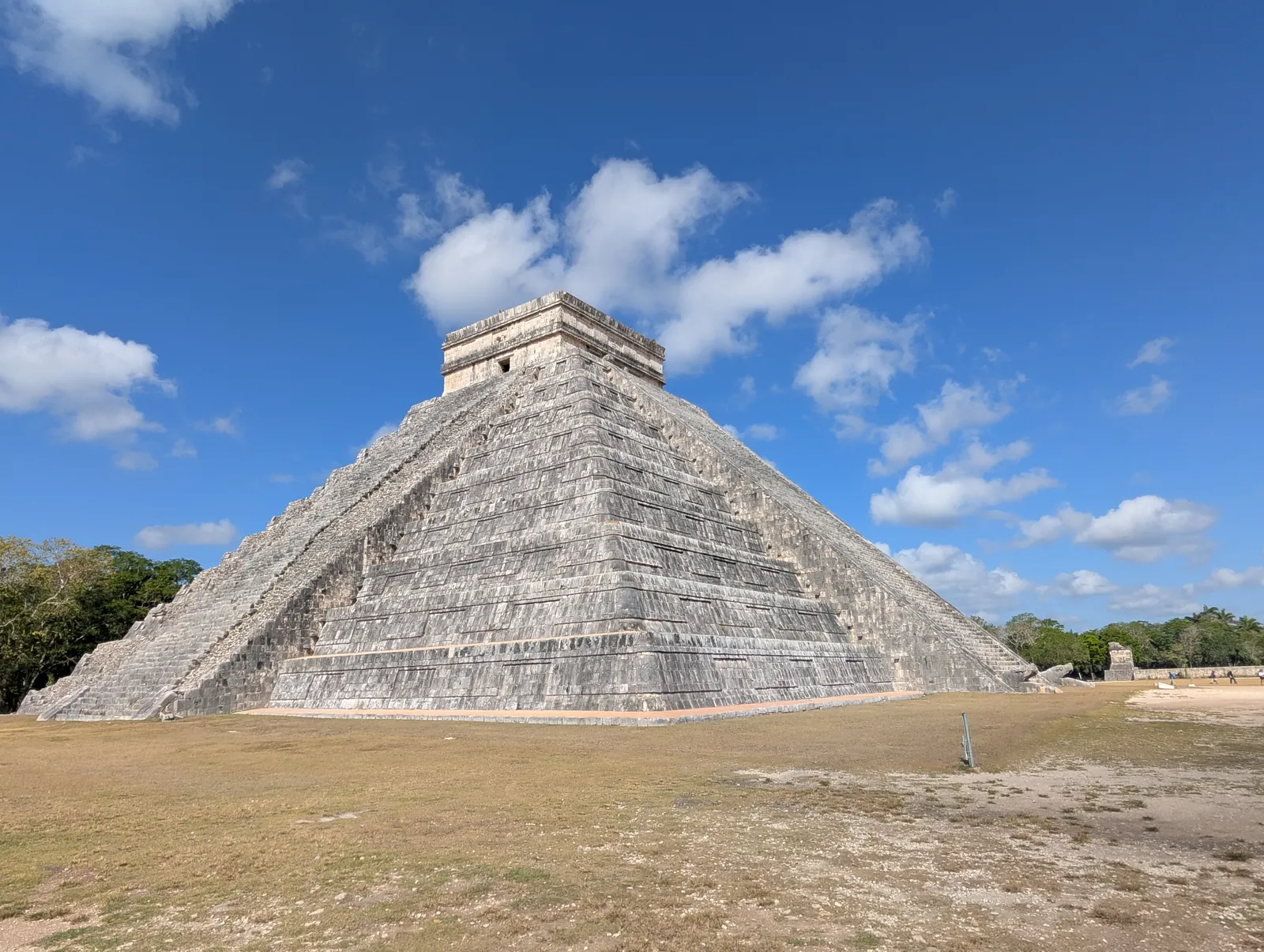
On our journey: April 2025. El Castillo, the Temple of Kukulcán, connects architecture, sky and ritual. Around the equinoxes, light draws a sequence along the balustrade resembling a serpent’s body leading towards the carved head at the base. The familiar reading of its steps as a 365-day calendar is widespread, but INAH urges caution because of twentieth-century restoration. INAH on architecture and astronomy.
The pyramid is only part of the city: explore the Great Ball Court, the columns and the route towards the Sacred Cenote. Religion, power and public space become clearer when you broaden your view.
Allow a generous morning without immediately adding too many other excursions. INAH’s visitor information separates the archaeological admission charge from the state supplement: check the total, not just the first quoted fee. Respect restricted areas; the pyramid cannot be climbed.
- When
- Early hours for the heat; equinox season for the light effect.
- How many days
- Suggestion: a morning; 2 nights in or near Valladolid.
- Who for
- Travellers drawn to Maya history beyond the pyramid photograph.
3. Taj Mahal: marble embroidery in the light
India
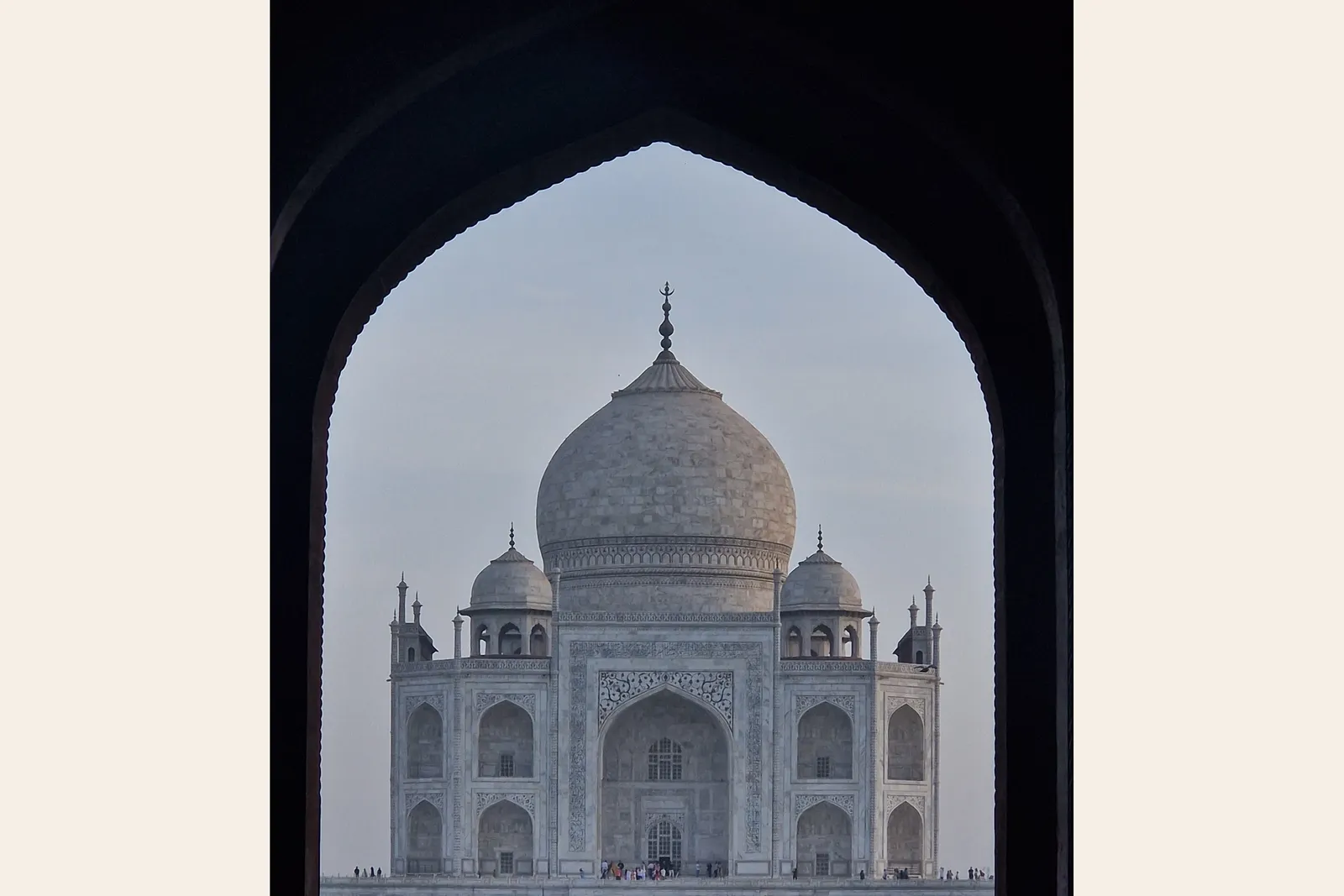
On our journey: April 2025. Light flows over the dome and changes the face of the marble; closer up, inlaid flowers, calligraphy and delicate pierced screens emerge. The Taj Mahal’s beauty lives at both scales: the grace of the whole and the precision of its details. The Mughal emperor Shah Jahan commissioned the mausoleum in memory of Mumtaz Mahal in the seventeenth century. The love story is the best-known account, but the monument also embodies the work of architects, calligraphers and craftspeople. The official account of its construction.
Within the complex, the mosque and its matching building on the opposite side help explain the layout of the garden and riverfront. Inside, a marble screen surrounds the cenotaphs: pausing over the craftsmanship shifts the experience from dome to detail.
The Taj Mahal is closed to the public on Fridays. Daytime opening follows sunrise and sunset; entry to the main mausoleum is an additional option beyond admission to the complex. Arriving early helps with heat and crowds. Official opening information and ticket categories.
- When
- At sunrise; closed to the public on Fridays.
- How many days
- Suggestion: half a day at the Taj Mahal; 1–2 nights in Agra.
- Who for
- Lovers of architecture, gardens and intricate craftsmanship.
4. Machu Picchu: a dream in stone among the Andes
Peru
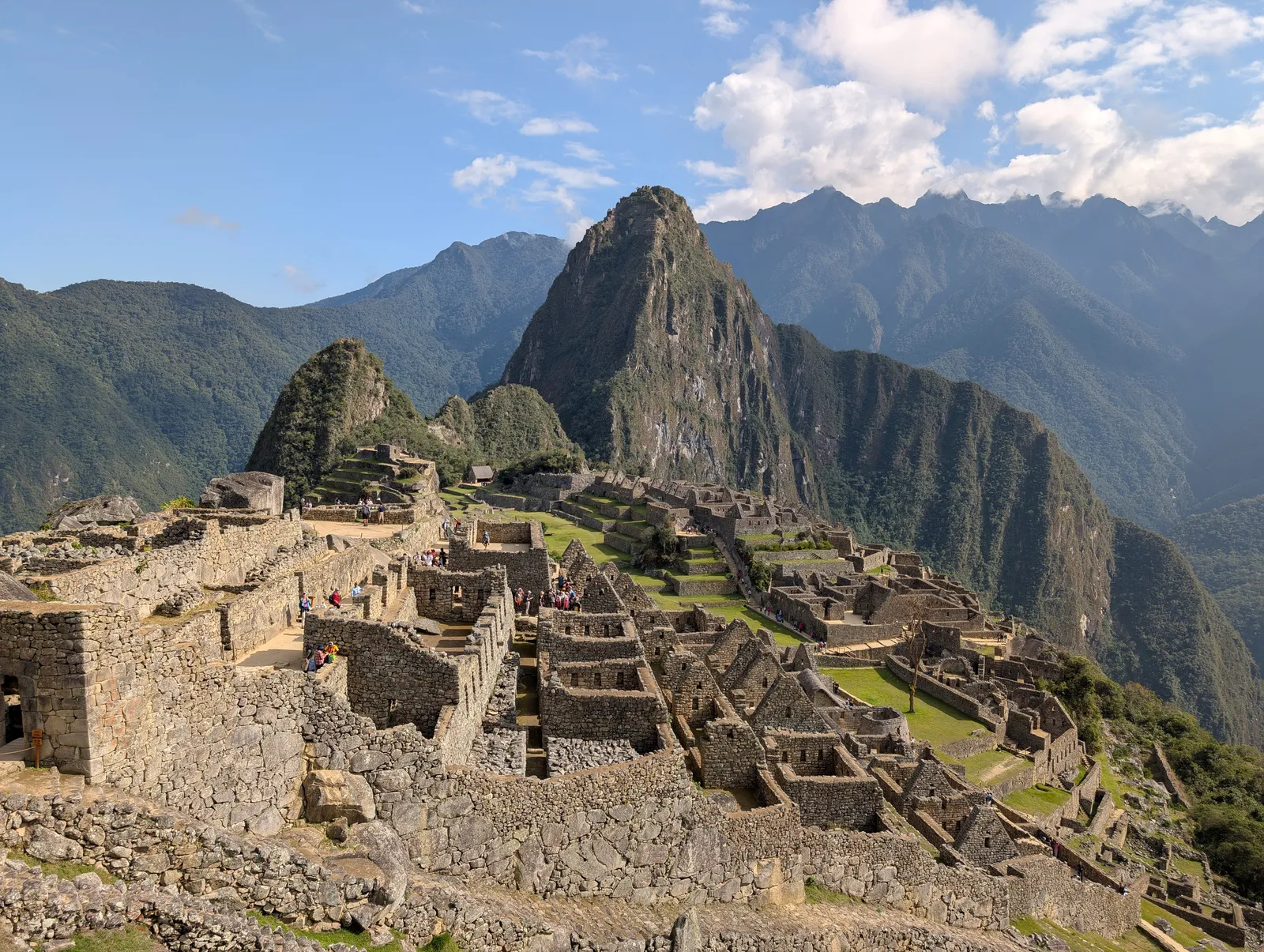
On our journey: September 2025. Walls follow the terrain, terraces reshape its slopes and mountains become part of the composition. At about 2,430 metres, this fifteenth-century Inca site combines architecture and land management: notice the stairs, passageways and relationship between buildings and hillside to see more within the panorama. UNESCO on the historic sanctuary.
The crucial practical decision comes before the train: which route do you want to visit? The system distinguishes panoramic, classic and royalty circuits, divided into routes. One ticket does not automatically include every terrace or mountain. Compare the official maps before coordinating admission time, transport and overnight stays. The site’s circuits and routes.
Leave room for Cusco and the Sacred Valley rather than treating everything as a transfer towards a photograph. The site is one stop, not the whole Andean journey.
- When
- May–September: drier season, without guaranteed sunshine.
- How many days
- Suggestion: 1 day at the site; 4–5 around Cusco and the Sacred Valley.
- Who for
- Travellers seeking archaeology and scenery, with time to plan the route.
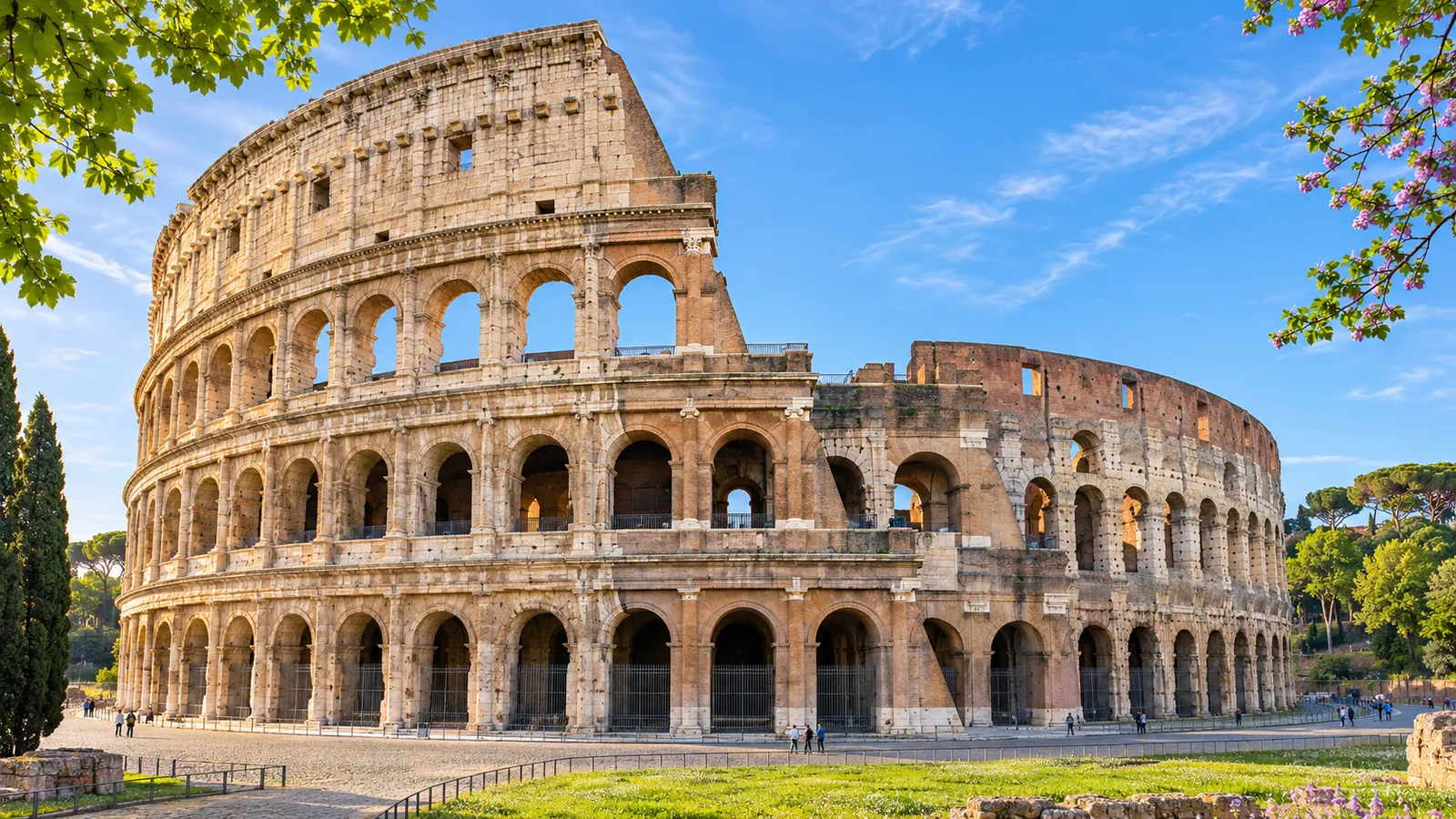
5. Colosseum: Rome’s eternity, arch by arch
Italy
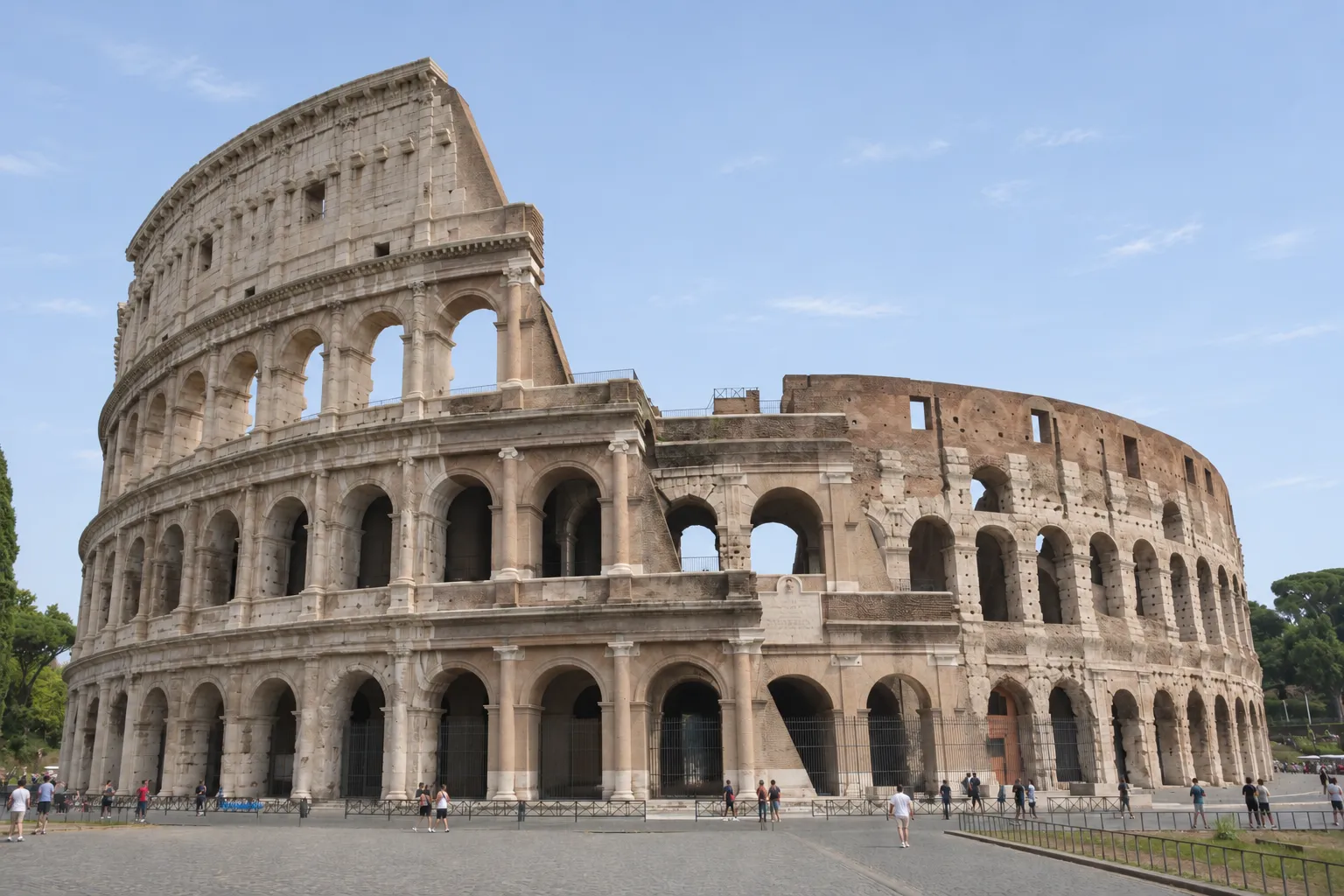
Still on our list. Arches rise in successive tiers, shaping a building designed to astonish an imperial capital. Inaugurated in AD 80, the Flavian Amphitheatre gathered audiences for spectacles through which power presented itself to the city. Rome told its story in the stands too: entrances, corridors and assigned seats made divisions between social classes visible. Looking at it means entering the history of those who offered the spectacles, those who watched and those who worked behind the scenes. The Colosseum’s history.
Beneath the arena floor, the underground areas reveal a machinery of services, movement and preparation. Not every visit includes these areas: choose your preferred route before searching for an available time.
The Park states that sales open 30 days ahead, with a booked admission slot and a named ticket requiring identification. Read exactly which areas are included and allow time for the Roman Forum and Palatine Hill too. Official tickets and conditions.
- When
- March–May or September–November; avoid the hottest hours in June–August.
- How many days
- Suggestion: 1 day for the Park; at least 3 days in Rome.
- Who for
- Travellers curious about Roman public life beyond the façade.
6. Christ the Redeemer: an embrace between Rio and the sky
Brazil
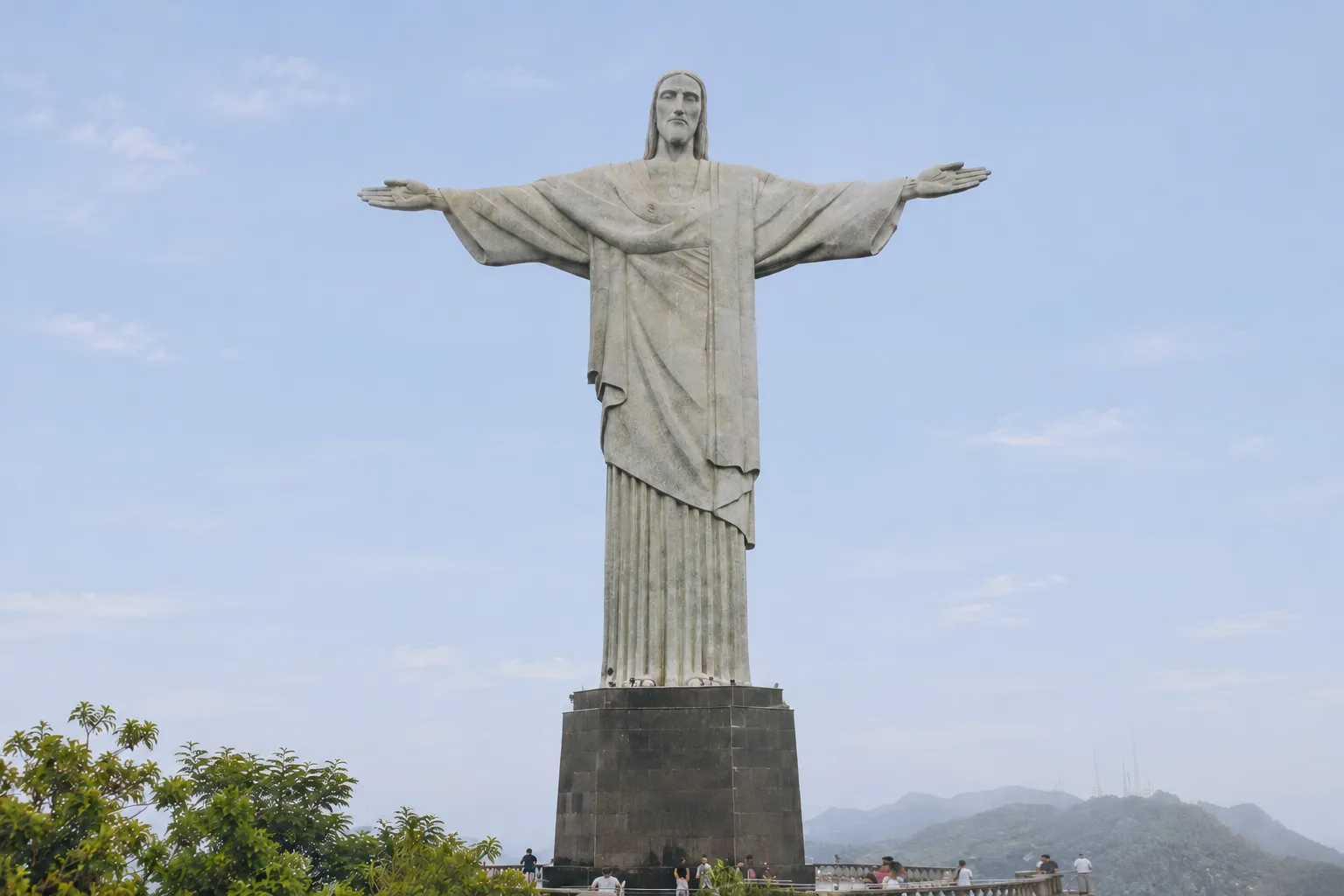
Still on our list. Inaugurated in 1931 on Corcovado, Christ the Redeemer belongs to a very different era from the other monuments on the list. It is both a religious and an urban symbol: its terrace reveals how hills, forest and city relate to one another. Its setting is Tijuca National Park, rather than a square cut off from the landscape. Visit Brasil on the park.
One practical way to reach it is by Paineiras’ official vans: the ticket includes a return journey from the chosen departure point and admission to the monument. Choose your boarding point before planning the day, because it changes the transfer. The operator’s guidance.
As of November 2026, the operator reports access modernisation works: visitors with mobility requirements should check current conditions rather than rely on older images. The works notice.
- When
- Good visibility; check weather and notices before going up.
- How many days
- Suggestion: half a day with transfers; at least 4 days in Rio.
- Who for
- Lovers of city views who want to connect urban life, forest and history.
7. Great Wall: a thread of stone following the mountains
China
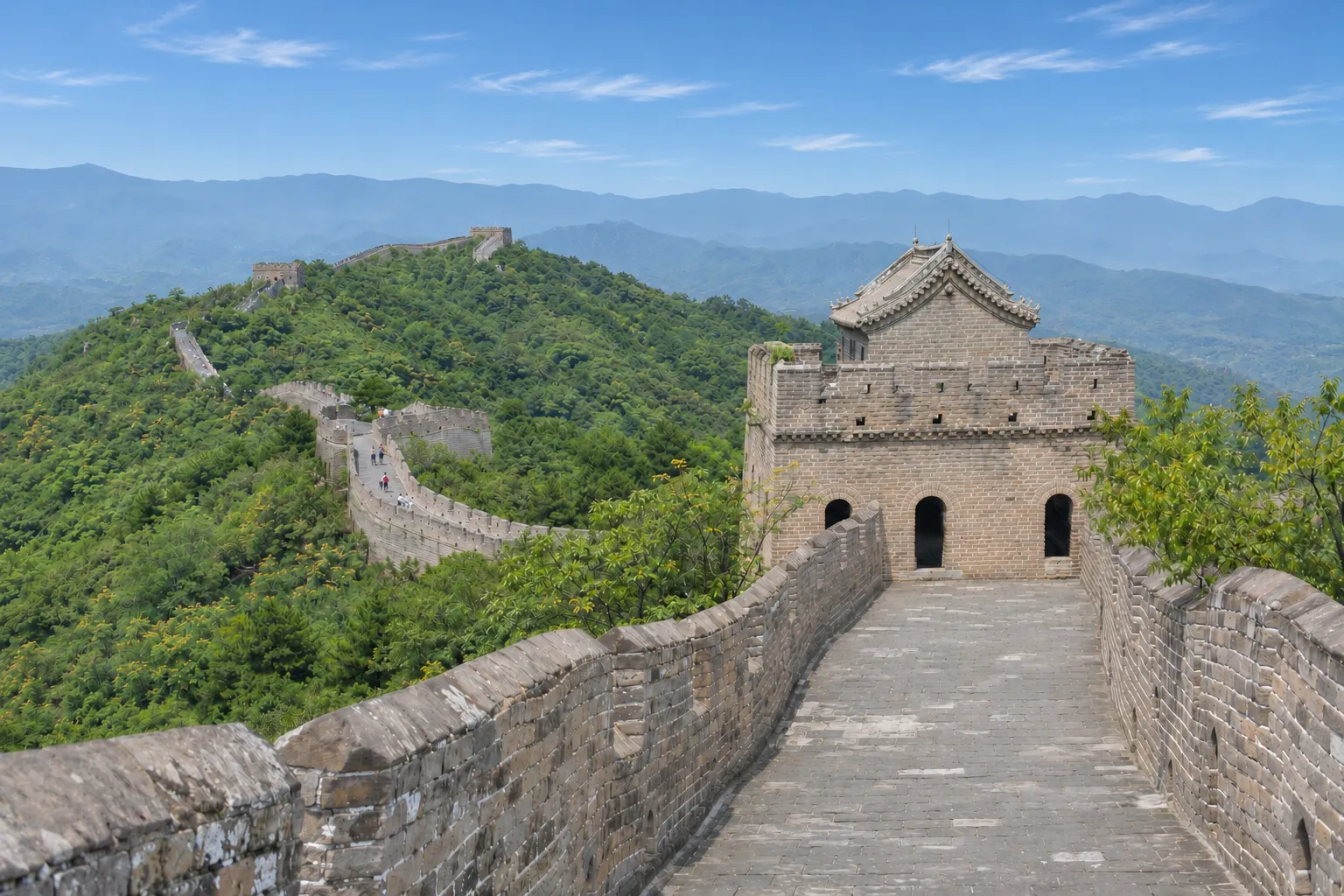
Still on our list. The Great Wall is not a single wall built all at once: it is a system of fortifications developed across different eras. The silhouette familiar to many travellers, with masonry towers and walkways, is associated above all with the Ming works. UNESCO’s historical overview.
For a first visit from Beijing, Mutianyu offers a restored section among wooded mountains. Walking between towers reveals how the defences follow the ridges: steps and slopes remain part of the experience even if you reach the wall by a lift. Beijing municipality on Mutianyu.
Booking requires identification details, and a passport must be presented at entry. Shuttle, cable car and chairlift with toboggan descent are not interchangeable services: check what your purchase includes and how you will return to your starting point. The operator’s instructions.
- When
- March–May or September–November; check opening and route conditions.
- How many days
- Suggestion: 1 day from Beijing; 4–5 days in the capital.
- Who for
- Walkers interested in how architecture adapts to the mountains.
Which story would make you set off?
We have no deadline for completing our collection. Each stop needs days, roads and places around it: arriving, looking and leaving is not enough to know it. Which of the seven intrigues you most? And which finalist that missed out would you add to your map?
Liked an article? Make it your trip
Plan the days, the places and the budget with Daysaway, on the map, with the help of the assistant.