When to visit Japan: twelve months, many journeys
Snow in the north, cherry blossom moving across the country, summer evenings and autumn maples: choosing a month also means choosing a part of Japan.
In 30 seconds
For a first itinerary between Tokyo and Kyoto, choose April–May or October–November. For snow and skiing, look to winter in Hokkaido; Okinawa needs a different calendar. Golden Week and Obon call for care with bookings.
- Jan5°Good
- Feb6°Good
- Mar9°Good
- Apr14°Ideal
- May19°Ideal
- Jun22°Good
- Jul26°Good
- Aug27°Good
- Sept23°Good
- Oct18°Ideal
- Nov13°Ideal
- Dec8°Good
IdealGoodLess suited· average temperatures in Tokyo · climate averages 1991–2020
Month by month
January – March5–9°
GoodJanuary 5°
- Weather: Cold, often dry on the Pacific side
- Crowds: Moderate; high at New Year
- Prices: Variable; holiday peak
Not to miss: Onsen and cities; snow at equipped resorts.
February 6°
- Weather: Cold; snow mainly in the north
- Crowds: Moderate
- Prices: Mid-range; high at ski resorts
Not to miss: Hokkaido for skiing; plum blossom in the cities.
March 9°
- Weather: Milder weather arriving, still cool
- Crowds: Increasing
- Prices: Increasing
Not to miss: Cherry blossom advances from the south; it has no fixed date.
April – May14–19°
IdealApril 14°
- Weather: Mild; rain possible
- Crowds: High for cherry blossom
- Prices: High
Not to miss: Hanami wherever blossom is out; gardens and walks.
May 19°
- Weather: Mild; warmer towards the end of the month
- Crowds: High during Golden Week
- Prices: High on public holidays
Not to miss: Gardens and walks; Hokkaido follows a later calendar.
June – September22–27°
GoodJune 22°
- Weather: Humid; rainy season in many regions
- Crowds: Moderate
- Prices: Mid-range, depending on location
Not to miss: Hydrangeas, museums and temples; more room to change plans.
July 26°
- Weather: Hot and humid; rain and thunderstorms
- Crowds: High at summer destinations
- Prices: Mid to high
Not to miss: Matsuri and mountains, subject to openings and conditions.
August 27°
- Weather: Intense heat; typhoons possible
- Crowds: High around Obon
- Prices: High during holiday weeks
Not to miss: Summer festivals and cooler northern areas.
September 23°
- Weather: Lingering heat; rain and typhoons possible
- Crowds: Moderate
- Prices: Variable around holidays
Not to miss: First autumn colours at higher elevations and latitudes.
October – November13–18°
IdealOctober 18°
- Weather: Cooler; rain still possible
- Crowds: High at well-known destinations
- Prices: Mid to high
Not to miss: Walking and the start of autumn colour, following regional differences.
November 13°
- Weather: Cool, shorter days
- Crowds: High in famous gardens
- Prices: High at autumn-colour destinations
Not to miss: Maples and ginkgo between Tokyo and Kyoto, depending on the season's progress.
December8°
Good- Weather: Colder, drier on the Pacific side
- Crowds: Moderate; rises at year-end
- Prices: High at year-end
Not to miss: Illuminations, onsen and the first snow holidays.
A blanket spread beneath a cherry tree and a warm cup after a hot-spring bath belong to two different journeys. In Japan, the season changes the light in gardens, the time spent outdoors and even the rhythm of travelling between places. To choose dates, we start with what we want to encounter: blossom, a neighbourhood festival, a trail or a city to explore on foot. The perfect month for a photograph may be the busiest for finding a bed.
The map comes before the calendar
Tokyo and Kyoto are useful reference points for a first trip, but they do not sum up the archipelago. Hokkaido has longer winters and a late spring; Okinawa is subtropical. Even on Honshu, the two sides differ: snow on the Sea of Japan side does not automatically describe Tokyo's winter. Choose regions first, then compare seasons. Adding a distant stop simply to chase blossom may consume more days than it gives back.
Spring (March–May): follow the blossom without fixing the whole journey around it
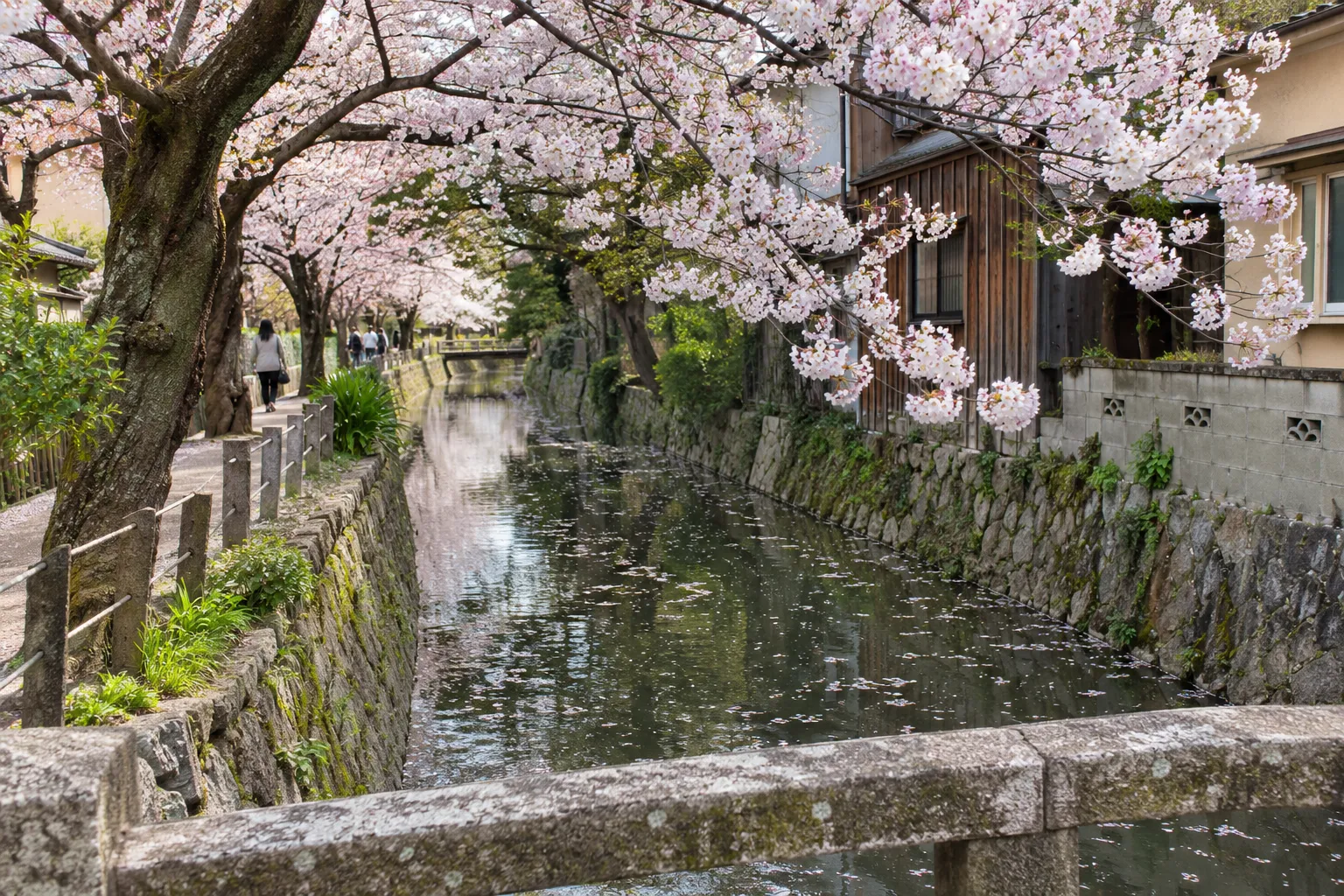
The sakura calendar moves from south to north and responds to that year's weather. Hanami means pausing to look at the flowers: the experience also lies in stopping, in the life of the parks and in the brevity of the blossom. March and April can be magnificent for the classic route, but they do not promise the same flowers on the same day in two cities. The JNTO seasonal guide distinguishes landscapes and visiting opportunities. Keep a couple of alternative gardens, avoid tying the whole holiday to one morning and leave room for spring's other expressions.
Golden Week arrives between late April and early May, a concentration of public holidays that also prompts domestic travel. It does not make the whole spring inconvenient: the point is to compare the exact dates for your chosen year and book the journeys you need early. If your trip is flexible, leaving after that window may offer a pleasant combination of mild days and a more relaxed pace. JNTO's Golden Week advice explains why that calendar detail matters.
Summer (June–August): street festivals and days planned differently
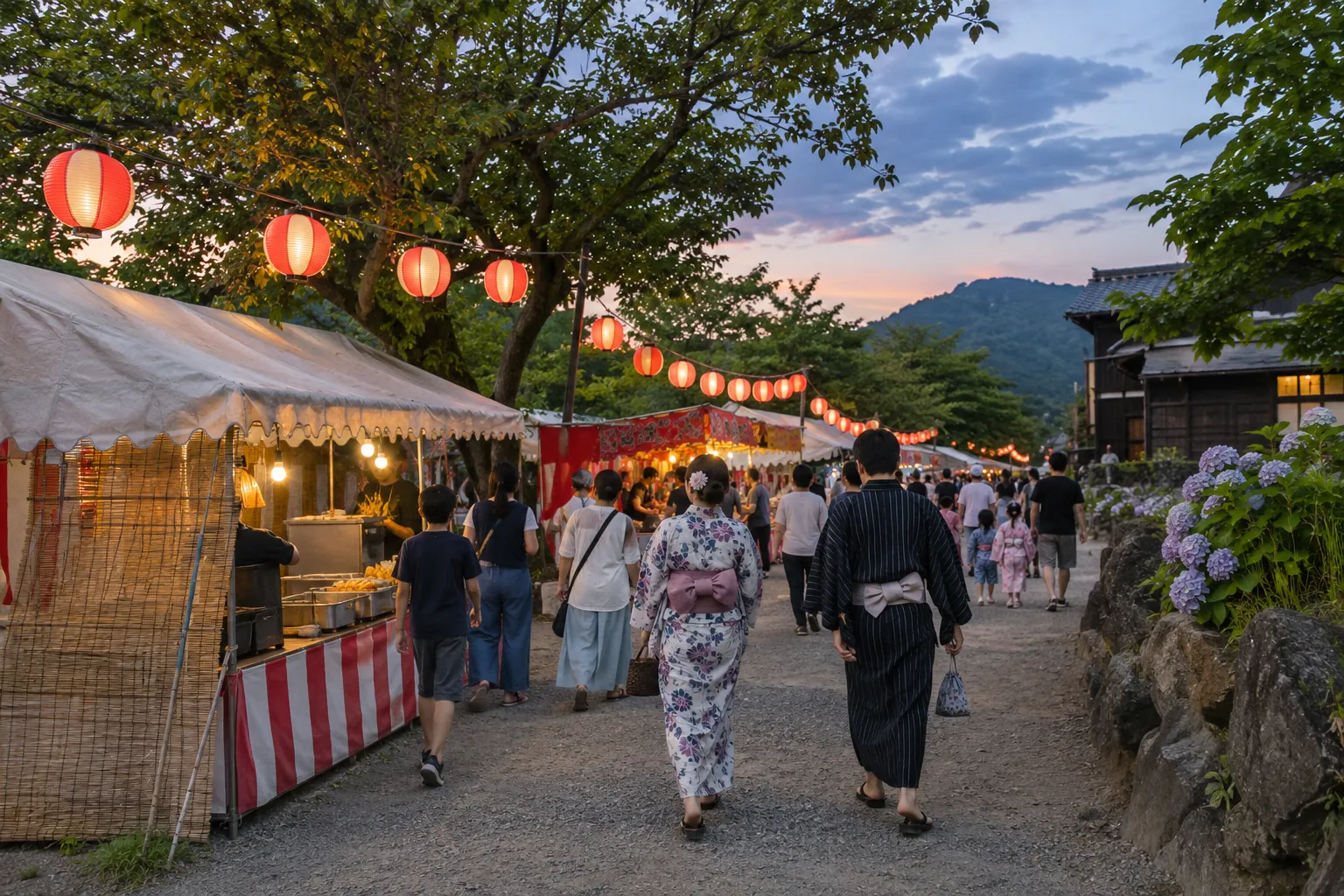
June brings the rainy season to many regions; July and August add heat and humidity. An urban itinerary works better by alternating outdoor neighbourhood walks in cooler hours, museums or other indoor stops in the middle of the day, and evening outings. Matsuri offer another way to encounter communities: processions, music and preparations are part of the festival, but each place has its own programme. Do not treat a festival announced for a previous edition as an already confirmed date.
Obon, in summer, is linked to remembering ancestors and travelling to join family; dates and practices are not identical everywhere. For travellers, this mainly means checking the local period against trains and accommodation. Summer is also mountain season, but an accessible low-level trail does not confirm that a higher route is open. The JNTO summer guide helps distinguish the opportunities. For every walk, choose distance and elevation gain before booking the stop.
Autumn (September–November): colour descends from the mountains
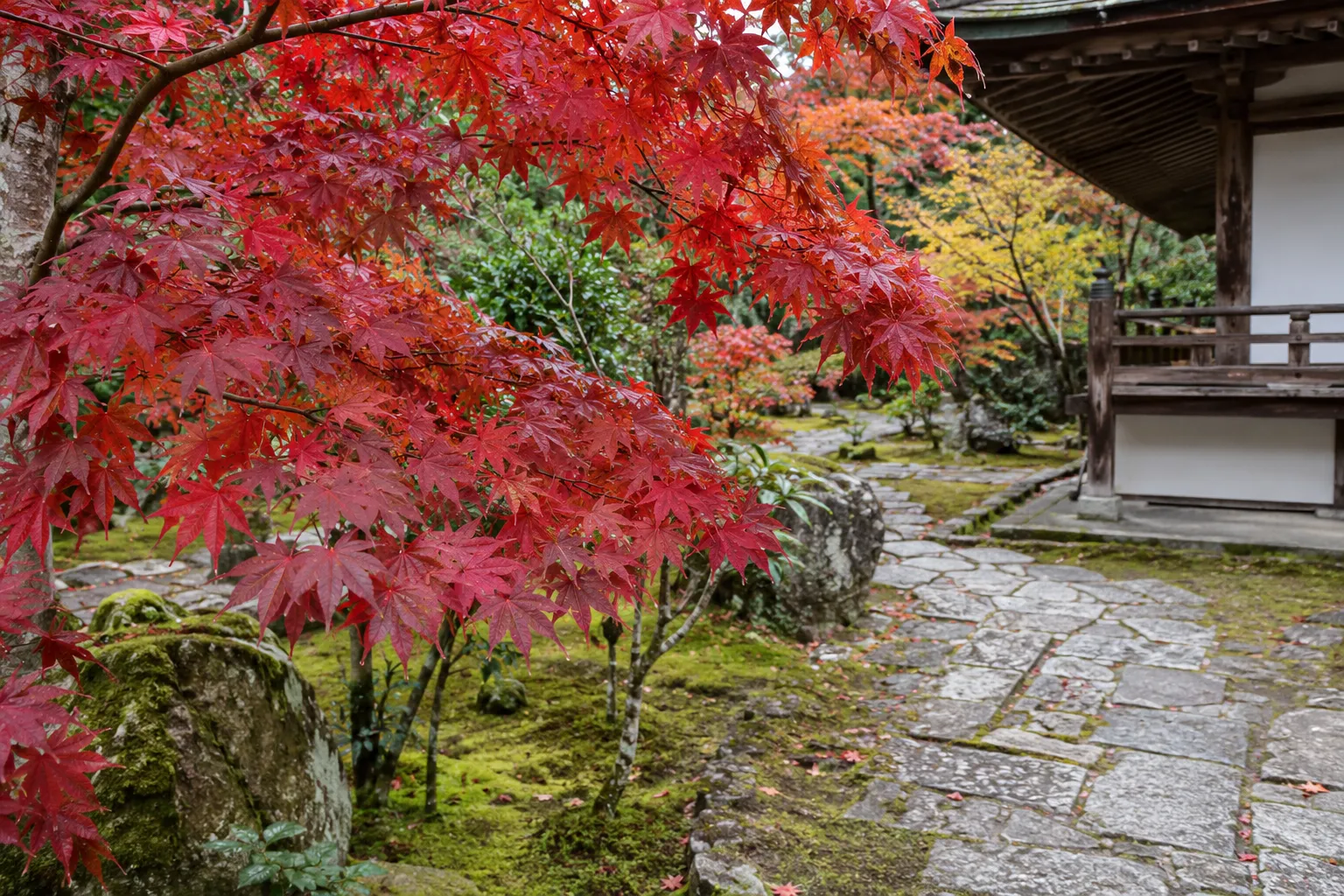
Autumn foliage moves differently from cherry blossom: the first colours arrive at higher latitudes and elevations, then reach many cities. October and November are excellent candidates for walking, but they are not automatically low season. Famous gardens can be very popular. Rather than fitting three distant temples into one day, build a coherent area and include a walk between visits. The leaves are a reason to slow down, not a timetable to chase.
Winter (December–February): onsen steam and cities after the holidays
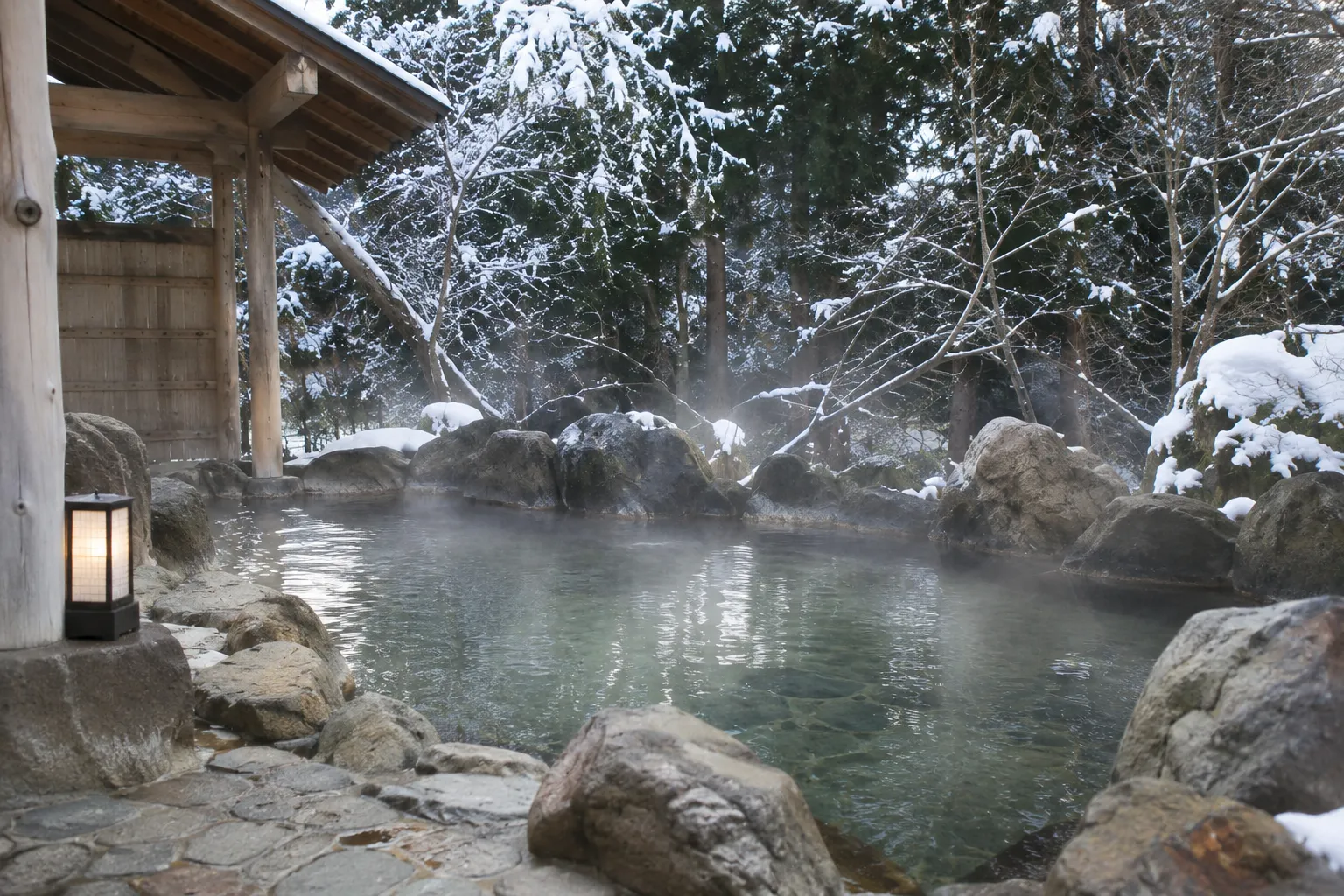
Cold weather brings snow in suitable regions, hot-spring baths and often drier city days on the Pacific side. For onsen, read the establishment's rules: separate areas, any restrictions and entry arrangements should not be assumed. Between late December and early January, some businesses change hours or close; organise meals and main visits without filling every hour. The JNTO winter guide distinguishes snow trips from city visits.
An itinerary at the pace of its season
For an initial two-week proposal, spend several days in Tokyo, plan the move to Kyoto carefully and choose just one extension according to the month. In spring, it could be another garden area; in autumn, a valley with walks; in winter, a hot-spring town reached without chaining together too many forms of transport. These are ideas for pacing, not a compulsory programme. Our comparison of spring and autumn explores those two seasons; this guide helps you understand what journey to build in the other months.
How to read climate, crowds and prices
Tokyo's monthly mean temperatures, rounded to the nearest degree, from the Japan Meteorological Agency. They describe Tokyo, not all Japan: Hokkaido, Okinawa and mountain areas need their own references. Crowd and price indications are broad seasonal judgements, not quotations: holidays, events and availability can change even between two weeks in the same month. “Ideal” refers to the type of trip described; it does not guarantee good weather or access to every activity.
Japan in blossom, from Osaka to Tokyo: it’s in Explore.
An official 20-day itinerary to shape the journey, adapting stops to the season and the days available.
Liked an article? Make it your trip
Plan the days, the places and the budget with Daysaway, on the map, with the help of the assistant.