When to visit Oman: cool desert days and monsoon greenery
From Hajar terraces to dunes and the Dhofar landscape transformed by the khareef between June and September: choosing a month means choosing a landscape.
In 30 seconds
For a northern itinerary through Muscat, Nizwa, mountains and dunes, choose November–March. April and October call for more care with the heat when planning your days. Dhofar follows a different season: the khareef, the monsoon between June and September, brings humidity, mist and greenery around Salalah.
- Jan21°Ideal
- Feb22°Ideal
- Mar25°Ideal
- Apr29°Good
- May34°Less suited
- Jun35°Less suited
- Jul33°Less suited
- Aug32°Less suited
- Sept31°Less suited
- Oct29°Good
- Nov26°Ideal
- Dec23°Ideal
IdealGoodLess suited· average temperatures in Muscat · airport station
Month by month
January – March21–25°
IdealJanuary 21°
- Weather: Mild on the coast; cool evenings inland
- Crowds: High on northern circuits
- Prices: High in popular locations
Not to miss: Walks in Hajar villages and afternoons in Nizwa.
February 22°
- Weather: Pleasant days; colder at altitude
- Crowds: High but spread out
- Prices: Moderately high
Not to miss: Combine coast, oases and a night among the dunes.
March 25°
- Weather: Temperatures rising; pleasant mornings
- Crowds: Moderately high
- Prices: Moderately high
Not to miss: Agricultural terraces and walks before the heat.
April29°
Good- Weather: Hot at lower elevations; head higher
- Crowds: Moderate in the north
- Prices: Variable
Not to miss: Jabal Akhdar and the rosewater tradition.
May – September31–35°
Less suitedMay 34°
- Weather: Intense heat in the north
- Crowds: Lower on touring routes
- Prices: Possible reductions
Not to miss: Museums and indoor breaks around midday.
June 35°
- Weather: Very hot; weather changes in Dhofar
- Crowds: Low in the north; rising in the south
- Prices: Different between north and south
Not to miss: Salalah only with a programme suited to the khareef.
July 33°
- Weather: Scorching north; humid, misty Dhofar
- Crowds: High in khareef destinations
- Prices: High in Salalah
Not to miss: Dhofar’s green landscapes, without expecting clear seas.
August 32°
- Weather: Intense heat in the north; southern monsoon
- Crowds: High in Dhofar
- Prices: High in popular southern locations
Not to miss: A khareef itinerary with flexible timings.
September 31°
- Weather: Still hot in the north; transition in the south
- Crowds: Varies by area
- Prices: Variable
Not to miss: Assess Muscat and Salalah conditions separately.
October29°
Good- Weather: Hot by day; more usable mornings
- Crowds: Rising in the north
- Prices: Rising
Not to miss: Resume the circuit through Nizwa, coast and mountains.
November – December23–26°
IdealNovember 26°
- Weather: Milder; suitable for outdoor days
- Crowds: High in the north
- Prices: Moderately high
Not to miss: Forts, palm groves and trails with village breaks.
December 23°
- Weather: Mild coast; cold nights at altitude
- Crowds: High, particularly over holidays
- Prices: High at month’s end
Not to miss: Desert and mountains with warm clothes too.
Water runs through a narrow channel among palm groves; a little higher up, cultivated ground meets the mountain. It is an image that helps explain Oman: the landscape also reflects how communities learned to share a scarce resource. The right season leaves time to follow that channel, cross a village and pause before a carved door without constantly seeking shelter from the heat.
The north from November to March: days spent outdoors
For a first trip taking in Muscat, Nizwa, the Hajar Mountains and the Sharqiyah Sands, we suggest November–March as the most comfortable window. This recommendation favours walking and sightseeing: the Omani Ministry of Foreign Affairs gives a broader favourable season, September–March, and distinguishes the mountains and Dhofar from the heat of the lowlands. September, however, can still be demanding if you plan long hours walking at lower elevations.
Allow eight–ten days for the north: two in Muscat, three around Nizwa and the mountains, one night in the desert and the remaining time for the coast and transfers. Adapt this proposal rather than squeezing it by adding a stop every evening. Another night in the same place lets you start a walk early and return in daylight instead of spending the best hours in the car.
Explore has two proposals for this season. Four days in Muscat combine the mosque, museums and souq with Wadi Shab, a gorge of rock walls, palms and pools: the final part involves swimming, and you can limit your visit to the walk without reaching the cave. The ten-day loop adds Sur, Ras al Jinz, dunes, Nizwa and mountains. December and January suit both trips; for the longer circuit, also bring warm clothes for desert nights and stops at higher elevations.
Muscat in 4 days: city, coast and wadi: it’s in Explore.
A base in the capital, with the mosque, souq, museums, Wadi Shab and Daymaniyat. The programme is set in December, within the recommended window for the north.
Oman in 10 days: from the sea to the mountains: it’s in Explore.
From Muscat to Sur and Ras al Jinz, then dunes, Nizwa and the Hajar Mountains. The programme is set in January: favourable for visits and walks, with cold nights at altitude.
Among the palms, a history written by water
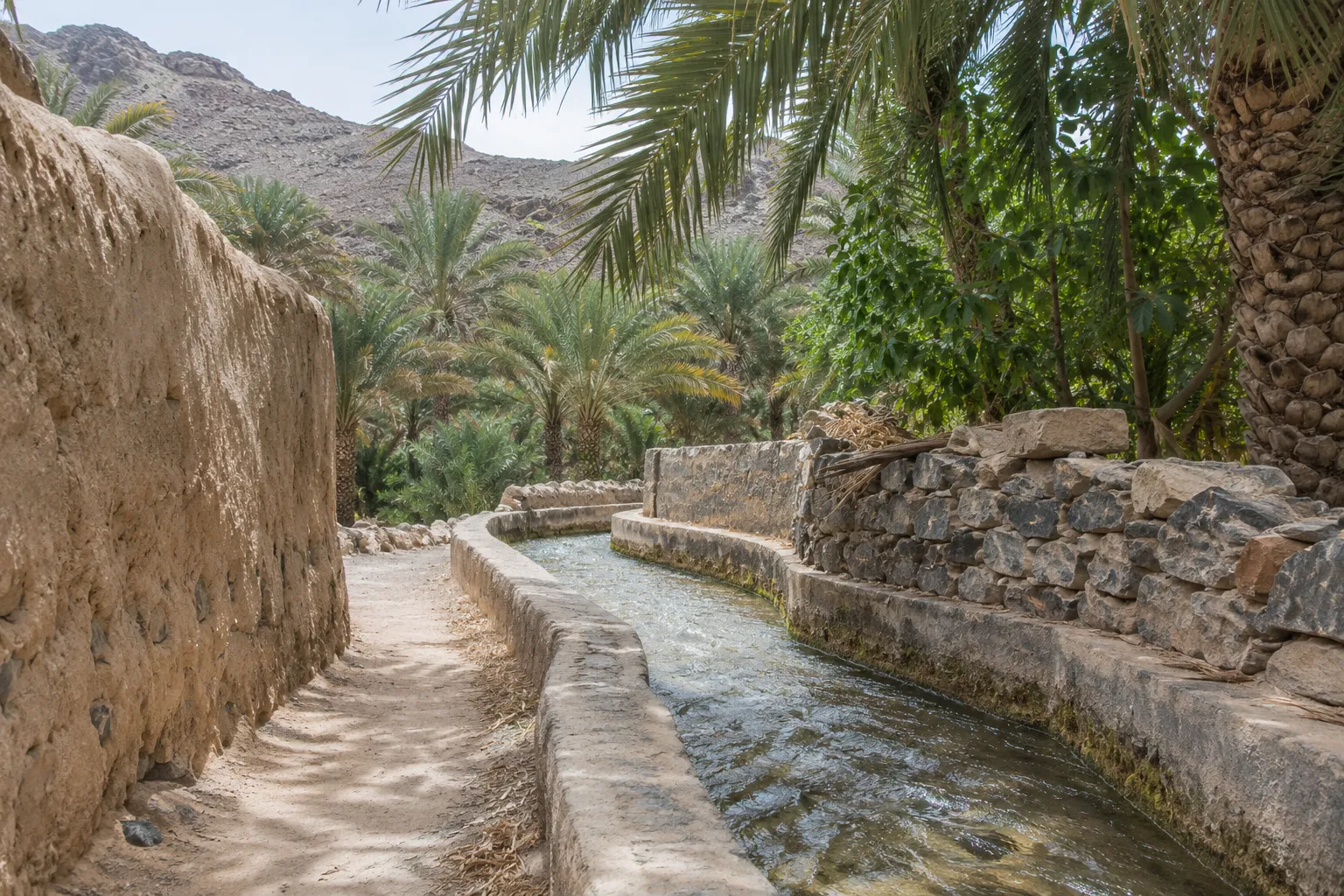
The aflaj are water collection and distribution systems: gravity carries water to homes and crops. Five are inscribed on the UNESCO World Heritage List. Their importance also lies in sharing rules and collective maintenance: following a falaj reveals social infrastructure as well as hydraulic engineering. Towers built to defend the channels recall how much settlement life depended on water.
Choose an accessible section and walk without entering farmland. Keep passageways clear, do not use the channel as a bathing pool and ask before photographing people. In Nizwa and nearby villages, alternating a fort, a palm grove and a market stop makes the relationship between defence, cultivation and trade easier to understand. There is no need to fill the day with similar monuments: time spent on the details changes the experience.
The mountains have their own calendar
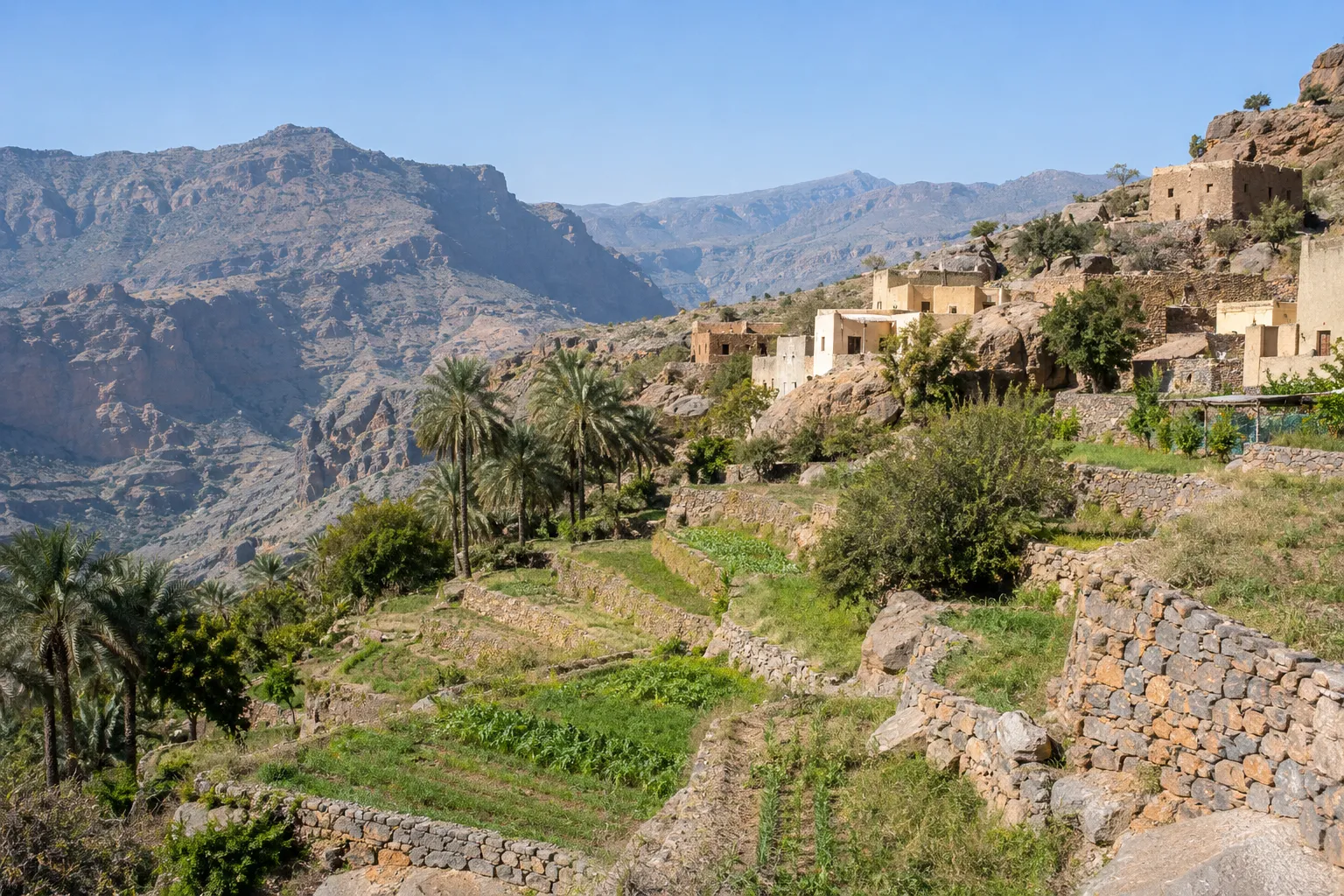
Jabal Akhdar and Jabal Shams do not have Muscat’s temperatures. The coastal average in the table does not describe a windswept terrace or a night at altitude: bring a warm layer even when short sleeves suffice in the city. If walking is your reason for travelling, choose the trail and elevation gain before accommodation; check road conditions and the vehicle needed with your accommodation provider.
Between March and May, the local spring, Jabal Akhdar also offers a chance to learn about rosewater production. A local operator’s introduction describes traditional distillation and visits associated with it. Arrange them by appointment: flowering does not mean a display available every day. Growers and workshops have their own working schedules, which deserve respect.
Salalah from June to September: the khareef transforms the landscape
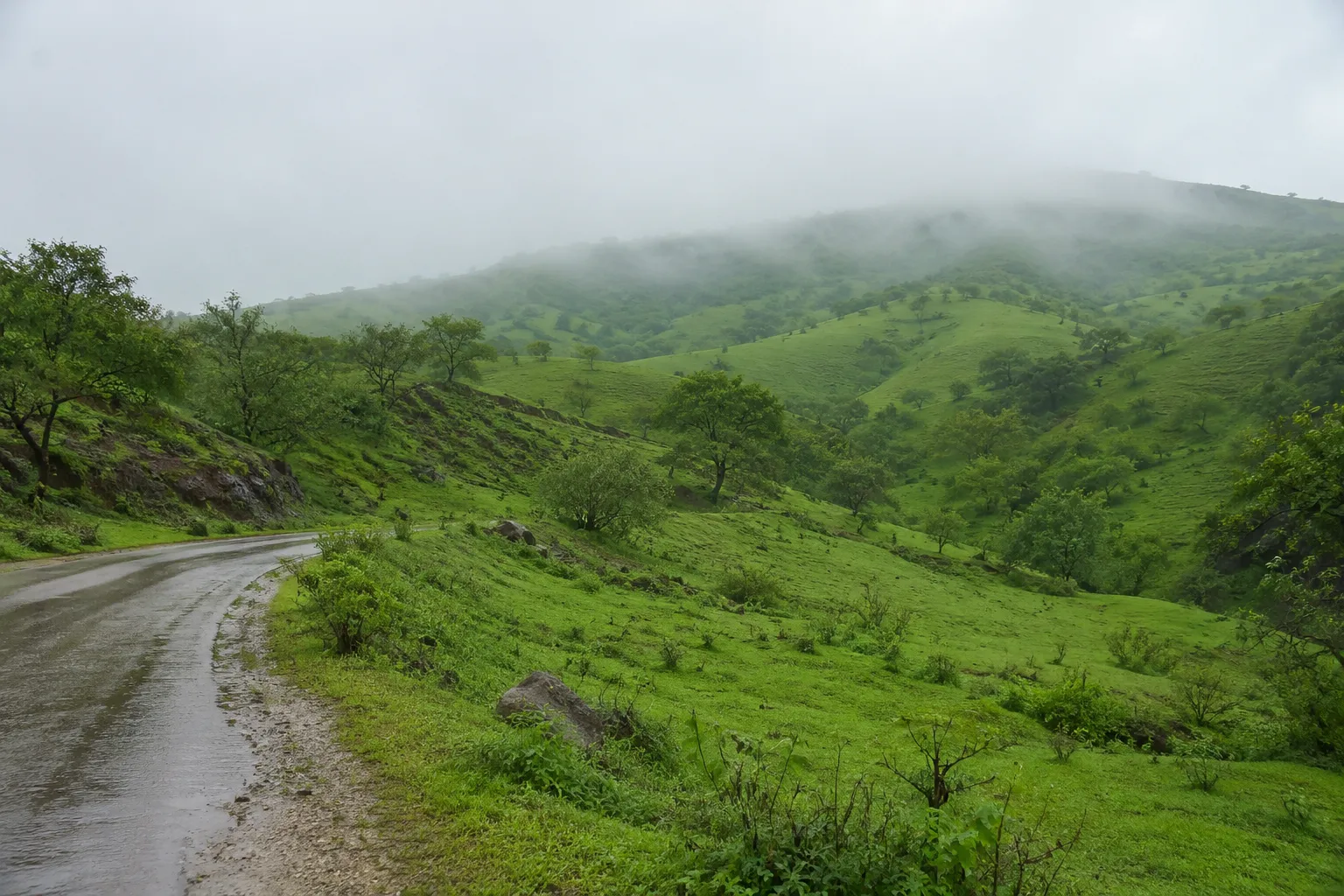
In Dhofar, the khareef transforms the landscape between June and September, with onset and intensity varying from year to year: humidity and mist encourage greenery around Salalah. This is a different trip from a seaside holiday in the cooler months, November–March. You may encounter poor visibility, wet ground and sea conditions unsuitable for swimming; choosing this period means wanting the monsoon atmosphere itself. The Ministry’s geographical overview explains this difference from the north.
With a week available, devote it to either Dhofar or the north, according to the season. To combine them, compare flying with the time needed for a long road transfer before booking hotels. Between June and September, do not assume lower prices in Muscat apply to Salalah too: demand follows different landscapes. The table’s monthly assessment concerns the northern circuit; it does not dismiss the khareef for those seeking it.
Desert and coast: a few well-chosen plans
For a night among the dunes, agree on the meeting point with the camp and check whether your stay includes the transfer from the car park. Arriving before sunset leaves time for a walk and to watch the sand change colour.
If you plan a boat trip, leave some flexibility to move it in rough seas. Before visiting a wadi, check local alerts: rain may fall upstream even when the coast is sunny. An afternoon without bookings lets you reschedule a postponed outing or stay longer somewhere you enjoy.
The Daymaniyat Islands, with coral reefs off Muscat, feature in the short trip. December suits a stay in the north, but does not guarantee calm seas or wildlife sightings: operator Daymaniat Shells chooses snorkelling sites according to conditions on the day and requires basic swimming skills. If possible, leave an alternative day for the outing rather than relying solely on the hours before your flight.
On the longer circuit, a guided visit to Ras al Jinz offers a chance to observe sea turtles on the beach. January is favourable for the trip as a whole, but does not coincide with the period the reserve recommends for hatchings, May–September. Sightings should not be taken for granted: confirm the visit with the reserve and build the stop around the coast and Sur as well.
How to read climate, crowds and prices
Temperatures: monthly climate normals for Muscat’s airport station, published by the Japan Meteorological Agency and rounded to the nearest degree. They do not represent Hajar elevations or Salalah. JMA climate table. Crowd and price indications are broad seasonal assessments, not quotes: holidays, events and availability can change even between two weeks in the same month. “Ideal” refers to the type of trip described; it guarantees neither good weather nor access to every activity.
Liked an article? Make it your trip
Plan the days, the places and the budget with Daysaway, on the map, with the help of the assistant.