When to visit Marrakech: the rhythm of the medina
Gardens, courtyards and evenings in the square: the months for discovering the city on foot, and those when heat changes the whole day.
In 30 seconds
For three days among the medina, palaces and gardens, we choose March–April or October–November. May and September require more heat breaks; December to February call for warm evening layers. July and August are less suited to long days on foot because of intense heat.
- Jan12°Good
- Feb14°Good
- Mar17°Ideal
- Apr19°Ideal
- May22°Good
- Jun25°Good
- Jul29°Less suited
- Aug29°Less suited
- Sept25°Good
- Oct22°Ideal
- Nov17°Ideal
- Dec13°Good
IdealGoodLess suited· average temperatures in Marrakech · station at 464 m
Month by month
January – February12–14°
GoodJanuary 12°
- Weather: Mild days, cold nights; possible rain
- Crowds: Moderate, peaks early in the month
- Prices: Vary with holidays
Not to miss: Sunny courtyards and medina shops
February 14°
- Weather: Cool evenings, changeable weather
- Crowds: Moderate, holiday peaks
- Prices: Variable
Not to miss: Palaces and gardens during daylight
March – April17–19°
IdealMarch 17°
- Weather: Mild, possible showers
- Crowds: Moderate to high
- Prices: Medium to high
Not to miss: Medina walks and gardens
April 19°
- Weather: Pleasant, warmer afternoons
- Crowds: High, especially in holidays
- Prices: Often high
Not to miss: Courtyards, gardens and evening square
May – June22–25°
GoodMay 22°
- Weather: Increasing heat, little rain
- Crowds: Moderate to high
- Prices: Variable
Not to miss: Morning visits and a riad break
June 25°
- Weather: Very hot, generally dry
- Crowds: Variable
- Prices: Compare options
Not to miss: Early medina visits, outdoor evenings
July – August29°
Less suitedJuly 29°
- Weather: Intense heat, almost no rain
- Crowds: Variable at classic sights
- Prices: Variable, no guaranteed savings
Not to miss: Short early visits; long cool breaks
August 29°
- Weather: Intense, potentially persistent heat
- Crowds: Vary with holidays
- Prices: Vary with holidays
Not to miss: Early gardens and indoor activities
September25°
Good- Weather: Still hot; possible rain
- Crowds: Increasing
- Prices: Variable
Not to miss: Morning and late-afternoon walks
October – November17–22°
IdealOctober 22°
- Weather: More moderate heat, possible rain
- Crowds: High
- Prices: Often high
Not to miss: Medina, gardens and terraces
November 17°
- Weather: Mild days, cool evenings; showers
- Crowds: Moderate to high
- Prices: Variable
Not to miss: Palaces and crafts on foot
December13°
Good- Weather: Cold nights, changeable days
- Crowds: Moderate; high over holidays
- Prices: Rising at month’s end
Not to miss: Courtyards at midday and cooking
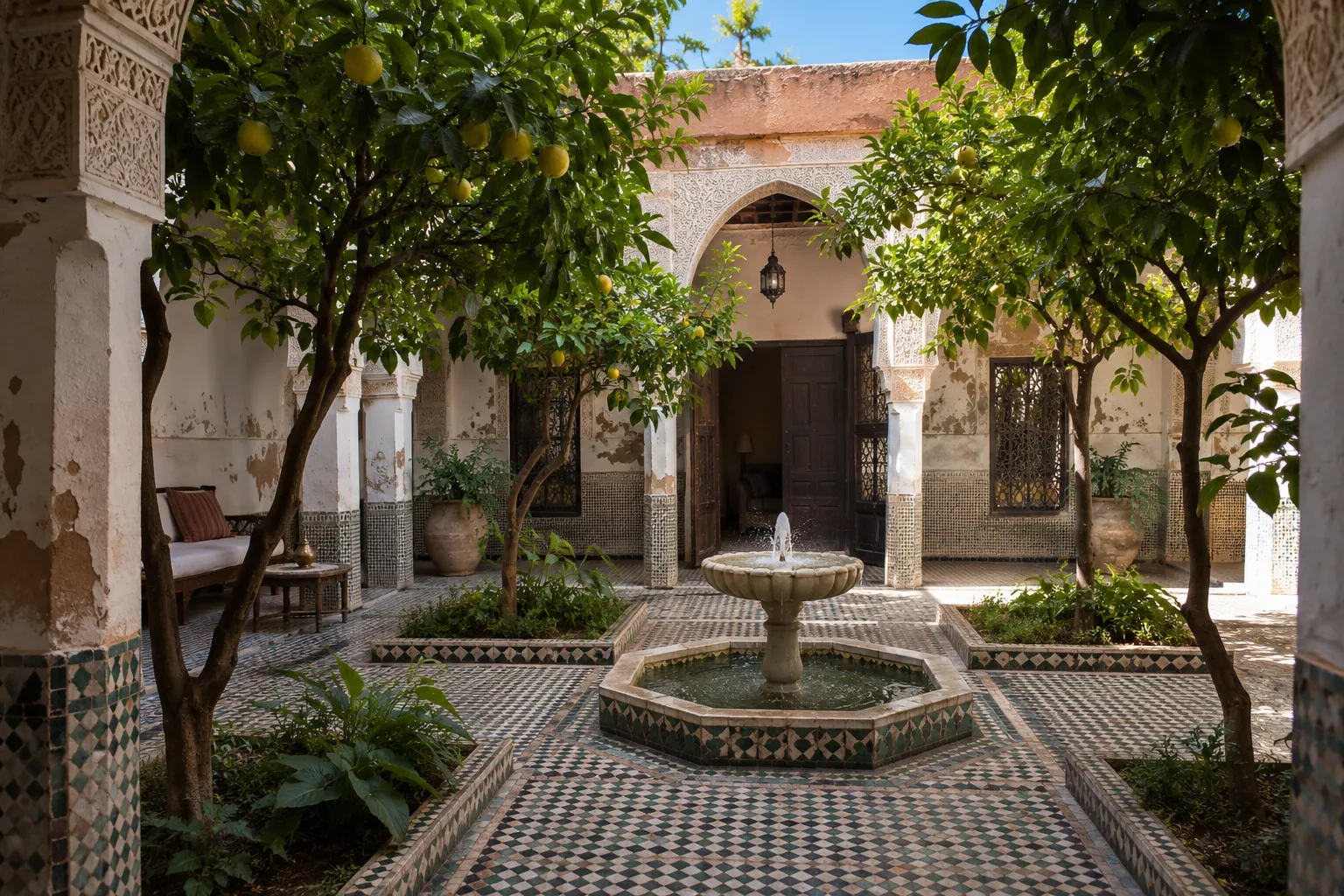
Between a medina lane and a palace courtyard, Marrakech changes light and temperature in a few steps. Outside, you pass busy streets and open shops; inside, an arcade shelters you from the sun and a fountain accompanies the pause. This contrast makes the milder months particularly pleasant. As the heat rises, the whole day shifts towards morning and evening.
The calendar covers a first city stay with plenty of visits on foot. Temperatures are rounded monthly means for Marrakech station at 464 metres, published by JMA ClimatView, using 1991–2020 normals. They include day and night: a mean of 29 °C is not the afternoon maximum. Crowds and prices are indicative seasonal assessments, particularly for accommodation, and also depend on holidays, flights and booking ahead.
March–April and October–November: time for courtyards
These are our preferred windows for spending a morning in the palaces and continuing through the neighbourhoods without needing to retreat immediately from the heat. March can be cool in the morning, April warmer around midday; October still has warm days, while November more often calls for an evening jacket. Rain is possible in all these months, so leave some flexibility in the order of visits.
The medina is the historic city within the walls; the souks are its market streets, lined with shops and workshops. On a first visit, a guide can help you understand neighbourhoods and trades. If you prefer walking independently, start with a short route, mark your accommodation on the map and extend it gradually, allowing time for stops. Crowded lanes and passing vehicles require attention even at pleasant temperatures.
The courtyards reveal the city on another scale: mosaics of small ceramic pieces called zellij, worked wood and pools reflecting the walls. At Le Jardin Secret, a historic garden in the medina, the water trail explains how an underground drainage gallery, the khettara, supplied the complex.
May–September: visits follow the shade
Between May and September, heat becomes an important part of the trip, but these months are not equivalent. May and September can still allow a pleasant stay with early starts and long breaks; June requires greater care around midday. In July and August, heat is a substantial constraint for anyone imagining whole days between palaces and markets. The less favourable rating refers specifically to this kind of visit.
If your holiday falls in these months, choose accommodation where you can truly rest during the hottest hours and check that the room has air conditioning. A riad is a traditional house arranged around an inner courtyard, often converted into visitor accommodation: the name alone does not guarantee a cool room. Check access to a pool and shade in shared spaces at the particular property too.
For Jardin Majorelle, with its bamboo, cacti and intensely blue buildings, tickets are sold exclusively online through the ticket service linked from the official website. Check current availability and conditions before arranging your day. A morning visit helps limit exposure to heat; trees do not make the whole route cool.
The evening can be spent in Jemaa el-Fna, the large square near the Koutoubia, the mosque recognisable by its tall minaret. The square changes throughout the day and hosts music, storytelling and encounters recognised by UNESCO as intangible cultural heritage. Its appeal also lies in the people keeping these practices alive: listen respectfully and ask before photographing them.
December–February: daytime sunshine, cool evenings
Local winter, December to February, suits those who prefer visiting palaces and shops without the heat of the middle months of the year. Daylight hours are shorter and weather can be changeable. A terrace that is pleasant at lunchtime may become cold after sunset; warm clothes are needed in the evening. Even a room that looks beautiful in photographs should be assessed for heating, especially in traditional buildings.
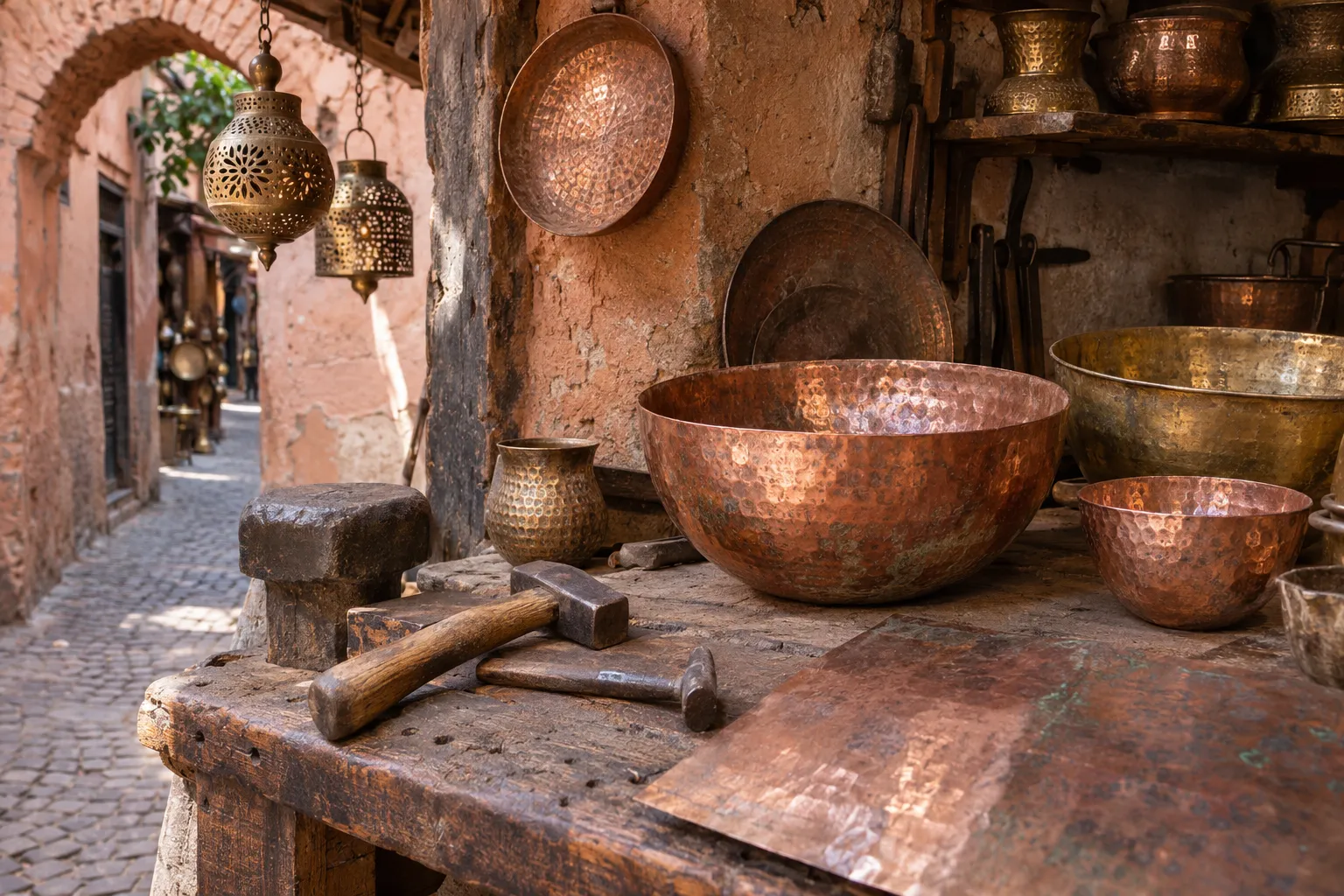
This is a good time to linger over details: the uneven surface of a copper bowl, a worked door, the joins in a mosaic. If you enjoy learning local recipes, a cookery class can fill part of the day; if historic sites appeal more, focus on palaces and leave longer walks for midday. These are useful alternatives when rain arrives too.
Demand can rise between Christmas and New Year: these months do not guarantee lower prices. On a short stay, accommodation location and the time needed to walk there from your arrival point matter too. Ask the property for precise directions, particularly if you enter the medina for the first time after sunset.
Ramadan and excursions: two choices to consider ahead
Ramadan follows the Islamic lunar calendar and moves relative to the months in this article. During this period, many Muslims fast from dawn to sunset; iftar is the meal that breaks the fast in the evening. The rhythm of shops, visits and dining may change, although services remain available for travellers. Before fixing your days, check that year’s calendar and the hours of your chosen places, as recommended in the official travel information for Morocco.
An excursion into the Atlas needs a separate weather assessment: temperatures and trail conditions change with altitude, with cold and snow possible in winter months. The official Marrakech tourism website highlights these differences. A mild day in the city is not enough to decide what to wear or whether a mountain walk is feasible.
For a first three-day trip, staying in Marrakech already allows you to alternate the square, gardens and visits without spending a large part of the stay travelling. If long walks are your main aim, we choose March, April, October or November. In other months, the choice largely depends on how much time you want outside and how much room you leave for courtyard breaks.
Marrakech in three days: it’s in Explore.
The official itinerary brings together the medina, square, palaces and gardens, with a suggested cookery class. It is set in late March, one of the recommended periods for this stay.
Liked an article? Make it your trip
Plan the days, the places and the budget with Daysaway, on the map, with the help of the assistant.